
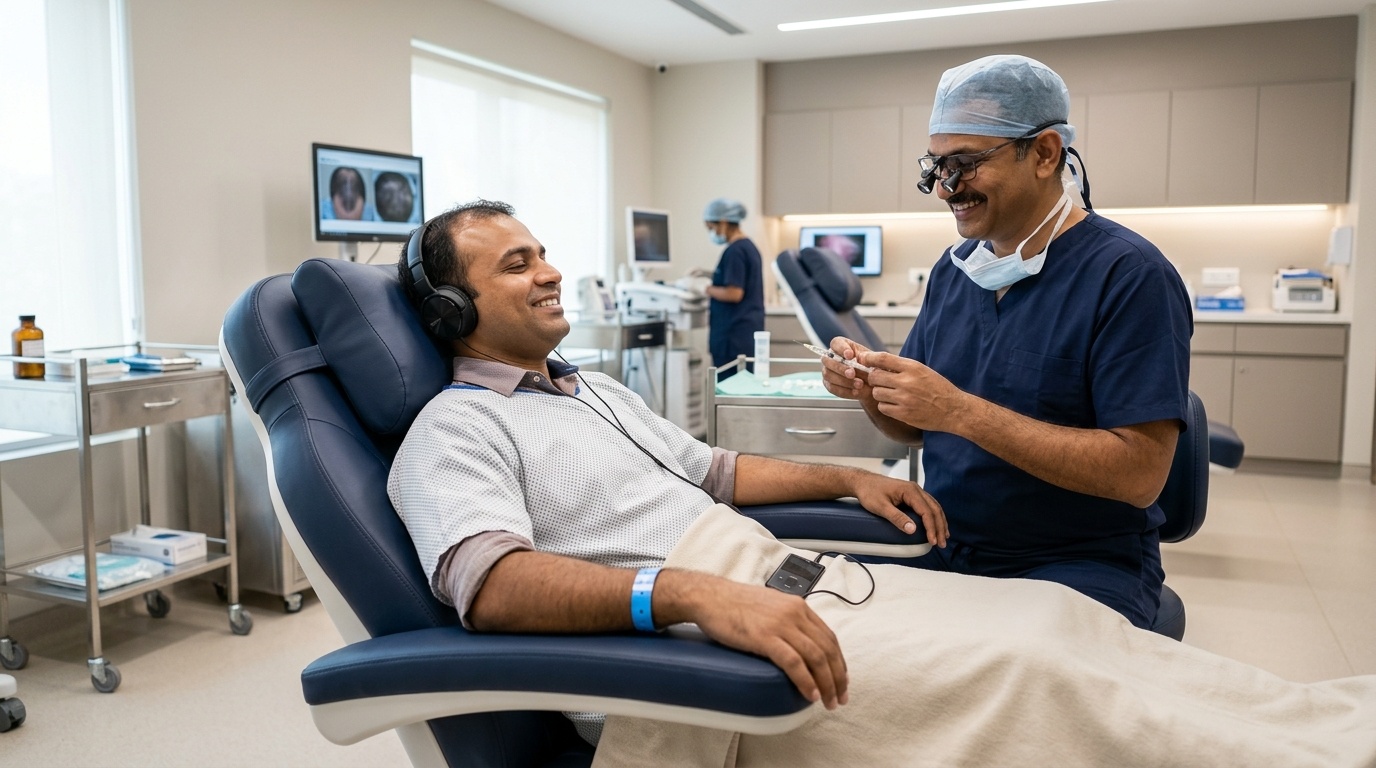
Undergoing hair restoration is an investment in confidence, making it heartbreaking when results fall short: why do hair transplants fail? A hair transplant fails primarily due to technical surgical errors (such as follicle transection, graft dehydration, overharvesting the donor bank, or improper implantation depth and angles), lack of ongoing hair loss stabilization, or severe post-operative trauma. Fortunately, with advanced corrective techniques, failed or unnatural procedures can be revised, repaired, and transformed into natural, dense hair using Precise Follicular Implantation (PFI) with the Scarfree Pen.
Key Takeaways:
- Top Technical Causes: Low survival is commonly caused by graft desiccation (drying out), rough forceps handling crushing root bulbs, and transection during extraction.
- Aesthetic Failures: Placing multi-hair grafts in the frontal hairline or implanting hairs at unnatural perpendicular angles creates an obvious, plug-like appearance.
- Donor Overharvesting: Inexperienced commercial clinics often extract too many grafts from the back of the head, leaving a patchy “moth-eaten” scar pattern.
- Corrective Revision: Skilled trichologists can extract misplaced grafts, soften harsh lines with delicate single-hair PFI placements, and restore full cosmetic harmony.
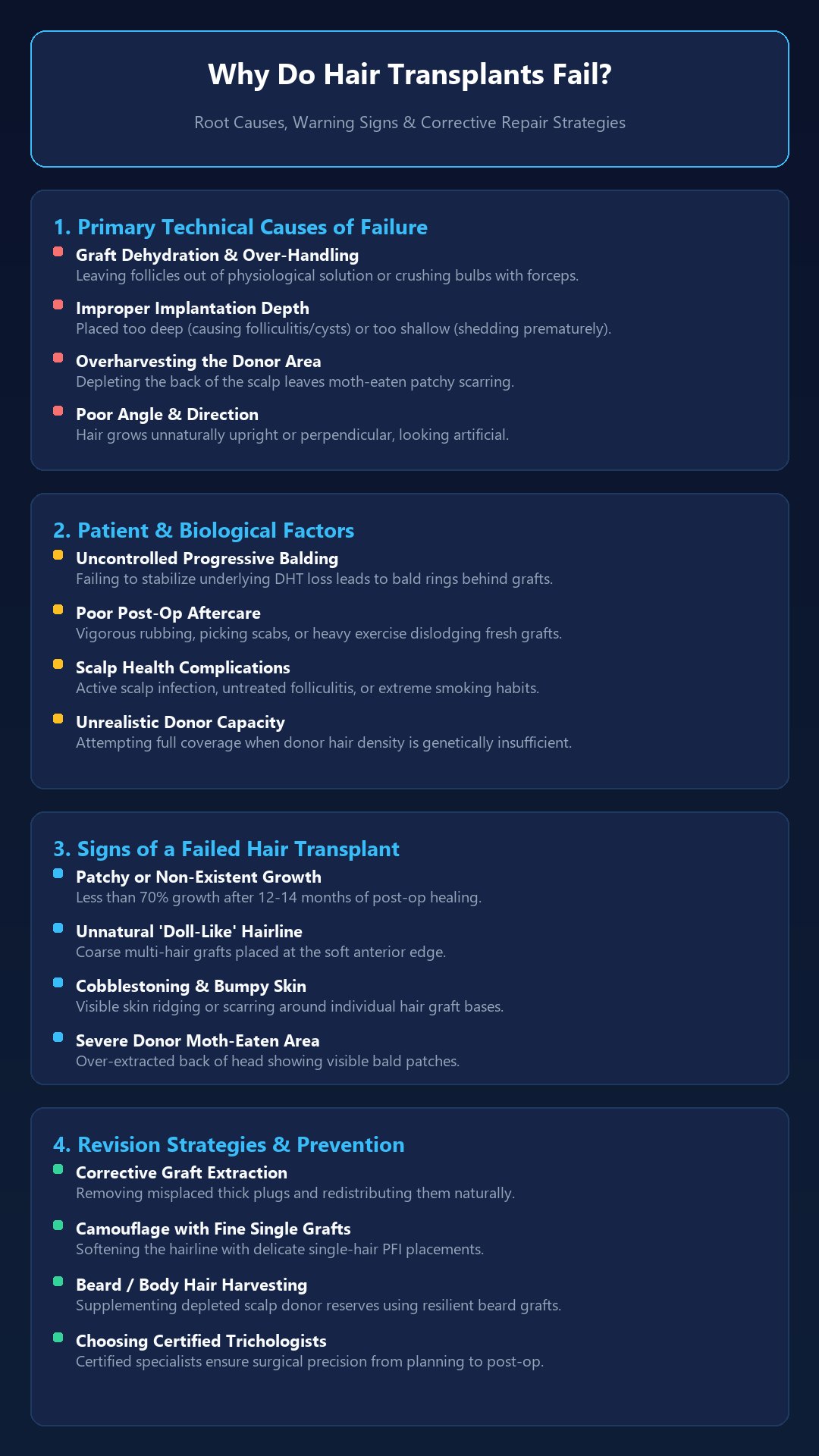
Table of Contents
- The Primary Surgical & Biological Causes of Graft Failure
- Aesthetic vs. Biological Failure: Recognizing the Difference
- Warning Signs of an Unsuccessful Hair Transplant
- Technical Causes vs. Corrective Solutions Table
- Revision and Corrective Restoration Strategies
- How PFI with the Scarfree Pen Prevents Graft Failure
- Corrective Hair Restoration in Thane with Dr. Arefa Patel
- Frequently Asked Questions (FAQs)
The Primary Surgical & Biological Causes of Graft Failure
When performed by certified trichologists in sterile surgical environments, modern hair transplants boast success rates exceeding 90% to 95%. However, when shortcuts are taken, several factors lead to poor follicle survival:
- Graft Dehydration & Out-of-Body Time: Hair follicles are delicate living organs. If technicians leave harvested grafts exposed to dry room air or fail to maintain chilled holding solutions (such as hypothermic saline or platelet-rich plasma), the cellular dermal papilla dies before implantation.
- Forceps Crush Injury: Traditional manual implantation requires technicians to grip the root bulb with forceps, risking mechanical crushing. Crushed roots fail to regrow or produce only thin, wispy hairs.
- Incorrect Implantation Depth: Grafts placed too deeply suffer from poor blood supply and can develop inflammatory foreign-body cysts (folliculitis). Grafts placed too shallowly dry out and shed permanently.
- Donor Area Overharvesting: Extracting more than 20% to 25% of follicles from the safe donor zone permanently depletes the occipital scalp, leaving visible patchy baldness behind.
- Unstabilized Native Hair Loss: If patients undergo surgery without controlling underlying DHT levels with medical therapy, native hair continues receding, creating awkward bald rings behind the transplanted frontal hair.
Aesthetic vs. Biological Failure: Recognizing the Difference
Hair transplant failures fall into two distinct categories:
- Biological Failure (Poor Yield): The transplanted follicles simply do not grow. Even after 12 to 14 months, the treated area exhibits sparse, patchy, or absent hair density.
- Aesthetic Failure (Unnatural Appearance): The transplanted hair grows vigorously, but looks completely artificial. Common aesthetic errors include straight “ruler-straight” hairlines, unnatural 90-degree upright angles, cobblestoning (bumpy raised skin at the graft bases), or coarse 3-to-4-hair grafts placed at the delicate soft hairline edge.
Warning Signs of an Unsuccessful Hair Transplant
While the first 3 months normally feature a temporary “shock loss” shedding phase, distinct warning signs emerge as healing progresses:
- No Noticeable Growth by Month 8–9: By month 8, at least 60% to 70% of grafted hair should have sprouted. Absence of new growth indicates graft demise.
- Persistent Redness & Inflammatory Bumps: Chronic folliculitis or pustules persisting months after surgery suggest buried grafts or poor hygiene protocols.
- Moth-Eaten Donor Scalp: Clear, visible round white scars and thinned scalp at the back of the head.
- Harsh, Unblendable Hair Direction: Hair that cannot be combed naturally because follicles were implanted counter to your biological growth whorls.
Technical Causes vs. Corrective Solutions Table
Reviewing how modern trichological repair techniques address common surgical errors:
| Failure Manifestation | Underlying Surgical Mistake | Corrective Repair Strategy |
|---|---|---|
| Unnatural “Pluggy” Hairline | Coarse multi-hair follicular units placed in front row | Micro-extraction of coarse grafts + PFI single-hair camouflage |
| Sparse, Low Density Yield | Graft desiccation, transection, or forceps bulb crush | Secondary density session using PFI Scarfree Pen + PRP/GFC |
| Depleted Scalp Donor Area | Excessive extraction over-concentrated in one zone | Body Hair Transplantation (BHT) using submental beard follicles |
| Unnatural Perpendicular Angles | Channel incisions made at 90° instead of 15°–30° acute angle | Selective graft removal, re-angulation, and artistic blending |
Revision and Corrective Restoration Strategies
If you have suffered a failed or disappointing hair restoration, hope is not lost. Experienced hair restoration surgeons utilize several advanced revision techniques:
- Graft Removal and Redistribution: Unnatural, misplaced plugs along the anterior hairline can be delicately extracted with ultra-fine punches, divided into single hairs under a stereomicroscope, and reimplanted at proper angles.
- Frontal Camouflage with Micro-Grafts: Delicate single-hair follicular units are placed 1 to 2 millimeters in front of the harsh old hairline, creating a feather-soft natural transition.
- Beard and Body Hair Harvesting (BHT): If your scalp donor bank was overharvested by a previous clinic, beard hair under the jawline offers a resilient, high-density alternative donor source that blends seamlessly into mid-scalp and crown thinning.
How PFI with the Scarfree Pen Prevents Graft Failure
Preventing graft failure starts with eliminating surgical trauma. At Elite Dermadent, our signature Precise Follicular Implantation (PFI) technique with the Scarfree Pen addresses the root causes of failure:
- No Forceps Handling: Grafts are loaded safely into the hollow needle of the Scarfree Pen, protecting the vital dermal papilla bulb from mechanical damage.
- Simultaneous Insertion: The pen creates the site and deposits the graft in one unified movement, preventing dehydration and eliminating oversized incision scars.
- Exact Angle & Depth Control: The surgeon calibrates the needle depth to within 0.1mm, ensuring each graft receives optimal dermal blood circulation without pitting or cobblestoning.
Corrective Hair Restoration in Thane with Dr. Arefa Patel
Corrective hair transplant surgery requires significantly greater diagnostic expertise and artistic skill than a primary procedure. Led by Dr. Arefa Patel, Trichologist and Skin Specialist, Elite Dermadent has successfully revised and repaired numerous compromised cases.
Whether you require hairline softening, density enhancement, or donor repair, our clinic offers comprehensive clinical evaluations and advanced hair transplant in Thane to restore your natural appearance and peace of mind.
Frequently Asked Questions (FAQs)
1. Can a failed hair transplant be fixed?
Yes. Skilled trichologists can fix failed hair transplants through revision procedures including plug extraction, hairline camouflage with fine single grafts, density fill-ins using the Scarfree Pen, or harvesting beard hair if the scalp donor area is depleted.
2. How long should I wait before getting a corrective revision transplant?
You should wait at least 10 to 12 months after your initial surgery. This allows the scalp tissue to fully heal, inflammation to subside, and all transplanted hair from the previous procedure to reach its final growth stage.
3. Why did my transplanted hair shed after 3 weeks?
This is completely normal and is known as “shock loss” (telogen effluvium). The hair shafts shed while the transplanted root bulbs remain safely embedded under the skin. New permanent hair begins growing around month 3 to 4.
4. What causes donor area overharvesting?
Donor overharvesting happens when untrained technicians extract too many grafts from a small donor zone, exceeding safe thresholds. This leaves patchy bald spots and scarring that resemble a moth-eaten appearance.
5. How does the PFI Scarfree Pen technique prevent graft failure?
The Scarfree Pen eliminates manual forceps handling of root bulbs, prevents follicle dehydration by minimizing out-of-body time, and inserts grafts at precise physiological depths and angles for 95%+ survival.
No responses yet