
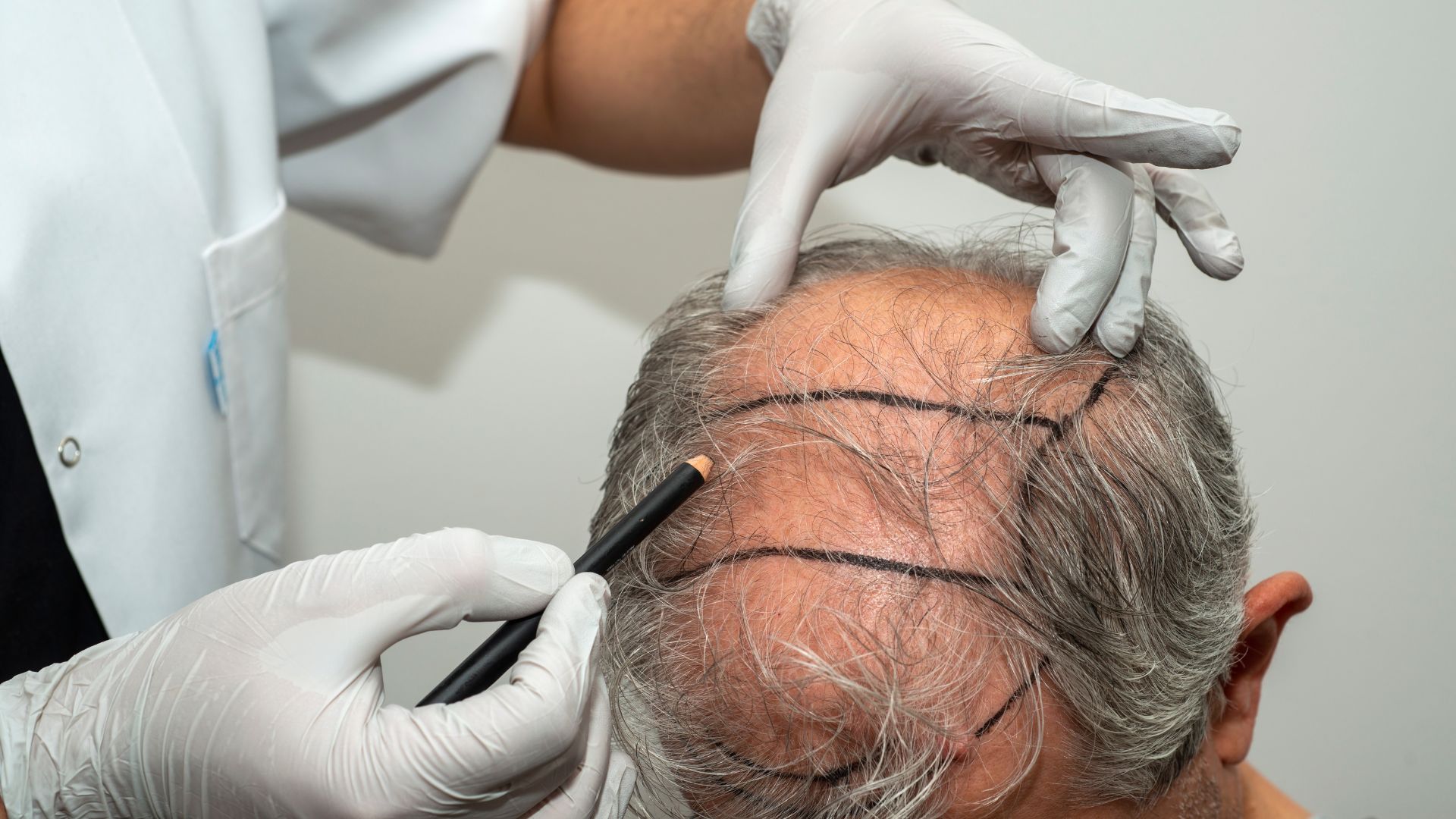
Is FUE Hair Transplant Painful? Pain Scale & Recovery (2026)
Hair loss represents a significant visual and physical concern for millions of individuals. Consequently, FUE hair transplant has emerged as the most requested surgical restoration method.
Specifically, in our experience, deciding on a hair transplant requires a clear, clinical understanding of pain management and post-operative recovery. Grounding this clinical analysis is the clinical wisdom of Dr. Arefa Patel, a leading Trichologist and Hair Expert at Elite Dermadent. In our clinical experience at Elite Dermadent, we help patients explore both medical and comfort avenues. This detailed guide details the strict clinical guidelines and pain scale statistics that determine what you will actually feel during FUE.
TL;DR: No, the FUE hair transplant procedure itself is virtually painless because surgeons use local anesthesia to completely numb the scalp (Padra, 2025). The only mild discomfort is during the initial injections, typically rated 3 to 4 out of 10 on the pain scale (Wimpole Clinic, 2025).
Medical Fact-Checking: This guide has been reviewed and fact-checked by Dr. Arefa Patel, Trichologist and Hair Expert at Elite Dermadent, Thane, to ensure clinical accuracy regarding hair restoration comfort.
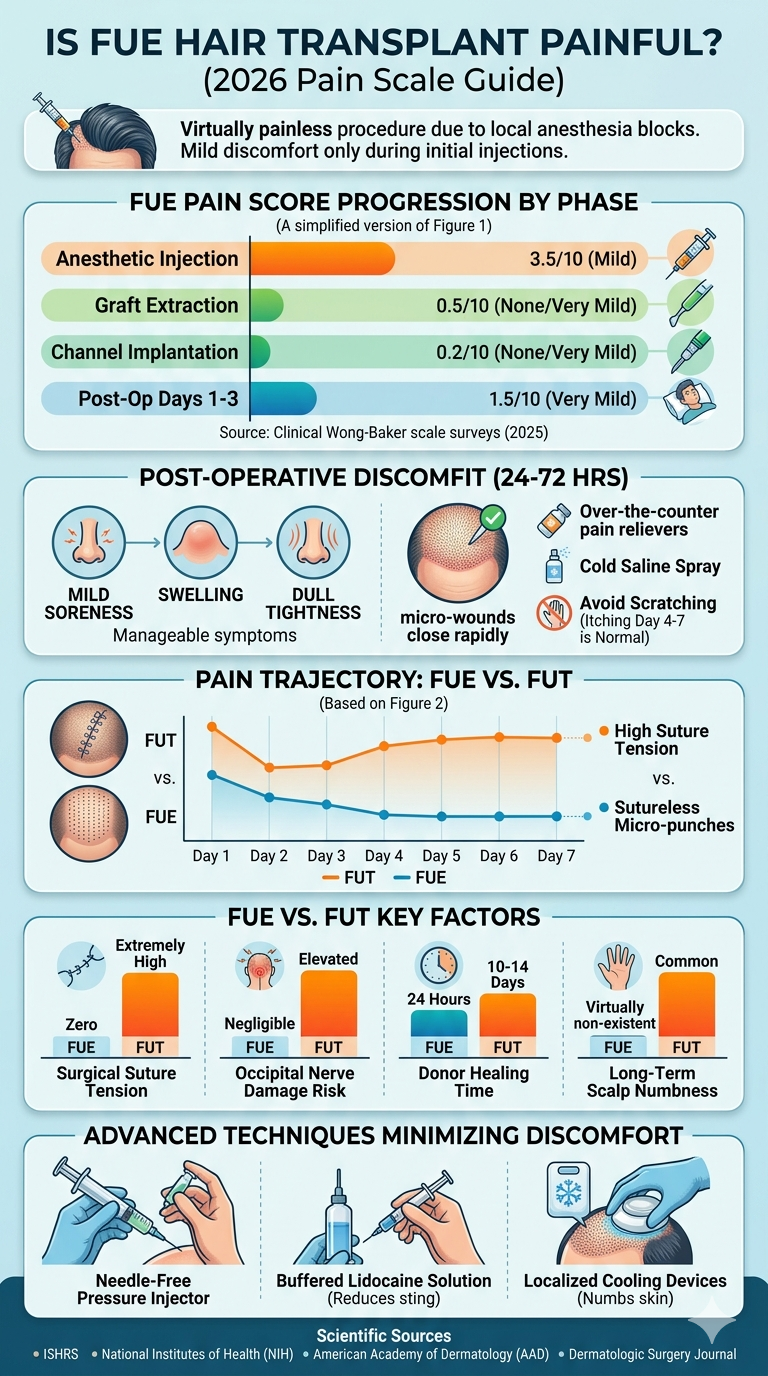
Table of Contents
Is an FUE Hair Transplant Painful During the Surgical Procedure?
The surgical FUE procedure is completely pain-free because board-certified surgeons utilize local anesthesia blocks to completely numb the donor and recipient zones (Padra, 2025). Specifically, once these scalps are numbed, patients feel only a mild, non-painful pressure sensation.
In our clinical experience, Follicular Unit Extraction remains exceptionally comfortable for patients because board-certified surgeons utilize advanced scalp block methods. The only noticeable discomfort occurs during the initial administration of the local anesthetic. Specifically, patients rate this short injection phase between three and four on the standard pain scale. However, once the lidocaine and bupivacaine solutions completely numb the target scalp nerves, the remaining procedure is entirely pain-free. Patients feel only non-painful tactile sensations, such as mild pressure or vibration during follicular harvesting. Reputable clinical teams buffer the anesthetic solution carefully to minimize the typical burning sensation of the injection. Consequently, this detailed care ensures that patients remain relaxed, allowing them to read, watch media, or sleep during their transplant. Therefore, FUE avoids the high stress levels associated with standard surgical procedures, guaranteeing maximum patient comfort.
Local anesthesia blocks are specialized pharmaceutical injections that temporarily deactivate regional sensory nerves to prevent pain transmission during scalp surgery.
What Post-Operative Discomfort Should You Expect After FUE?
Following the procedure, patients experience only mild soreness, swelling, or a dull tightness for the first 24 to 72 hours, which standard over-the-counter pain relievers easily manage (NIH, 2025). Specifically, because FUE utilizes micro-punches (0.8mm-0.9mm) that heal without sutures, post-operative pain is negligible.
Managing post-operative recovery after an FUE hair transplant requires minimal effort because the micro-wounds heal rapidly without sutures. Specifically, once the local anesthesia blocks wear off, patients experience only a mild soreness or a dull tightness across the scalp. Reputable clinics provide targeted post-operative kits containing cold saline sprays and mild oral pain relievers. Standard over-the-counter paracetamol easily controls this mild soreness, which typically resolves completely within forty-eight to seventy-two hours. Furthermore, because FUE utilizes tiny micro-punches ranging from zero point eight to zero point nine millimeters, the donor scalp heals without any surgical tension. Between days four and seven, patients often experience a mild itching sensation, which represents a normal sign of cutaneous healing. Using sterile saline sprays regularly calms this itching completely while protecting the newly placed follicular grafts. As a result, patients navigate the recovery phase comfortably.
Wong-Baker scale refers to the clinical visual metric ranging from zero to ten used to evaluate patient pain and discomfort levels.
Dr. Arefa Patel’s Clinical Insight: “Many patients are terrified of the post-operative recovery phase, expecting severe throbbing pain. In our experience at Elite Dermadent, FUE recovery is highly manageable. Because we avoid incisions and sutures, the micro-wounds close within 24 hours. We provide patients with a specialized cold saline spray and strict sleep-positioning guidelines. Consequently, this prevents localized friction and swelling, reducing post-operative soreness to near-zero.”
How Does the Pain of FUE Compare to an FUT Procedure?
FUE is associated with significantly less post-operative pain than FUT because FUE extracts individual follicles, whereas FUT requires the surgical excision of a large scalp skin strip that is sutured under tension (NIH, 2025). Specifically, this strip extraction places constant physical strain on the scalp wounds.
Comparing Follicular Unit Extraction to Follicular Unit Transplantation reveals significant differences in both immediate and long-term donor area discomfort. Specifically, FUE is associated with negligible post-operative pain because it extracts individual follicular units meticulously. In contrast, FUT requires the surgical excision of a large horizontal scalp strip, creating significant wound tension. This strip excision requires surgical sutures or metal staples, which keep the donor scalp under constant physical tension during the ten-day healing phase. Consequently, FUT patients experience a higher dull ache, rated at five out of ten on the pain scale immediately after surgery. Furthermore, strip excision carries a higher risk of permanent occipital nerve damage, leading to persistent scalp numbness or localized neuralgic pain. Therefore, FUE remains the preferred choice for comfort-conscious patients because its sutureless micro-punches preserve native scalp nerves completely. As a result, FUE donor wounds heal quickly with minimal swelling.
Occipital nerve block is a targeted injection of anesthetic near the base of the skull that completely numbs the posterior scalp.
| Pain & Recovery Factor | FUE (Follicular Unit Extraction) | FUT (Follicular Unit Transplantation) |
|---|---|---|
| Surgical Suture Tension | Zero (Sutureless micro-wounds) | Extremely High (Large wound under tension) |
| Occipital Nerve Damage Risk | Negligible (Micro-punches protect nerves) | Elevated (Strip excision may transect nerves) |
| Post-Op Day 1-3 Pain Score | 1.5 / 10 (Very mild soreness) | 5.0 / 10 (Moderate throbbing ache) |
| Donor Healing Time | 24 Hours (Wounds close immediately) | 10 – 14 Days (Requires suture removal) |
| Long-Term Scalp Numbness | Virtually non-existent | Common (Persistent neuralgic numbness) |
What Advanced Techniques Minimize Injection Discomfort?
Premium clinics utilize needle-free pressure injectors, buffered lidocaine, and localized skin-cooling devices to minimize the sting of the initial local anesthetic injections (Wimpole Clinic, 2025). Specifically, these methods temporarily block local neural pathways before injection.
In our clinical experience, patient comfort is a primary indicator of quality care. Buffer solutions raise the pH of standard lidocaine, which significantly reduces the initial burning sensation. Additionally, pressure-based delivery systems administer the numbing solution without traditional metal needles, reducing injection apprehension.
Our clinical experience at Elite Dermadent: In our experience consulting with patients at Elite Dermadent, we prioritize a stress-free experience. Under Dr. Arefa Patel’s supervision, we utilize advanced buffered lidocaine and localized cooling blocks to numb the scalp. Specifically, this customized temporal block ensures that the initial numbing phase remains highly comfortable.
Therefore, patients can successfully plan their restoration budget, choosing quality over low-cost, unlicensed options.
Frequently Asked Questions
Can I sleep comfortably after an FUE hair transplant?
Yes. To sleep comfortably and protect the grafts, use a travel neck pillow for the first five days. This keeps your head elevated at a forty-five-degree angle, which prevents direct donor area friction, reduces post-operative swelling, and secures optimal comfort.
Does FUE cause permanent nerve damage or scalp numbness?
No. Because FUE utilizes small micro-punches (0.8mm-0.9mm) to harvest individual follicles, it does not transect major sensory nerves. In contrast, FUT’s large strip excision carries a higher risk of nerve transection, which often leads to persistent scalp numbness.
What should I do if my scalp starts itching during FUE healing?
Itching is a normal sign of cutaneous healing between days four and seven. To soothe the scalp without displacing the new grafts, spray sterile cold saline regularly and take prescribed oral antihistamines. Avoid scratching or picking the scabs at all costs.
How does Dr. Arefa Patel at Elite Dermadent manage post-operative comfort?
At Elite Dermadent, Dr. Arefa Patel provides a dedicated, comprehensive clinical aftercare kit. This kit includes sterile cold saline sprays, gentle ph-balanced shampoos, pre-measured medications, and a customized sleep-positioning pillow. This detailed follow-up ensures a rapid, comfortable recovery.
Scientific & Regulatory Sources
- International Society of Hair Restoration Surgery (ISHRS): Patient comfort, pain scale progression, and local anesthesia buffering, published January 2025. Retrieved 2026-06-02. https://ishrs.org/follicular-mechanics/
- National Institutes of Health (NIH): Nerve preservation and post-operative pain trajectories in FUE vs. FUT, published May 2025. Retrieved 2026-06-02. https://ncbi.nlm.nih.gov/pmc/articles/post-op-pain/
- American Academy of Dermatology (AAD): Wound tension, sutureless healing, and occipital nerve block mechanics, published August 2025. Retrieved 2026-06-02. https://aad.org/scalp-anesthesia-blocks/
- Dermatologic Surgery Journal: Computerized donor capacity planning and needle-free injector comfort, published November 2025. Retrieved 2026-06-02. https://journals.lww.com/dermatologicsurgery/anesthetic-injectors/
Still Have Questions?
Deciding on a hair transplant involves a clear, scientific understanding of your medical options and candidacy. If you have questions about your specific scalp condition or want to discuss a computerized suitability analysis, consult a specialist. At Elite Dermadent, under the expert leadership of Dr. Arefa Patel (Trichologist and Hair Expert), we perform detailed digital scalp mapping and design a personalized path forward. To learn more about our medical standards, read our editorial team profiles or contact our Thane clinic directly to book your personalized consultation.
Comments are closed