

If your dentist has recommended a root canal, it is very common to feel a bit anxious about what the procedure actually involves. Understanding the exact clinical process can go a long way in demystifying the treatment and replacing fear with confidence. In this guide, we will walk you through exactly how root canal is done step by step so you know what to expect at every stage of your appointment.
At Elite Dermadent, under the specialized guidance of our lead endodontic expert Dr. Saurabh Pakhale, we offer state-of-the-art Same Day Root Canal treatments to restore your dental health quickly and painlessly in a single visit.
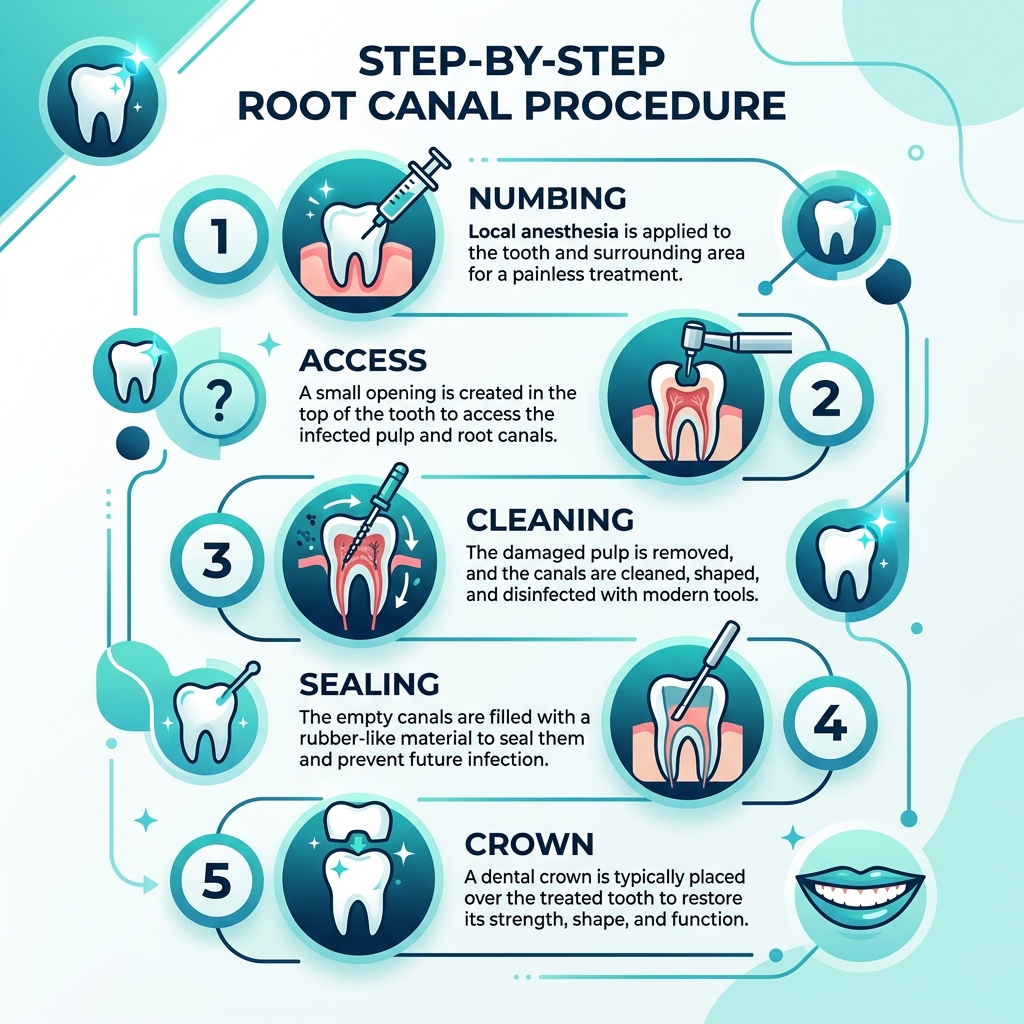
Table of Contents
- What is a Root Canal Treatment?
- How a Root Canal is Done: Step-by-Step Clinical Process
- Standard Multi-Visit vs. Single-Visit Same-Day Root Canal
- What Happens if the Infection Returns? (Retreatment)
- Post-Procedure Care and Quick Recovery Tips
- Frequently Asked Questions (FAQs)
What is a Root Canal Treatment?
A root canal is a dental procedure used to save a natural tooth that has been severely damaged or infected. The pulp—the soft center of the tooth housing nerves, blood vessels, and connective tissue—becomes inflamed or infected due to deep decay, cracks, or trauma. Removing the infected pulp resolves your dental pain, prevents the infection from spreading into the jawbone, and avoids the necessity of an extraction.
How a Root Canal is Done: Step-by-Step Clinical Process
Modern root canal therapy is highly precise and is typically completed in 5 main steps:
Step 1: Preparation & Local Anesthesia
First, digital X-rays are taken to visualize the root shape and check the surrounding bone. Dr. Saurabh Pakhale then administers a local anesthetic to completely numb the target tooth and surrounding tissues. Once you are comfortable, a thin sheet of protective latex or vinyl called a rubber dam is placed over the tooth. This isolates the tooth, keeps it dry and free from saliva, and prevents mouth bacteria from entering the sterile treatment area.
Step 2: Accessing the Pulp Chamber
Using a dental drill, a small access opening is made in the chewing surface of a back tooth or the back of a front tooth. This exposes the pulp chamber, which contains the infected pulp and the entry points to the root canals.
Step 3: Cleaning & Shaping the Canals
Using highly flexible nickel-titanium rotary files, the dentist carefully removes the diseased pulp tissue from the root canals. The canals are shaped to receive the filling material and are continuously flushed with specialized antibacterial and disinfecting solutions to eliminate all microscopic bacteria.
Step 4: Sealing the Canals
Once the canals are clean and dry, they are filled and sealed. The primary filling material is a biocompatible, rubber-like material called gutta-percha. This is placed inside the canals with an adhesive cement to ensure a tight, hermetic seal that prevents any future bacterial entry.
Step 5: Final Restoration (Crown Placement)
After the canals are sealed, the access cavity is closed with a temporary or permanent filling. Because a root-canal-treated tooth loses its blood supply and becomes brittle, a custom dental crown (or cap) is highly recommended. The crown restores the tooth’s structural strength, looks natural, and protects it from fracturing under chewing pressure.
Standard Multi-Visit vs. Single-Visit Same-Day Root Canal
Depending on the case’s complexity, the procedure can be performed over multiple appointments or in a single visit:
| Feature | Standard Multi-Visit Root Canal | Single-Visit Same-Day Root Canal |
|---|---|---|
| Number of Visits | Requires 2 to 3 appointments spaced 1-2 weeks apart. | Completed in a single appointment (usually 90 to 120 minutes). |
| Temporary Sealing | A temporary filling is placed between visits; carries a minor risk of leaking or breaking. | Not required; the canals are permanently sealed during the same session. |
| Anesthesia Sessions | Local anesthesia must be administered at each visit. | Only one session of local anesthesia is needed. |
| Best Suited For | Highly complex anatomy, severely calcified canals, or cases with severe active swelling. | Standard cases, busy patients, and individuals with acute pain seeking immediate relief. |
What Happens if the Infection Returns? (Retreatment)
Even with high success rates, a root canal can occasionally fail if a microscopic canal was missed or a crown leaks. If this happens, you do not have to lose the tooth. A specialized Root Canal Retreatment can be performed. The dentist reopens the tooth, removes the old filling materials, cleans and sterilizes the root canals again, and reseals the tooth to give it another chance at survival.
Post-Procedure Care and Quick Recovery Tips
To ensure a smooth recovery after your root canal, follow these tips:
- Avoid Hard Foods: Do not chew hard or sticky foods on the treated side of your mouth until the permanent crown is placed.
- Manage Discomfort: Take over-the-counter pain relievers as directed by your dentist to manage mild sensitivity.
- Gentle Flossing: Brush and floss regularly, but be gentle around the temporary restoration.
Frequently Asked Questions (FAQs)
1. How is a root canal done step by step?
The step-by-step procedure involves: numbing the tooth, isolating it with a rubber dam, creating an access hole, cleaning and shaping the canals, filling the canals with gutta-percha, and placing a final crown.
2. Is the root canal procedure painful?
No, the procedure itself is painless. Modern local anesthetics completely numb the area, so you feel only pressure, not pain.
3. How long does a root canal take?
A standard root canal takes between 45 to 90 minutes. A same-day root canal is completed in a single session lasting about 90 to 120 minutes.
4. Why is a rubber dam used during a root canal?
A rubber dam isolates the tooth, keeps the treatment area dry and free of saliva, and prevents bacteria from your mouth from contaminating the sterile canals.
5. What is the difference between a root canal and retreatment?
A standard root canal is done on a tooth for the first time. Root canal retreatment is performed to correct a previously failed root canal by cleaning and sealing it again.
Comments are closed