

When facing a dental procedure, it is completely natural to feel anxious about potential side effects, risks, and recovery times. If you have been searching online to find out if are root canal bad for you, you may have encountered conflicting information. Understanding what is normal during recovery and recognizing rare complications is key to a stress-free dental experience.
At Elite Dermadent, under the specialized care of Dr. Saurabh Pakhale, we use advanced technology and gentle endodontic techniques to make your Same Day Root Canal as comfortable and safe as possible.
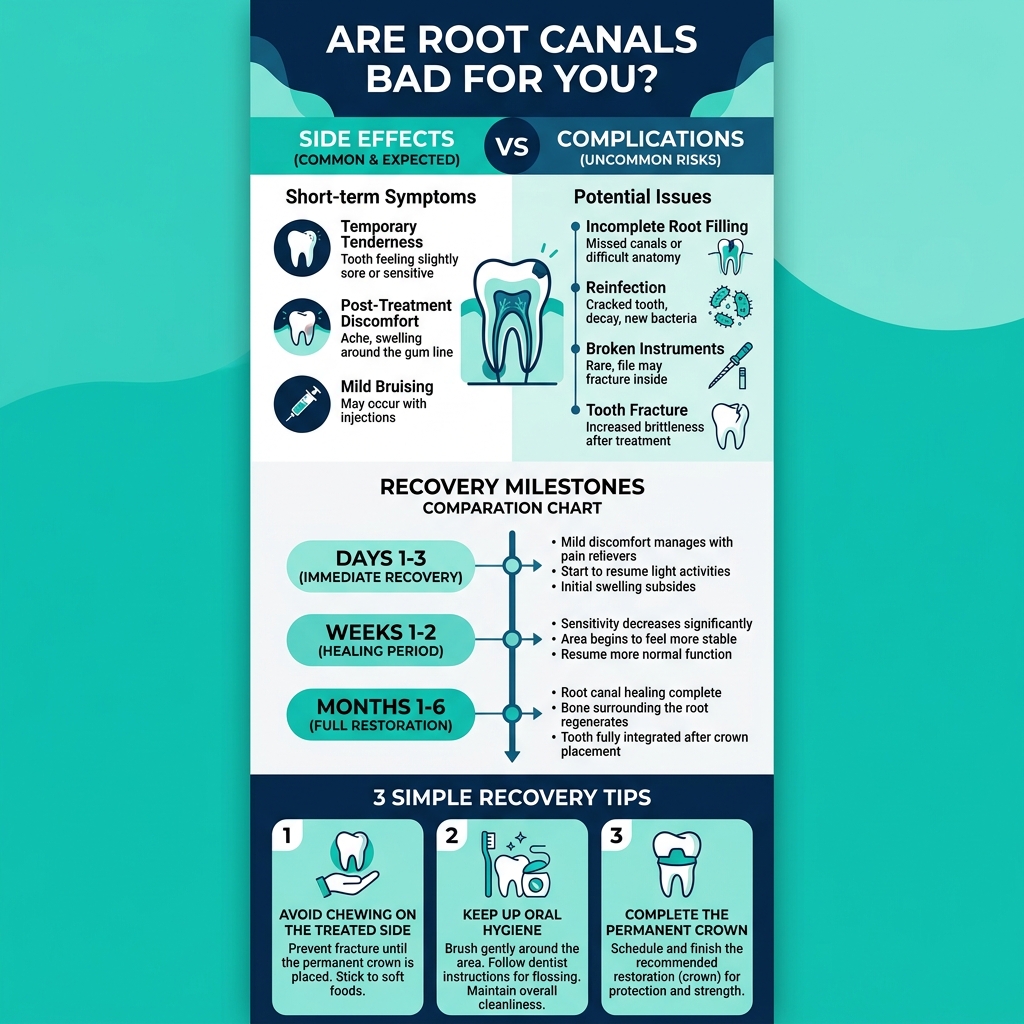
Table of Contents
- What is a Root Canal and How Does It Feel?
- Common Side Effects After treatment (What is Normal?)
- Potential Complications (What is Abnormal?)
- How Complications are Treated (Retreatment)
- Recovery Tips: Caring for Your Treated Tooth
- Frequently Asked Questions (FAQs)
What is a Root Canal and How Does It Feel?
A root canal is a common endodontic treatment performed to save an infected or badly damaged tooth. During the procedure, the dentist removes the infected pulp (the soft tissue inside the tooth containing nerves and blood vessels), cleans and disinfects the root canal space, and fills it with a biocompatible material called gutta-percha. With modern local anesthetics, the treatment itself is virtually painless, feeling very similar to getting a standard dental filling.
Common Side Effects After treatment (What is Normal?)
Once the local anesthesia wears off, it is common to experience some mild discomfort. This is a normal response as your body heals around the treated area. Expected side effects include:
- Mild Soreness: A dull ache in the tooth or surrounding gums that peaks 24 to 48 hours after treatment and slowly fades.
- Gum Tenderness: Irritation around the injection site or the rubber dam clamp used during the procedure.
- Biting Sensitivity: Mild discomfort when biting or chewing on the treated tooth during the first few days.
Potential Complications (What is Abnormal?)
While root canals have a success rate of over 95%, complications can occasionally occur. Knowing how to differentiate expected healing from a potential problem is crucial:
| Symptom | Normal Recovery (Expected) | Abnormal Complication (Contact Doctor) |
|---|---|---|
| Pain Severity | Mild, manageable pain that responds well to over-the-counter pain relievers and decreases daily. | Severe, throbbing, or worsening pain that is not relieved by painkillers. |
| Swelling | No visible swelling, or very minor gum irritation. | Visible swelling in the gums, face, or neck. |
| Duration | Symptoms improve consistently and resolve within 3 to 5 days. | Symptoms persist or worsen after a week. |
How Complications are Treated (Retreatment)
If a root canal fails or a complication occurs (such as a microscopic canal being missed or a crack developing), the tooth is not necessarily lost. In most cases, the infection can be successfully treated with a Root Canal Retreatment. During this procedure, the endodontist reopens the tooth, removes the previous filling material, thoroughly cleans and sterilizes the entire canal system, and seals it again. Retreatment is a highly effective way to salvage the tooth and avoid extraction.
Recovery Tips: Caring for Your Treated Tooth
To ensure a smooth recovery and minimize any post-operative discomfort, follow these simple care guidelines:
- Avoid Chewing: Do not chew or bite on the treated tooth until your permanent restoration (crown or filling) is placed. This prevents the temporary filling from cracking.
- Soft Diet: Stick to soft foods like yogurt, soup, mashed potatoes, and pasta for the first 24 to 48 hours.
- Maintain Hygiene: Continue brushing and flossing regularly to keep the area clean, but be gentle around the treated tooth.
Frequently Asked Questions (FAQs)
1. Are root canals bad for you?
No, root canals are a safe and necessary dental procedure to save an infected tooth. The risk of complications is extremely low, and the benefits of keeping your natural tooth are high.
2. What are the side effects of a root canal?
Normal side effects include mild soreness, sensitivity to biting, and temporary gum tenderness. These typically resolve within 3 to 5 days.
3. How do I know if my root canal is failing?
Signs of a failing root canal include severe, persistent pain, swelling in the gums, a pimple-like bump near the tooth, or sensitivity that lasts for weeks.
4. What happens if a root canal fails?
If a root canal fails, it can usually be corrected with a root canal retreatment, which cleans and reseals the tooth to preserve it.
5. Are same-day root canals safer?
Yes, single-visit root canals are highly safe and effective, reducing the risk of contamination between visits by cleaning and sealing the tooth in a single appointment.
Comments are closed