
Undergoing a root canal is intended to relieve excruciating tooth pain and eliminate deep dental infections. However, if you or a loved one begins feeling warm, shivery, or unwell following treatment, you might immediately worry: can root canal cause fever, and is developing a fever normal after endodontic therapy?
The clear clinical answer is that a true fever—defined as a body temperature of 100.4°F (38°C) or higher—is NOT a normal or expected side effect of a root canal. While localized soreness or a very mild low-grade temperature elevation (under 99.5°F / 37.5°C) can occasionally arise within the first 24 to 48 hours as the immune system responds to tissue manipulation, a genuine fever accompanied by chills, throbbing pain, or facial swelling indicates an active or spreading bacterial infection that requires prompt dental evaluation.
Key Takeaways: Root Canals and Post-Treatment Fever
- Fever Is a Warning Sign: Mild jaw soreness for 2 to 4 days is standard healing, but a high or persistent fever indicates bacterial proliferation beyond the tooth root.
- Common Underlying Triggers: A pre-existing severe periapical abscess, a post-op “flare-up” (phoenix abscess), missed microscopic canals, or leaking temporary fillings can trigger fever.
- Red Flag Symptoms: Fever exceeding 101°F, visible facial swelling, difficulty swallowing, or trouble breathing are serious dental emergencies requiring immediate hospital or specialist care.
- Predictable Resolution: Proper antibiotic therapy, drainage, or specialized root canal retreatment can completely eradicate the infection and preserve your natural tooth.
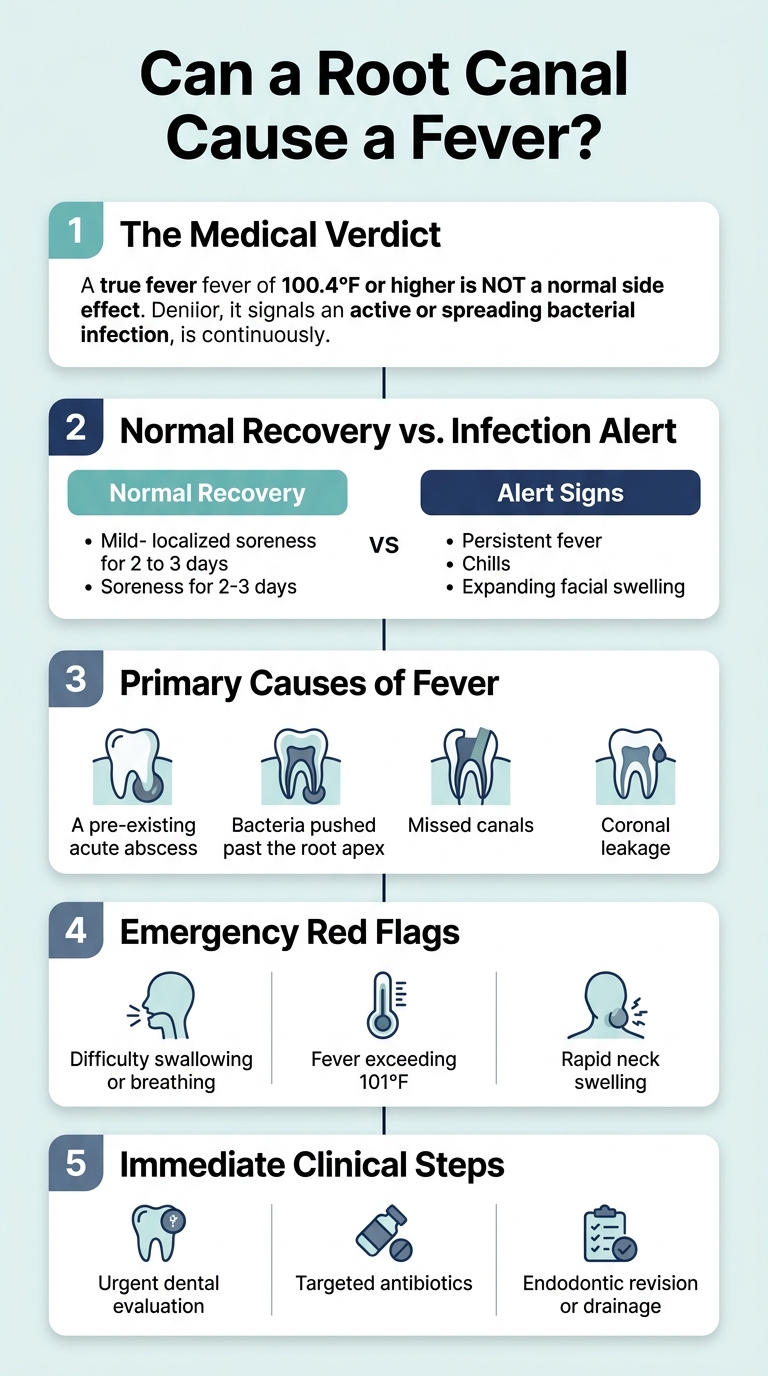
Table of Contents
- Is a Fever Normal After a Root Canal?
- Primary Reasons for a Post-Treatment Fever
- Normal Recovery vs. Infection Alert: Comparison Table
- Red Flag Symptoms: When to Seek Immediate Medical Help
- Action Steps: What to Do If You Develop a Fever
- Resolving Persistent Infections with Endodontic Retreatment
- Preventing Complications with Elite Dermadent
- Frequently Asked Questions
Is a Fever Normal After a Root Canal?
To understand why a fever occurs, it helps to distinguish between local post-operative inflammation and systemic infection. During root canal therapy, an endodontist thoroughly cleans, disinfects, and shapes the microscopic root canals inside your tooth. Because instruments work down to the root tip (the apex), the surrounding periodontal ligament experiences mild mechanical irritation.
This localized irritation can cause:
- Mild to moderate tenderness when chewing or tapping on the tooth.
- Slight jaw ache or stiffness near the injection site.
- A short-lived, low-grade temperature increase (under 99.5°F) that resolves within 24 hours.
However, a temperature of 100.4°F (38°C) or higher is the body’s systemic response to pyrogens released by replicating bacteria. If you develop a true fever after a root canal, bacteria are actively multiplying in the surrounding alveolar bone or soft tissues, signaling that the infection was not fully suppressed or has flared up.
Primary Reasons for a Post-Treatment Fever
When asking can root canal cause fever, it is important to realize that the root canal procedure itself doesn’t generate bacteria—it eradicates them. However, specific clinical conditions can trigger a fever following treatment:
- Pre-Existing Severe Periapical Abscess:
In many instances, the tooth was already housing a massive bacterial infection with a large periapical lesion (bone abscess) before the procedure started. The fever may simply be the continuation of an aggressive, pre-existing systemic infection that requires systemic antibiotics alongside dental treatment.
- Endodontic “Flare-Up” (Phoenix Abscess):
In roughly 2% to 5% of root canal treatments, an acute exacerbation occurs within 24 to 48 hours of treatment. Cleaning the canals alters the microbial ecosystem, shifts the balance between anaerobic bacteria and host defenses, or pushes microscopic debris past the root apex (apical extrusion), provoking an acute inflammatory flare-up with pain, swelling, and fever.
- Missed Accessory or Curved Canals:
Molars and premolars often have complex anatomical variations, such as curved roots, fins, isthmuses, or extra canals (like the hidden MB2 canal in upper first molars). If an accessory canal is left untreated, surviving bacteria multiply and migrate into the periapical tissues, causing a localized abscess and fever.
- Salivary Contamination or Lost Temporary Seal:
If the temporary filling cracks, chips, or falls out between appointments, saliva and mouth bacteria immediately repopulate the sterile canals, triggering a rapid reinfection.
Normal Recovery vs. Infection Alert: Comparison Table
Use the comparison table below to determine whether your symptoms represent expected healing or a post-treatment infection:
| Symptom Indicator | Expected Post-Op Recovery | Active Bacterial Infection Alert |
|---|---|---|
| Body Temperature | Normal (98.6°F) or slight low-grade elevation (<99.5°F) for <24 hrs | True fever (100.4°F / 38°C or higher) with chills/sweats |
| Pain Characteristics | Dull, bruised feeling when biting; steadily decreases daily | Intense, throbbing, radiating pain that worsens over time |
| Facial & Gum Swelling | None, or minor localized gum sensitivity near the tooth | Expanding swelling in the cheek, jawline, neck, or gum abscess (pimple) |
| Duration of Symptoms | Resolves completely within 2 to 5 days | Persists or spikes suddenly several days or weeks later |
| Response to Medication | Easily relieved with standard OTC ibuprofen or paracetamol | Fever or severe pain breaks through analgesics within hours |
Red Flag Symptoms: When to Seek Immediate Medical Help
While most post-treatment infections can be safely handled by your endodontist with targeted antibiotics or drainage, certain symptoms indicate that the infection is spreading into critical anatomical spaces (such as the submandibular or retropharyngeal spaces). Seek emergency medical care immediately if you notice:
- Difficulty Swallowing (Dysphagia) or Breathing (Dyspnea): Indicates swelling in the floor of the mouth or throat (a life-threatening condition called Ludwig’s Angina).
- Inability to Fully Open the Mouth (Trismus): Infection spreading into the masticatory muscle spaces.
- Swelling Spreading Toward the Eye or Down into the Neck: Sign of spreading facial cellulitis.
- High Fever Exceeding 102°F (38.9°C), Confusion, or Extreme Lethargy: Warning signs of systemic sepsis.
Action Steps: What to Do If You Develop a Fever
If your temperature reaches 100.4°F or higher after a root canal, follow these proactive clinical steps:
- Contact Your Dentist or Endodontist Immediately: Never wait for a dental fever to resolve on its own. Notify your provider right away so they can adjust your treatment plan.
- Take an Antipyretic / Analgesic: Over-the-counter paracetamol (acetaminophen) or ibuprofen can help lower your temperature and reduce inflammatory swelling temporarily while you arrange your visit.
- Do NOT Rely Solely on Leftover Antibiotics: Never self-prescribe leftover antibiotics. Only an endodontist can determine the exact microbial strain, verify if surgical drainage is needed, and prescribe the appropriate targeted antibiotic (such as amoxicillin-clavulanate or clindamycin).
- Rinse Gently with Warm Salt Water: Dissolve half a teaspoon of salt in warm water and rinse gently 3 to 4 times a day to soothe inflamed oral tissues and encourage drainage if a localized gum boil is present.
Resolving Persistent Infections with Endodontic Retreatment
When an active infection and fever are caused by bacteria lingering inside complex or missed canals, antibiotic pills alone provide only temporary relief. Once the medication stops, the bacteria repopulate.
Definitive resolution requires specialized root canal retreatment in Thane. During retreatment, the endodontist removes the existing crown and root filling material, navigates curved or calcified canals under high optical magnification, flushes the entire canal system with ultrasonic antimicrobial irrigants, and places a therapeutic antibacterial paste (such as calcium hydroxide) before hermetically resealing the tooth.
Preventing Complications with Elite Dermadent
Minimizing the risk of post-operative flare-ups requires strict adherence to sterile protocols, anatomical precision, and modern endodontic technology. At Elite Dermadent, restorative and endodontic care is spearheaded by Dr. Saurabh Pakhale, an experienced dental surgeon dedicated to patient safety and painless clinical results.
Dr. Pakhale employs sterile rubber dam isolation on every procedure to prevent saliva contamination, computerized electronic apex locators to avoid over-instrumentation into surrounding bone, and high-frequency rotary instrumentation to ensure complete canal disinfection. Whether you need an urgent evaluation for persistent discomfort or a gentle root canal treatment in Thane, our team ensures your smile heals safely, quickly, and completely.
Frequently Asked Questions
Is it normal to have a slight fever the day after a root canal?
A mild, low-grade temperature below 99.5°F (37.5°C) within the first 24 hours can occur as a temporary immune reaction to procedural tissue manipulation. However, a fever of 100.4°F (38°C) or higher is not normal and indicates an active bacterial infection that requires dental attention.
Can an infected tooth cause a fever before a root canal is done?
Yes. When dental decay reaches the pulp and creates an acute periapical abscess in the jawbone, bacteria and their toxins often cause systemic symptoms including fever, chills, fatigue, and swollen lymph nodes.
What does it mean if my root canal tooth throbs and I have a fever?
The combination of a throbbing toothache and a fever strongly indicates an acute endodontic flare-up or spreading abscess at the root tip. You should contact your dental specialist immediately for clinical drainage or prescription antibiotics.
Will antibiotics alone cure a fever caused by a root canal infection?
No. Antibiotics help control systemic bacterial spread and lower your fever, but they cannot penetrate inside the non-vital tooth where bacteria reside. The infection will return unless the tooth undergoes definitive cleaning via root canal retreatment or drainage.
How long does an endodontic flare-up last?
With prompt dental intervention, prescription antibiotics, and localized drainage or canal debridement, acute flare-up symptoms—including pain, swelling, and fever—typically begin resolving within 24 to 48 hours.
No responses yet