
Experiencing severe tooth pain, throbbing sensitivity, or swelling during pregnancy can be overwhelming. Expectant mothers often worry about whether dental interventions might harm their developing baby, leading many to ask: can root canal be done during pregnancy, and is it safe for both mother and child?
The short and reassuring answer is yes, a root canal can safely and effectively be done during pregnancy. Leading maternal and dental healthcare organizations—including the American College of Obstetricians and Gynecologists (ACOG) and the American Dental Association (ADA)—confirm that dental treatment is safe and necessary during pregnancy. In fact, leaving an infected tooth untreated poses far greater health hazards to both mother and baby than receiving professional endodontic therapy.
Key Takeaways: Root Canal Safety During Pregnancy
- Treating Infection Is Essential: An untreated dental abscess can release bacteria into the bloodstream, triggering systemic inflammation and increasing risks of pre-term delivery or low birth weight.
- Second Trimester Is Optimal: While emergency dental relief can be administered during any trimester, the second trimester (weeks 14 to 27) is the ideal clinical window for routine and complex procedures.
- Digital X-Rays Are Completely Safe: Modern digital dental radiography paired with a protective lead apron and thyroid shield delivers virtually zero radiation to the reproductive organs or abdomen.
- Safe Anesthesia & Medications: Obstetric-approved local anesthetics (like Lidocaine) and pregnancy-safe analgesics (such as acetaminophen) ensure a painless, stress-free procedure.
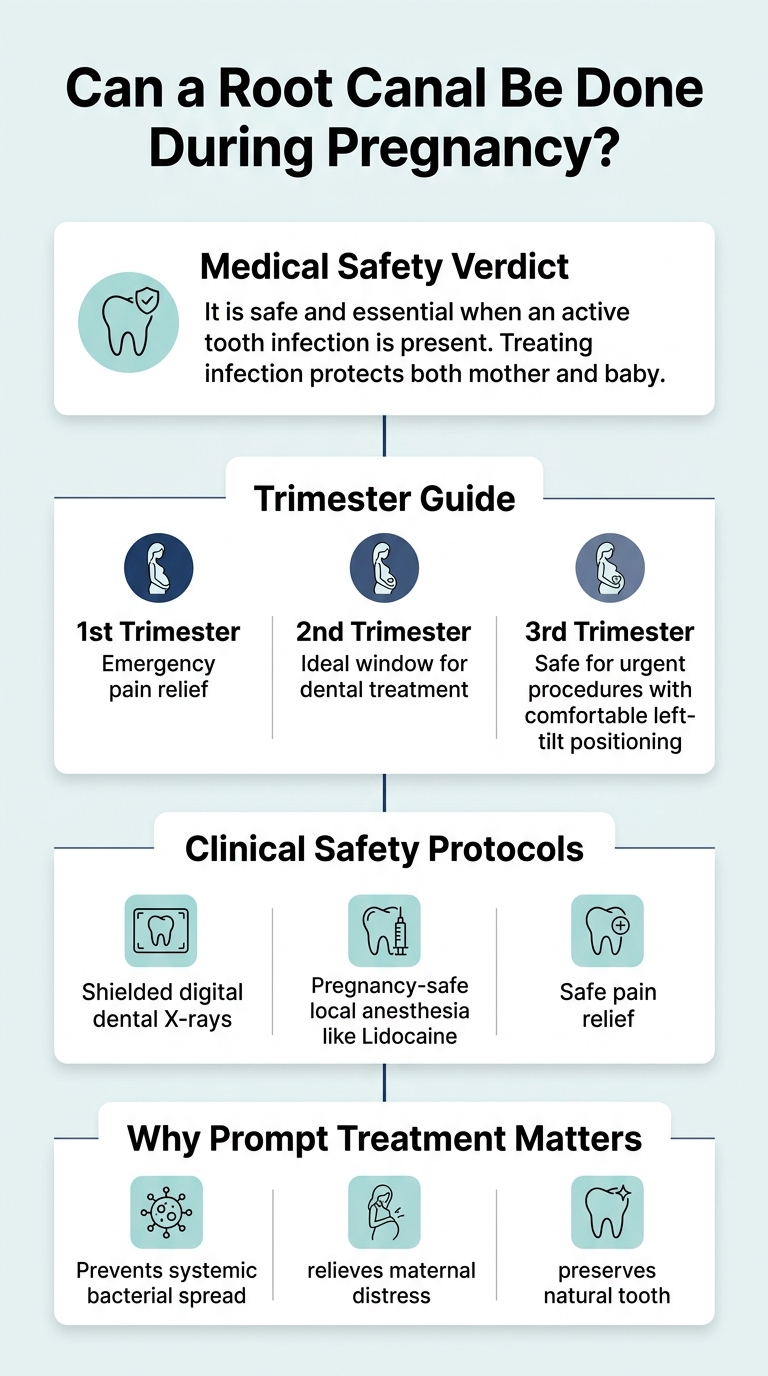
Table of Contents
- Why Untreated Dental Infections Are Risky During Pregnancy
- Trimester-by-Trimester Guide for Root Canal Treatment
- Addressing Common Fears: X-Rays, Anesthesia & Medications
- Comparison: Root Canal vs. Extraction vs. Postponing Treatment
- What If an Old Root Canal Fails During Pregnancy?
- Expert Endodontic Care at Elite Dermadent
- Frequently Asked Questions
Why Untreated Dental Infections Are Risky During Pregnancy
Pregnancy triggers significant hormonal shifts—notably surges in estrogen and progesterone—which increase blood flow to gum tissues, suppress certain immune responses, and heighten susceptibility to bacterial proliferation. Morning sickness and dietary changes can also accelerate enamel erosion and dental decay.
When decay breaches the outer enamel and dentin layers, bacteria invade the inner dental pulp, causing acute pulpitis or a periapical abscess. When patients wonder can root canal be done during pregnancy, they often overlook the severe dangers of postponing care:
- Systemic Spread of Infection: Oral bacteria from a dental abscess can enter the maternal bloodstream (bacteremia), causing elevated cytokine and prostaglandin production, which has been linked in clinical studies to premature uterine contractions and low birth weight.
- Uncontrolled Pain & Maternal Stress: Severe dental pain triggers prolonged releases of maternal cortisol and adrenaline, which places unnecessary physiological stress on the unborn child.
- Facial Cellulitis: Dental infections do not resolve on their own; left unchecked, infection can spread into the jawbone, deep neck spaces, or facial tissues, requiring emergency surgical hospitalization.
Trimester-by-Trimester Guide for Root Canal Treatment
Timing plays an important role in maternal comfort and dental management:
First Trimester (Weeks 1 to 13)
The first trimester is the critical period of fetal organogenesis (organ development), during which many expectant mothers also experience morning sickness and fatigue. Routine elective dental treatments (such as cosmetic smile design or teeth whitening) should be postponed. However, if an acute toothache or active infection arises, dentists can perform a palliative pulpectomy or emergency root canal opening to extirpate the infected nerve, alleviate pain, and eliminate infection safely.
Second Trimester (Weeks 14 to 27) — The Golden Window
The second trimester is widely recognized by obstetricians and endodontists as the safest and most comfortable time for a root canal. Organogenesis is complete, fetal vulnerability is low, nausea has typically subsided, and the mother’s abdomen is not yet large enough to cause discomfort while reclining in the dental chair.
Third Trimester (Weeks 28 to 40)
Emergency root canal procedures remain safe during the third trimester. The primary consideration is physical comfort. Reclining fully flat on the back can cause the enlarged uterus to compress the inferior vena cava (supine hypotensive syndrome), causing dizziness or drop in blood pressure. Endodontists accommodate mothers by adjusting the dental chair to a semi-reclined position and placing a small pillow beneath the right hip to tilt the body slightly to the left.
Addressing Common Fears: X-Rays, Anesthesia & Medications
| Component | Safety Status During Pregnancy | Clinical Protocol & Safeguards |
|---|---|---|
| Digital Dental X-Rays | Completely Safe | Digital sensors require 80% less radiation than traditional film. A lead apron with thyroid collar shields the abdomen and neck entirely. |
| Local Anesthesia (Lidocaine) | Safe (FDA Category B) | Lidocaine with low-dose epinephrine is standard of care. It acts locally to numb the tooth completely without entering systemic circulation. |
| Prescribed Antibiotics | Safe (Penicillins / Cephalosporins) | Amoxicillin, penicillin, or clindamycin are safe options if bacterial infection has spread to surrounding tissues. Tetracyclines are strictly avoided. |
| Post-Op Pain Relief | Safe (Acetaminophen) | Acetaminophen (Paracetamol) is recommended for post-treatment soreness. NSAIDs like ibuprofen or aspirin are avoided, particularly in the 3rd trimester. |
Comparison: Root Canal vs. Extraction vs. Postponing Treatment
When severe toothache strikes during pregnancy, patients often weigh their choices between saving the tooth, extracting it, or waiting until after delivery:
| Action | Impact on Tooth & Jaw | Impact on Pregnancy & Baby |
|---|---|---|
| Root Canal Treatment (Recommended) | Preserves natural tooth, prevents bone resorption, maintains chewing function. | Quickly stops bacterial infection and eliminates maternal pain stress safely. |
| Tooth Extraction | Loss of natural tooth, bone loss in jaw, requires expensive future implant/bridge. | Surgical trauma, open socket wound, risk of dry socket, higher post-op pain. |
| Postponing Treatment | Infection deepens, destroys jawbone, tooth becomes non-restorable. | High Risk: Continuous bacteremia, intense systemic stress, potential pregnancy complications. |
What If an Old Root Canal Fails During Pregnancy?
Sometimes, tooth pain during pregnancy isn’t caused by a new cavity, but rather by an old, pre-existing root canal that has developed a secondary infection beneath a crown or restoration. Hormonal shifts and immune fluctuations can awaken dormant bacteria inside complex, hidden root canals.
In such instances, specialized root canal retreatment in Thane is performed. An endodontist gently removes the previous filling material, cleans and disinfects previously untreated or calcified accessory canals using advanced magnification, and reseals the tooth to eliminate persistent bacterial colonization.
Expert Endodontic Care at Elite Dermadent
Receiving dental care while pregnant requires precision, gentleness, and clear medical coordination. At Elite Dermadent, endodontic and restorative procedures are led by Dr. Saurabh Pakhale, an experienced dental surgeon dedicated to patient-first, painless clinical care.
Dr. Pakhale utilizes state-of-the-art rotary endodontic systems, digital apex locators, and ultra-low radiation diagnostic sensors, ensuring treatments are swift, comfortable, and tailored to the unique physical needs of expectant mothers. If you or a loved one is experiencing persistent tooth pain during pregnancy, discover how our gentle root canal treatment in Thane can safely restore your dental health and peace of mind.
Frequently Asked Questions
Is it safe to get dental anesthesia while pregnant?
Yes. Local anesthesia such as Lidocaine (FDA Category B) is completely safe during pregnancy. It numbs only the targeted tooth and does not harm the baby. Preventing pain is crucial because untreated pain causes maternal stress and blood pressure spikes that can negatively impact fetal well-being.
Will dental X-rays hurt my baby?
No. Digital dental X-rays produce extraordinarily low levels of radiation focused exclusively on the jaw. When combined with a lead apron and thyroid collar, radiation exposure to the pelvic and abdominal region is practically zero.
Which trimester is best for a root canal?
The second trimester (weeks 14 through 27) is the ideal time for root canal therapy because fetal organogenesis is complete and the mother can comfortably recline in the dental chair. However, severe infections should never wait; they can and must be treated immediately in any trimester.
Can a dental infection cause miscarriage or premature labor?
Severe, untreated dental abscesses can allow oral pathogens to enter the bloodstream, triggering systemic inflammatory cytokines and prostaglandins that have been clinically associated with an increased risk of preterm labor and low birth weight. Prompt root canal treatment eliminates this threat.
What pain relief is safe after a root canal during pregnancy?
Acetaminophen (Paracetamol) is the safest and primary recommended pain reliever during pregnancy. Non-steroidal anti-inflammatory drugs (NSAIDs) such as ibuprofen, naproxen, or aspirin should be avoided, especially in the third trimester, unless specifically directed by your obstetrician.
No responses yet