
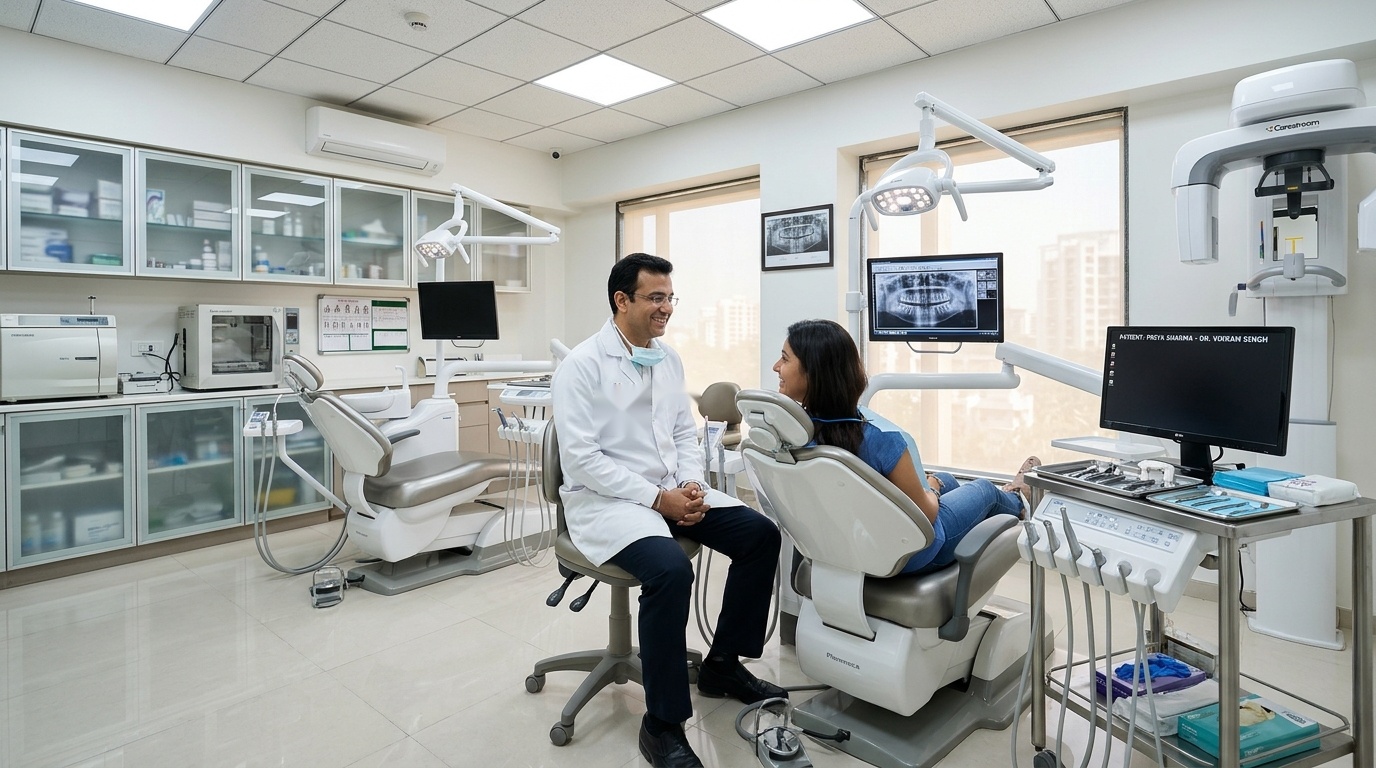
If your dentist recently informed you that you need endodontic therapy, you might be asking: where is root canal treatment done? Root canal treatment is performed in a specialized outpatient dental operatory or dedicated endodontic clinic by an experienced dentist or specialist endodontist. Unlike major medical surgeries, root canal therapy does not require a hospital admission, general operating room, or overnight stay. With modern clinical equipment, local anesthesia, and digital precision tools, the entire procedure is comfortably completed in a specialized dental chair within 30 to 60 minutes.
Key Takeaways:
- Outpatient Dental Operatory: Root canals are routine outpatient procedures performed right in a high-tech dental operatory chair.
- Specialist Endodontic Setting: Complex root systems, calcified canals, and retreatments are best handled in clinics equipped with digital apex locators and rotary endodontics.
- Advanced Clinical Tech: Essential operatory tools include digital sensor radiography (RVG), electronic apex locators, rubber dam isolation kits, and bioceramic sealers.
- Same-Day Return to Normal Life: Because localized anesthesia is used, patients walk out immediately and can resume light daily activities the very same day.
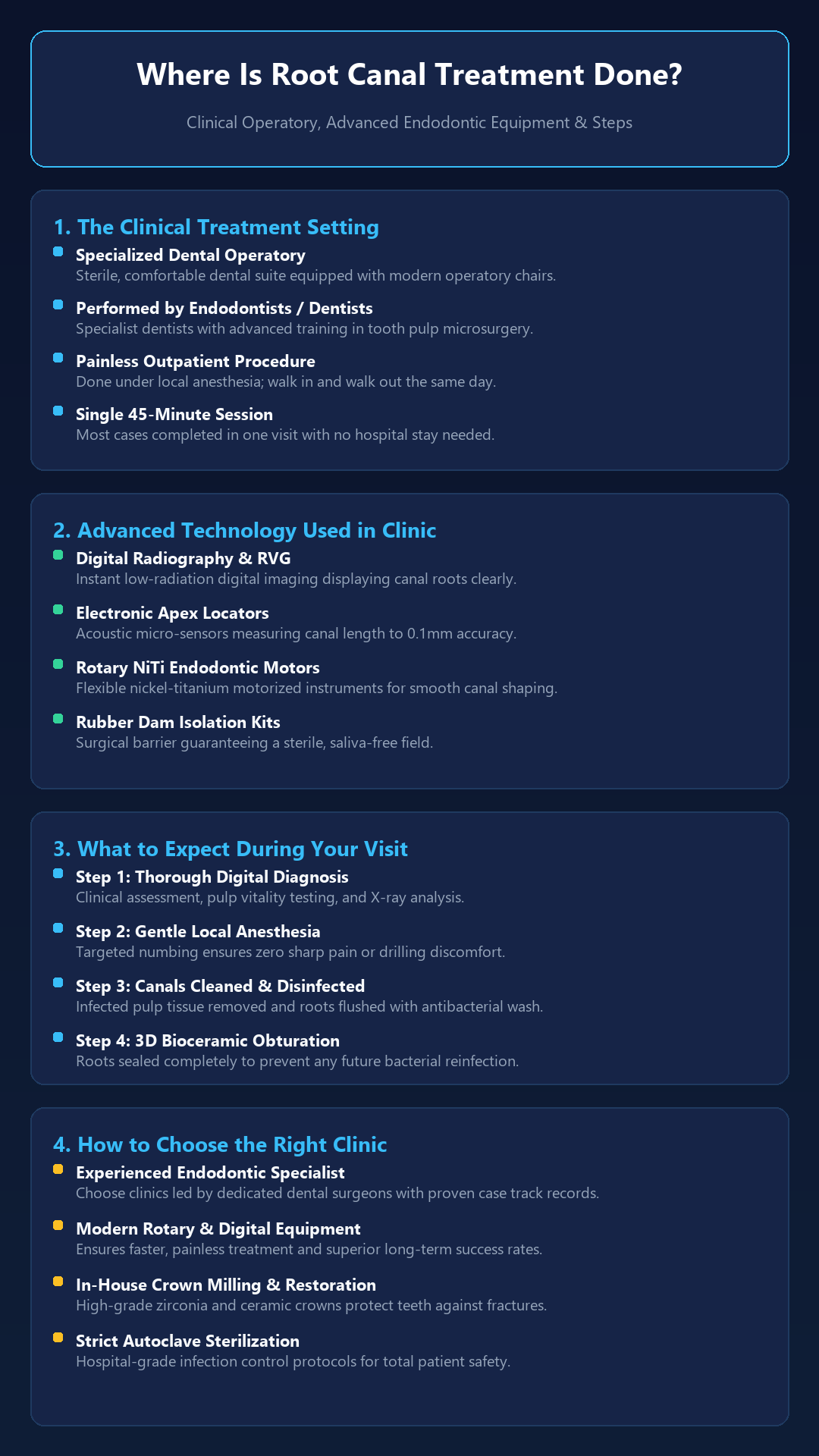
Table of Contents
- The Modern Dental Operatory: Where Endodontic Magic Happens
- Key Clinical Equipment Found in an Advanced Endodontic Suite
- General Dental Clinic vs. Specialist Endodontic Setup
- Step-by-Step: The Patient Journey in the Treatment Chair
- Where Are Complex Cases and Failed Root Canals Handled?
- Specialized Root Canal Care at Elite Dermadent in Thane
- Frequently Asked Questions (FAQs)
The Modern Dental Operatory: Where Endodontic Magic Happens
Many patients initially fear that a root canal resembles an invasive hospital operation. In reality, where root canal treatment is performed is an ergonomic, sterile private dental operatory designed specifically for patient relaxation and micro-level clinical precision.
Modern dental operatories feature state-of-the-art dental chairs equipped with fiber-optic illumination, micro-motor delivery units, high-volume evacuation suction, and digital diagnostic monitors right at eye level. This outpatient setting allows you to walk in for your scheduled appointment and leave 45 minutes later with the tooth fully preserved and the infection neutralized.
Key Clinical Equipment Found in an Advanced Endodontic Suite
A clinic performing world-class endodontics relies on several sophisticated technological instruments to achieve predictable, painless outcomes:
- Digital Radiovisiography (RVG): Instantaneous digital sensors capture root canal anatomy with up to 80% lower radiation exposure than traditional film X-rays, appearing directly on chairside screens.
- Electronic Apex Locators: Precision electronic devices measure the exact micro-distance to the physiological root tip (apical foramen) with 97%+ accuracy, preventing over-instrumentation.
- Rotary Nickel-Titanium (NiTi) Motors: Motorized, flexible NiTi instruments glide along curved root channels, thoroughly cleaning bacterial debris in minutes compared to rigid manual steel hand files.
- Rubber Dam Isolation Barrier: A sterile silicone or latex sheet placed over the tooth, shielding it from oral bacteria and saliva while preventing irrigating solutions from reaching your throat.
- Sonic / Ultrasonic Disinfection Units: Generates micro-acoustic cavitation waves within irrigants to penetrate deep into microscopic dentinal tubules where bacteria conceal themselves.
- Thermoplastic 3D Obturation Systems: Injects warm bioceramic or gutta-percha sealers that conform perfectly to the complex 3D morphology of the root canal system.
General Dental Clinic vs. Specialist Endodontic Setup
While many general dentists perform straightforward single-canal incisor treatments, complicated multi-rooted molars or curved anatomy require the advanced setup of a dedicated endodontic practice:
| Feature / Capability | Standard Dental Setup | Advanced Endodontic Specialist Suite |
|---|---|---|
| Practitioner Expertise | General dental surgeon handling routine fillings & cleanings | Endodontic specialist with thousands of root canal completions |
| Canal Length Measurement | Manual tactile estimation & multiple 2D X-rays | Real-time multi-frequency Electronic Apex Locators |
| Instrumentation | Manual stainless steel hand files | Torque-controlled rotary NiTi reciprocating systems |
| Field Sterility | Cotton rolls / suction tips | Strict rubber dam isolation protocols |
| Handling Curved / Missed Canals | Higher risk of ledging or missing hidden branches (MB2) | High success rate in locating accessory canals & sharp curves |
Step-by-Step: The Patient Journey in the Treatment Chair
Understanding what happens during your appointment eliminates dental anxiety. Here is the standard clinical sequence inside the operatory:
- Comfortable Positioning & Digital Scans: You recline in the dental chair while localized digital X-rays confirm the exact location and extent of pulp necrosis.
- Profound Local Anesthesia: A gentle topical numbing gel is applied, followed by a targeted local anesthetic that numbs the tooth and nerve pathways completely. You feel zero sharpness or pain throughout the session.
- Rubber Dam Placement: The tooth is isolated, keeping the work zone sterile and dry.
- Micro-Access Cavity: A small opening is created through the biting surface to reach the pulp chamber.
- Canal Cleaning & Disinfection: Rotary micro-instruments smoothly debride infected nerve pulp, while warm antimicrobial washes flush out bacterial colonies.
- 3D Hermetic Sealing: Once fully sterilized, canals are filled with biocompatible gutta-percha and bioceramic cement.
- Coronal Restoration: The access cavity is sealed with a strong core composite, ready to receive a protective dental crown.
Where Are Complex Cases and Failed Root Canals Handled?
In rare situations where a previous root canal redevelops symptoms—often caused by narrow accessory canals, delayed crown placement, or microscopic fractures—specialized root canal retreatment is required. Retreatment involves disassembling previous filling materials, sterilizing unreached channels, and resealing the roots under high clinical precision.
Specialized Root Canal Care at Elite Dermadent in Thane
When selecting where to receive root canal therapy, clinical expertise and modern technology are paramount. At Elite Dermadent, treatments are led by Dr. Saurabh Pakhale, an accomplished dental surgeon recognized for painless endodontic techniques.
Equipped with class-leading rotary instrumentation, digital sensor radiography, and computerized apex locators, our center delivers premium, stress-free root canal treatment in Thane. Patients enjoy single-visit convenience, gentle anesthesia delivery, and long-lasting tooth preservation.
Frequently Asked Questions (FAQs)
1. Is root canal treatment done in a hospital or a dental clinic?
Root canal treatment is almost always done in an outpatient dental clinic or specialized endodontic office. Hospitalization is only considered in extremely rare cases involving severe, life-threatening facial cellulitis or patients requiring deep hospital sedation.
2. Can I drive home after having a root canal?
Yes. Because root canals are performed under local anesthesia rather than general sedation, your cognitive and motor reflexes remain completely normal, allowing you to drive home or back to work immediately.
3. How long does the appointment take in the dental chair?
Most root canal procedures are completed in a single 45 to 60-minute appointment. Extremely complex molar anatomies or severe active infections may occasionally be split across two 30-minute sessions.
4. Does root canal treatment hurt while sitting in the chair?
No. Thanks to modern local anesthetics and advanced delivery methods, the treated area is rendered completely numb. Most patients report feeling only gentle pressure and vibration, similar to receiving a standard dental filling.
5. Do I need to see a specialist endodontist or a general dentist?
General dentists can perform simple anterior tooth root canals. However, for multi-rooted molars, severe curvatures, calcified canals, or retreatments, seeing an experienced endodontist ensures higher precision and optimal long-term success.
No responses yet