
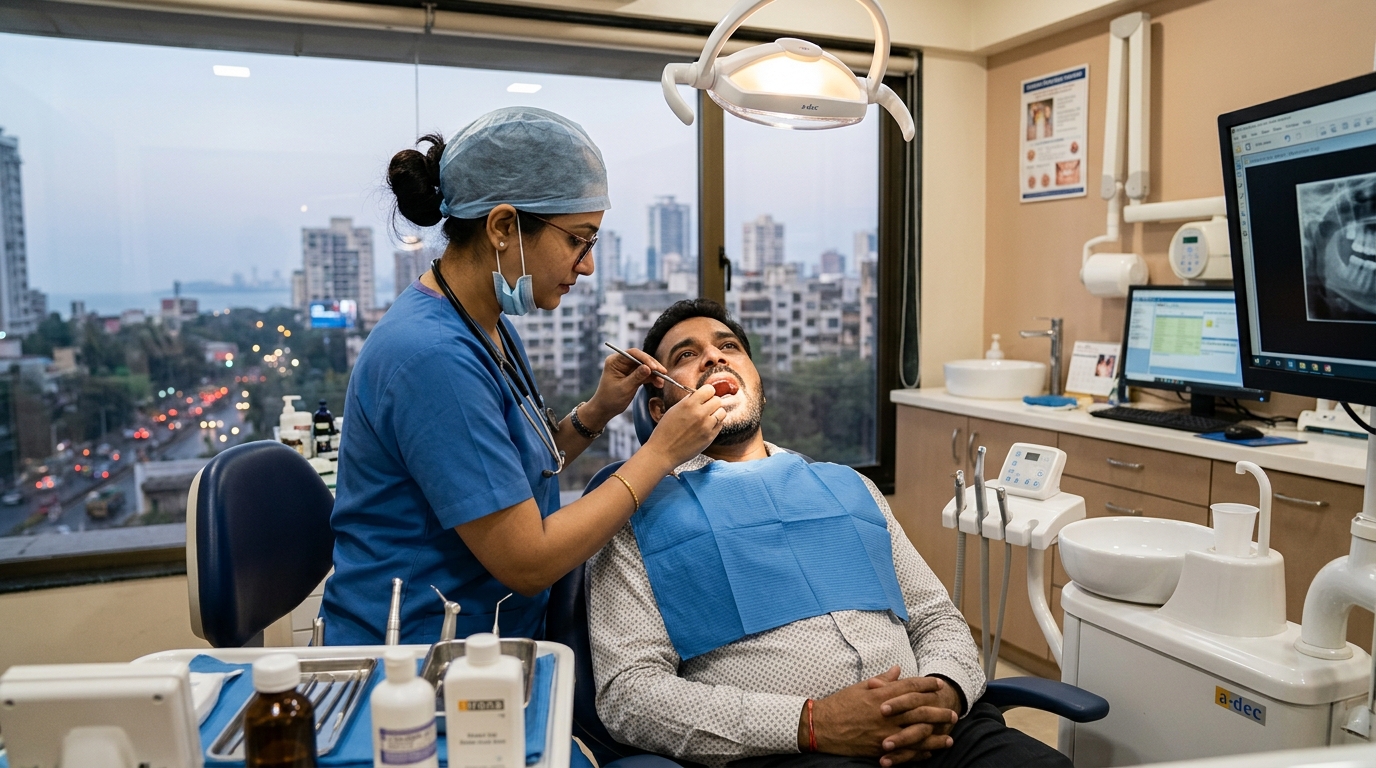
Undergoing endodontic therapy is meant to relieve agonizing toothaches, which makes it particularly confusing and concerning when patients wonder: why do root canal teeth hurt? If the living nerve inside the tooth has been completely removed, why do you still feel discomfort? The answer lies in the surrounding biology. While the internal nerve fibers of the tooth are gone, the surrounding periodontal ligaments, jawbone tissues, and gum structures can experience temporary inflammation. Understanding the difference between normal post-treatment healing soreness and persistent pain requiring clinical attention ensures complete peace of mind.
Key Takeaways:
- The Tooth Nerve Is Gone: Post-procedure pain does not come from inside the tooth; it arises from inflamed periodontal ligaments anchoring the root to the jawbone.
- Normal Recovery (24 to 72 Hours): Mild tenderness upon biting or chewing is standard as bone and gum tissues recover from prior deep bacterial infection.
- Common Temporary Triggers: A high bite on the temporary restoration or muscular soreness from holding the jaw open often causes easily rectifiable discomfort.
- Persistent Pain Causes: Throbbing pain lasting beyond 5 to 7 days may indicate an untreated microscopic canal branch, a hairline root fracture, or secondary leakage.
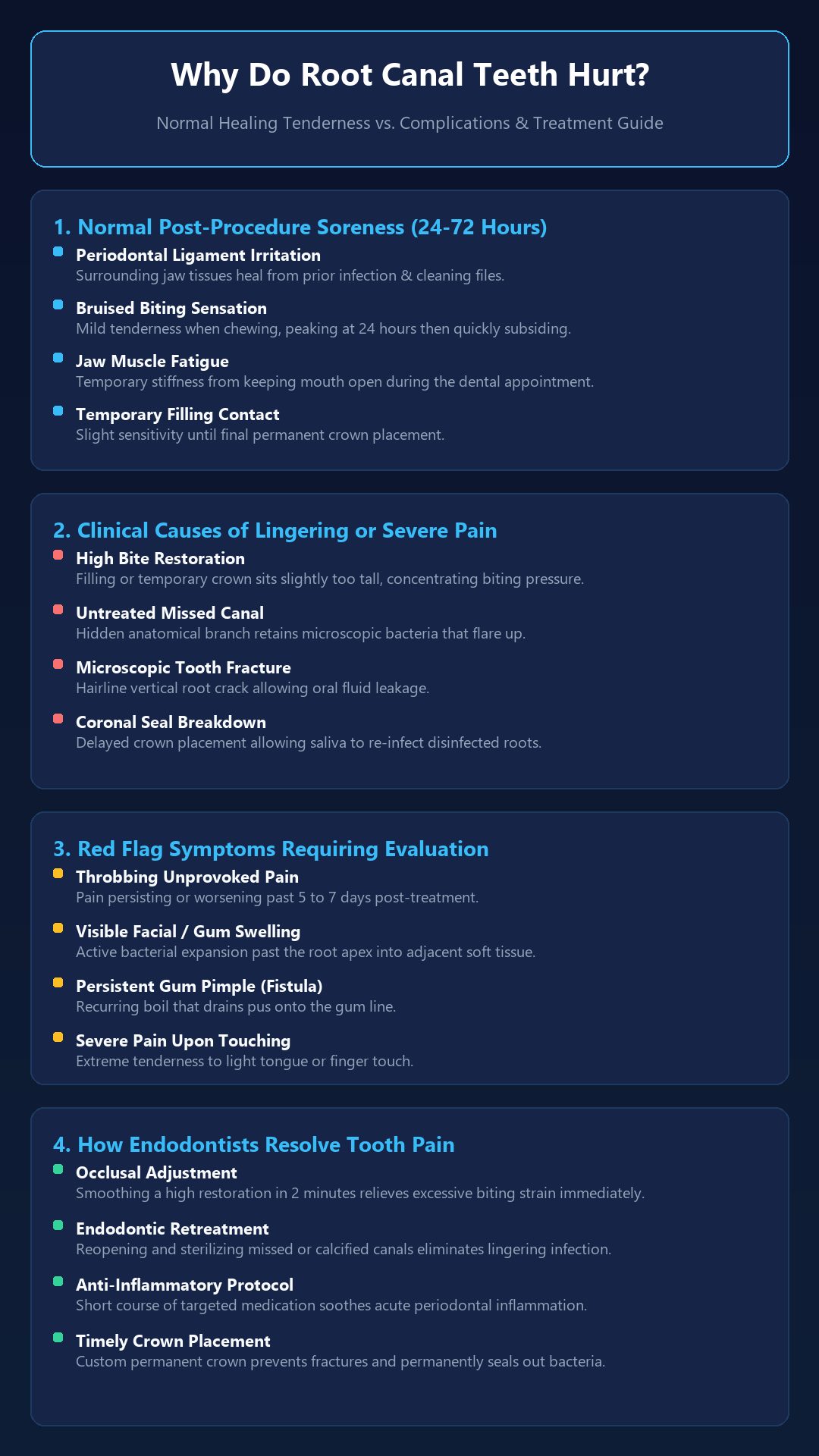
Table of Contents
- Biological Reality: How Can a Devitalized Tooth Still Hurt?
- Normal Healing Soreness: What to Expect in the First 72 Hours
- Top Clinical Causes of Lingering or Delayed Pain in Root Canal Teeth
- Red Flag Symptoms That Require Prompt Dental Evaluation
- Practical Steps to Relieve Post-Procedure Tenderness
- How Endodontists Treat and Resolve Persistent Pain
- Gentle, Precision Endodontics with Dr. Saurabh Pakhale
- Frequently Asked Questions (FAQs)
Biological Reality: How Can a Devitalized Tooth Still Hurt?
To understand why a tooth that has had a root canal can still feel sore, it helps to distinguish between the intrapulpal nerve and the periodontal nerve network.
During a root canal, the endodontist cleans and extracts the dental pulp—the soft internal tissue that registers hot and cold sensations. Once this nerve is removed, the tooth itself can never again feel temperature sensitivity. However, the outer surface of the root is suspended in the jawbone socket by millions of microscopic elastic fibers called the periodontal ligament (PDL). These external ligaments are packed with nerve receptors that sense pressure, biting force, and inflammation. When infection spills past the root apex, or when instruments gently navigate the canal tip during cleaning, the periodontal ligament becomes bruised and inflamed, generating pressure-related tenderness.
Normal Healing Soreness: What to Expect in the First 72 Hours
Mild post-operative sensitivity is a natural part of tissue recuperation. Clinical characteristics of normal healing include:
- Biting Tenderness: A mild “bruised” sensation when tapping the tooth with an opposing tooth or chewing firm food.
- Peak at 24 to 48 Hours: Discomfort usually peaks within the first 24 hours as local anesthesia completely fades and the body begins resolving local inflammation.
- Rapid Subsidence: By days 3 to 4, the tenderness should diminish noticeably, transitioning to complete comfort within a week.
- Responsive to Mild Analgesics: Normal soreness responds swiftly to routine anti-inflammatory medications like ibuprofen or paracetamol.
Top Clinical Causes of Lingering or Delayed Pain in Root Canal Teeth
If pain persists past the first week or returns months or years later, it generally points to one of several specific clinical factors:
| Cause of Pain | Clinical Mechanism | Solution & Resolution |
|---|---|---|
| High Bite (Occlusal Prematurity) | Temporary filling or crown sits fractionally too tall, concentrating chew force. | A 2-minute occlusal adjustment to polish down the high spot brings instant relief. |
| Missed or Curved Canal | A hidden anatomical root branch (such as MB2 in molars) retains residual bacteria. | Specialist microscopic retreatment cleans and hermetically seals the missed canal. |
| Over-Instrumentation / Over-Fill | Tiny amounts of sealer or irrigant extruded past root apex into bone. | Gradually resorbs; short-term anti-inflammatory therapy resolves inflammation. |
| Microscopic Root Fracture | Hairline crack in brittle tooth root allows chronic bacterial leakage. | Assessed via 3D CBCT imaging; irreparable vertical cracks may require extraction. |
Red Flag Symptoms That Require Prompt Dental Evaluation
While mild soreness is expected, you should contact your dentist immediately if you experience:
- Severe, Throbbing Unprovoked Pain: Pain that awakens you at night or does not lessen after taking prescribed analgesics.
- Visible Facial or Gum Swelling: A puffy cheek, lip, or localized swelling on the gum indicates expanding bacterial pressure.
- Gum Boil (Fistula): A pimple-like bump on the gum discharging yellowish fluid or blood.
- Allergic Reaction or Rash: Any swelling of the throat or hives following prescribed medications.
Practical Steps to Relieve Post-Procedure Tenderness
During the first few days of recovery, these evidence-based self-care steps promote rapid healing:
- Chew on the Opposite Side: Protect the treated tooth from heavy mechanical pressure until your permanent crown is seated.
- Take Anti-Inflammatory Medication: Over-the-counter NSAIDs (such as ibuprofen) specifically target periodontal ligament swelling far better than plain analgesics.
- Warm Salt Water Rinses: Dissolve half a teaspoon of salt in warm water and rinse gently three times a day to soothe surrounding gum margins.
- Avoid Hard or Sticky Foods: Prevent dislodging temporary fillings or cracking weakened tooth walls by avoiding ice, nuts, hard candy, and crusty bread.
How Endodontists Treat and Resolve Persistent Pain
If persistent discomfort occurs, dental science provides predictable diagnostic tools and interventions. A dentist will first check the bite using articulating paper to confirm that chewing pressure is balanced. If radiographic signs reveal lingering apical infection or complex root curvature, specialized root canal retreatment can reopen the tooth, dissolve old filling material, thoroughly sterilize deep canal branches under high-magnification illumination, and re-seal the root system to give the tooth a permanent clean bill of health.
Gentle, Precision Endodontics with Dr. Saurabh Pakhale
Experiencing discomfort after a root canal should never be a mystery. Under the clinical expertise of Dr. Saurabh Pakhale, Elite Dermadent specializes in advanced, painless root canal treatment in Thane.
Using digital apex locators, rotary endodontics, and custom aesthetic crowns, we ensure your treatment is comfortable, accurate, and protected for decades of natural chewing.
Frequently Asked Questions (FAQs)
1. Why does my tooth hurt when I bite down after a root canal?
Biting pain typically stems from inflammation in the periodontal ligament surrounding the root tip. Because this ligament has sensitive pressure sensors, the mechanical force of chewing transmits soreness into the jawbone until the tissues completely heal (usually 2 to 4 days).
2. How long is pain normal after root canal therapy?
Mild to moderate soreness is normal for 24 to 72 hours and should progressively decline each day. If significant throbbing pain persists past 5 to 7 days, you should schedule a check-up to evaluate the bite and canal anatomy.
3. Why does a tooth that had a root canal years ago start hurting?
Pain in an older root-canal-treated tooth is usually caused by secondary bacterial leakage from a cracked filling or loose crown, new decay along crown margins, or a delayed flare-up in a narrow, untreated accessory canal. Retreatment can cleanly resolve these issues.
4. Can a high filling cause severe root canal pain?
Yes. Even an elevation of just a fraction of a millimeter means the treated tooth strikes the opposing tooth before any other teeth touch when chewing. This constant premature impact severely bruises the periodontal ligament. A quick dental bite adjustment relieves this immediately.
5. Can antibiotics alone stop root canal tooth pain?
No. While antibiotics can temporarily control surrounding soft tissue swelling, they cannot penetrate the dead interior of a tooth root or correct an uneven bite. Physical evaluation and clinical treatment by an endodontist are necessary to address the root cause.
No responses yet