
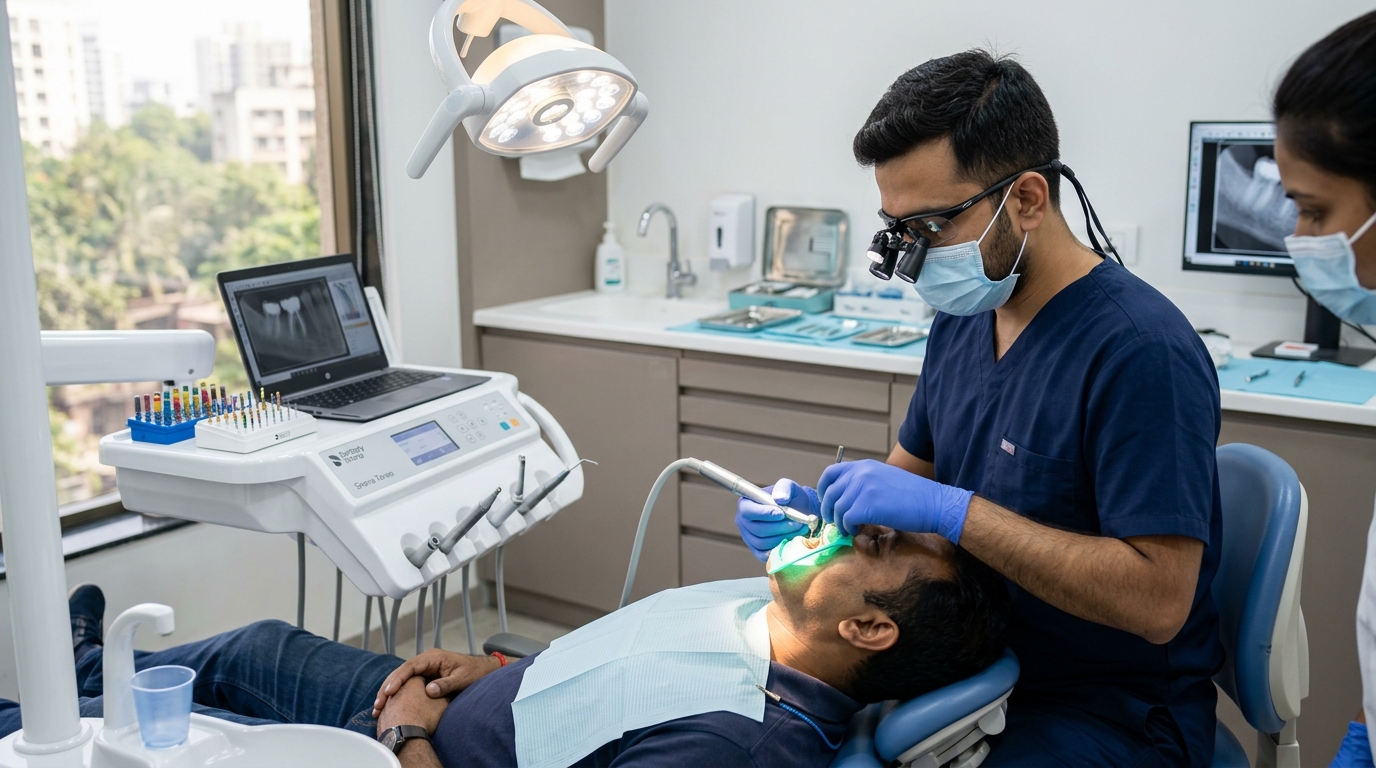
If you are facing an infected or aching tooth, asking can a root canal be done in one sitting is a common concern. Thanks to modern rotary endodontics, digital apex locators, and advanced biocompatible sealing materials, single-visit root canal treatment (single-sitting RCT) is now a routine, highly successful, and painless procedure completed in just 30 to 60 minutes.
Key Takeaways
- Single-Visit Convenience: Most non-abscessed teeth can be completely disinfected, shaped, and permanently sealed in a single 45-minute dental session.
- Advanced Rotary Technology: Motorized flexible nickel-titanium (NiTi) endodontic files clean complex root canals in a fraction of the time required by manual tools.
- One Anesthesia Injection: Single-sitting RCT eliminates the need for multiple numbing injections, temporary fillings, and recurring dental visits.
- High Success Rate: Clinical studies show that single-visit root canals achieve success rates equal to (or higher than) traditional multi-visit treatments when performed on suitable candidates.
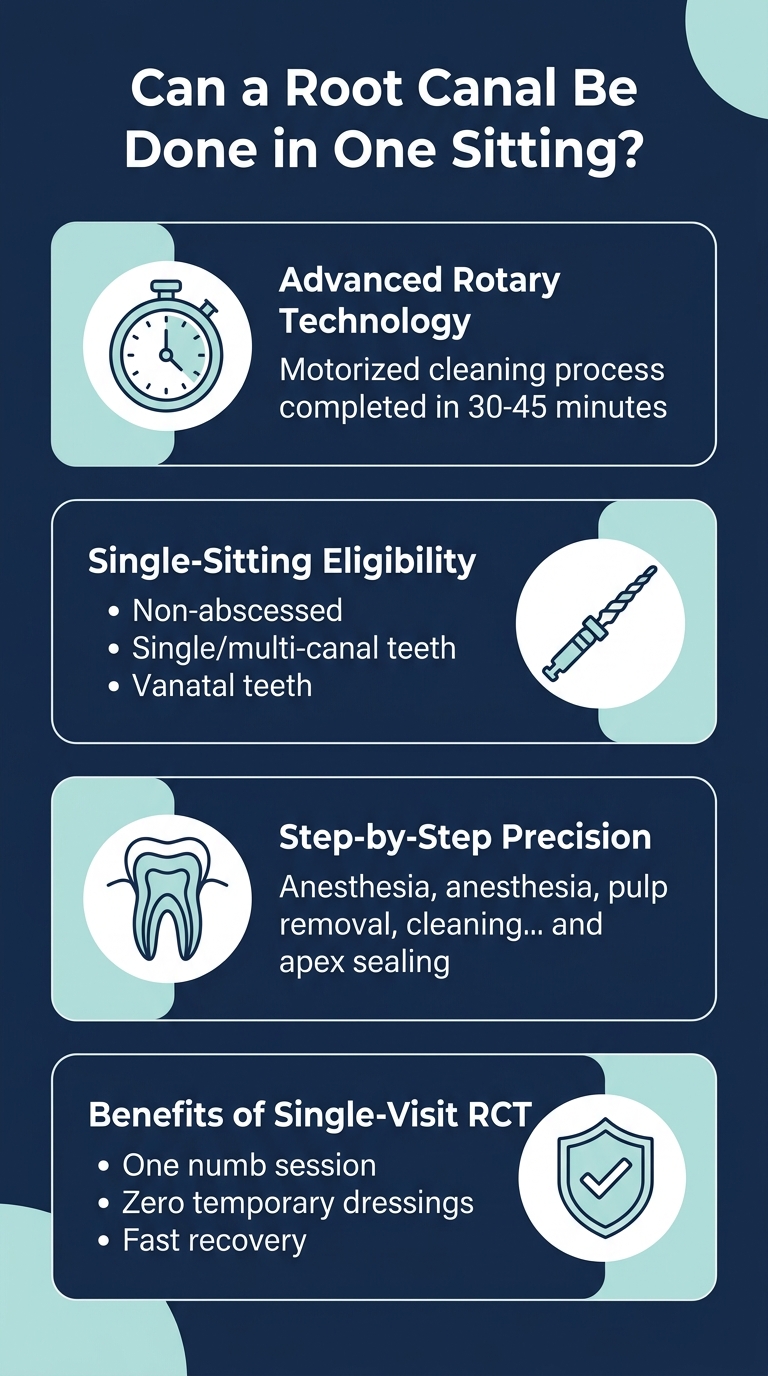
Table of Contents
- Can a Root Canal Be Done in One Sitting?
- Who Is Eligible for Single-Sitting RCT?
- Step-by-Step Single-Sitting Root Canal Process
- Single-Sitting RCT vs. Traditional Multi-Sitting RCT
- Expert Endodontic Care with Dr. Saurabh Pakhale
- Frequently Asked Questions
Can a Root Canal Be Done in One Sitting?
In the past, root canal treatment required 2 to 4 separate appointments spread across several weeks. Dentists had to clean canals manually with hand files, place temporary medicinal dressings, seal the cavity temporarily, and have the patient return multiple times to complete filling the root channels.
Today, the medical answer to can a root canal be done in one sitting is a definitive yes. Modern endodontics utilizes high-speed rotary instruments, electronic apex locators, digital radiography, and warm gutta-percha obturation. This enables specialized endodontists to thoroughly clean, disinfect, and permanently seal root canals during a single appointment.
Who Is Eligible for Single-Sitting RCT?
While single-visit root canals are suitable for the majority of patients, endodontists evaluate specific clinical criteria to ensure optimal healing:
Ideal Candidates for Single-Sitting RCT
- Vital Pulpitis: Teeth with acute nerve inflammation or early decay where the pulp is inflamed but not severely abscessed.
- Fractured or Traumatized Teeth: Teeth chipped or cracked due to physical injury where prompt single-session treatment prevents bacterial infection.
- Prosthetic Requirements: Teeth requiring intentional root canal therapy prior to placing a dental bridge or aesthetic crown.
- Front Teeth & Single-Canal Teeth: Incisors and canines with straightforward root canal anatomy are ideal for fast 30-minute completion.
When Are Multiple Sittings Required?
Multiple visits (2 or more sessions) are recommended if the tooth has an active periapical abscess, severe pus drainage, calcified canals, or intense acute swelling that requires intra-canal antibiotic dressing between visits.
Step-by-Step Single-Sitting Root Canal Process
What can you expect during a single-visit root canal appointment?
- Digital Diagnosis & Anesthesia (Minutes 0–10): The endodontist takes a digital X-ray and administers local anesthesia, ensuring the tooth and surrounding gums are completely numbed.
- Isolation & Access Cavity (Minutes 10–15): A rubber dam isolates the tooth from saliva. A small access opening is created through the top enamel.
- Rotary Cleaning & Disinfection (Minutes 15–35): Motorized rotary NiTi files remove the infected pulp and shape the canals. Ultrasonic irrigants eliminate all microscopic bacteria.
- 3D Obturation & Permanent Sealing (Minutes 35–50): Electronic apex locators verify canal length. Canals are sealed with biocompatible gutta-percha, and a permanent composite restoration seals the access cavity.
Single-Sitting RCT vs. Traditional Multi-Sitting RCT
Here is a comparison between modern single-sitting root canals and legacy multi-visit procedures:
| Evaluation Metric | Single-Sitting RCT | Multi-Sitting RCT |
|---|---|---|
| Total Dental Visits | 1 Visit (30 to 60 minutes) | 2 to 4 Visits across several weeks |
| Anesthesia Injections | Single painless numbing session | Multiple injections at each appointment |
| Risk of Inter-Appointment Contamination | Zero (sealed immediately in same visit) | Risk of temporary filling leakage or displacement |
| Technology Used | Motorized rotary NiTi files & apex locators | Manual hand files & step-by-step dressing |
| Patient Comfort & Schedule Impact | Highly convenient; minimal time off work | Requires multiple time commitments |
Expert Endodontic Care with Dr. Saurabh Pakhale
At Elite Dermadent, Dr. Saurabh Pakhale, experienced Endodontist and Dental Surgeon, specializes in painless single-visit endodontics utilizing advanced rotary systems and digital imaging.
Comprehensive Root Canal & Revision Services
- Fast, Painless Single-Visit Treatment: Schedule your comfortable Root Canal Treatment in Thane to eliminate tooth pain in one session.
- Specialized Revision & Retreatment: If a root canal treated elsewhere years ago suffers from recurrent infection or missed canals, learn how expert Root Canal Retreatment restores tooth health.
Frequently Asked Questions
Is a single-sitting root canal painful?
No. Single-sitting RCT is performed under effective local anesthesia. Because motorized rotary instruments clean the root canals quickly and smoothly, post-operative discomfort is minimal and resolves rapidly with standard mild pain relief.
How long does a single-sitting root canal take?
A single-sitting root canal typically takes between 30 to 60 minutes depending on whether the tooth is a front tooth (1 canal) or a molar (3 to 4 canals).
Are single-visit root canals as successful as multi-visit root canals?
Yes. Clinical studies confirm that single-visit root canals achieve success rates equal to or higher than multi-visit treatments (95%+), because sealing the canals immediately in a sterile single session prevents bacteria from entering between visits.
Do I need a crown after a single-sitting root canal?
Yes, especially for back molars and premolars that absorb heavy chewing pressure. Placing a custom dental crown after a single-sitting root canal restores full chewing strength and protects the tooth against structural fractures.
Comments are closed