
Experiencing persistent tooth pain or sensitivity can be alarming. Understanding why a root canal is needed helps patients recognize the critical warning signs of dental nerve infection early, allowing endodontic specialists to eliminate pain and permanently save your natural tooth from extraction.
Key Takeaways
- Saves Your Natural Tooth: A root canal cleans infected pulp tissue from inside the tooth, preventing unnecessary dental extraction.
- Eliminates Severe Pain: Contrary to common myths, modern root canal therapy cures tooth pain rather than causing it.
- Prevents Bone Loss & Abscesses: Removing bacteria from the root canals stops infection from spreading into the jawbone and surrounding facial tissues.
- Restores Normal Chewing: Topped with a custom dental crown, a root-canal-treated tooth functions just like a healthy natural tooth for decades.
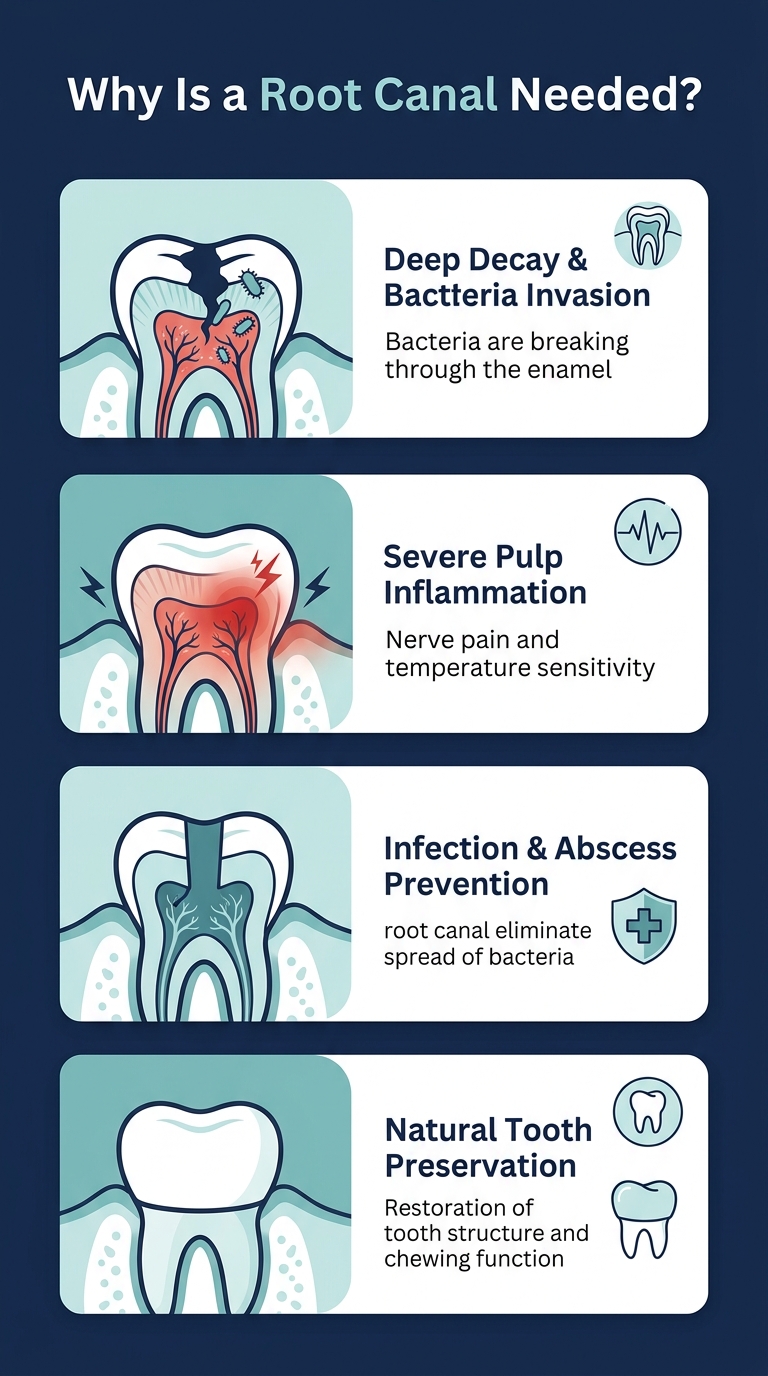
Table of Contents
- What Is a Root Canal & Why Is It Necessary?
- 5 Clear Symptoms That You Need a Root Canal
- Common Causes of Nerve & Pulp Infection
- Expert Care at Elite Dermadent with Dr. Saurabh Pakhale
- Comparison: Root Canal vs. Tooth Extraction
- Frequently Asked Questions
What Is a Root Canal & Why Is It Necessary?
Deep inside every tooth beneath the hard enamel and dentin layers lies a hollow chamber containing delicate nerve fibers, blood vessels, and connective tissue known as the dental pulp. The pulp extends from the crown of the tooth down to the tip of the roots in the jawbone.
When bacteria penetrate this inner chamber due to deep cavities or structural trauma, the pulp becomes inflamed and infected (a condition called pulpitis). Because the pulp is enclosed inside rigid walls, swelling creates intense internal pressure. A root canal is needed to remove the infected tissue, disinfect the canals, and seal the space to save the tooth.
5 Clear Symptoms That You Need a Root Canal
If you experience any of the following symptoms, an immediate evaluation by an endodontist is recommended:
- Persistent Throbbing Tooth Pain: Spontaneous, deep pain that radiates to your jaw, cheek, or ear, especially when lying down or chewing.
- Extreme Temperature Sensitivity: Sharp or lingering pain when consuming hot coffee or cold water that persists long after the stimulus is removed.
- Swollen or Tender Gums: Swelling, redness, or a small pimple-like bump (gum boil or fistula) on the gums near the painful tooth, indicating pus drainage.
- Tooth Discoloration: A single tooth turning grayish-dark, indicating internal nerve necrosis (death of the pulp tissue).
- Pain When Biting or Touching: Extreme tenderness when pressure is applied to the tooth during normal chewing.
Common Causes of Nerve & Pulp Infection
Several dental conditions can lead to irreversible pulp damage requiring root canal therapy:
- Untreated Deep Cavities: Bacteria gradually erode through enamel and dentin until reaching the pulp chamber.
- Cracked or Chipped Teeth: Fractures create microscopic pathways for oral bacteria to enter the inner nerve.
- Repeated Dental Procedures: Multiple deep fillings on the same tooth can stress the nerve over time.
- Physical Dental Trauma: An impact or injury to the mouth can sever the blood supply to the tooth nerve even if no visible crack appears.
Expert Care at Elite Dermadent with Dr. Saurabh Pakhale
At Elite Dermadent, Dr. Saurabh Pakhale provides advanced, painless endodontic treatment utilizing modern rotary instruments, digital apex locators, and painless local anesthesia techniques.
Comprehensive Root Canal & Retreatment Solutions
Whether you require primary infection clearance or complex revision therapy, expert care ensures your natural bite remains intact:
- Painless Primary Endodontics: Explore our specialized Root Canal Treatment in Thane to eliminate infection in a single comfortable visit.
- Specialized Retreatment for Complex Cases: If a tooth treated years ago experiences recurrent infection due to narrow or curved canals, learn how Root Canal Retreatment can save previously compromised teeth.
Comparison: Root Canal vs. Tooth Extraction
Comparing the choice between preserving your natural tooth through a root canal versus extracting it:
| Evaluation Factor | Root Canal Therapy + Crown | Tooth Extraction |
|---|---|---|
| Natural Tooth Preservation | Saves original root & natural tooth structure | Permanent loss of natural tooth root |
| Impact on Surrounding Teeth | Prevents adjacent teeth from shifting or tilting | Adjacent teeth drift into empty gap unless replaced |
| Jawbone Health | Maintains natural bone stimulation & facial structure | Gradual bone loss (resorption) occurs in extraction site |
| Chewing Function | Fully restores 100% natural chewing force | Requires dental bridge or implant to restore chewing |
| Long-Term Cost Efficiency | Cost-effective; single procedure + crown | Higher overall cost if replacing gap with implant/bridge |
Frequently Asked Questions
Why is a root canal needed instead of just filling the tooth?
A standard dental filling only fixes decay on the outer enamel and dentin. When bacteria reach the deep inner pulp chamber and infect the nerve, a filling cannot clear the internal infection. A root canal is required to clean the root channels directly.
Is a root canal painful?
No. Modern root canal procedures are performed under effective local anesthesia, making the treatment as comfortable as getting a routine filling. The procedure actually relieves the severe pain caused by nerve infection.
What happens if I delay getting a root canal?
Delaying treatment allows bacteria to multiply, leading to severe bone loss, painful abscesses, facial swelling, and eventual loss of the tooth. In extreme cases, deep dental infections can spread to surrounding blood vessels and systemic tissue.
Does every root-canal-treated tooth need a crown?
In most cases, especially for molars and premolars that absorb heavy chewing forces, placing a custom dental crown is essential to strengthen the treated tooth and prevent future structural fractures.
Comments are closed