
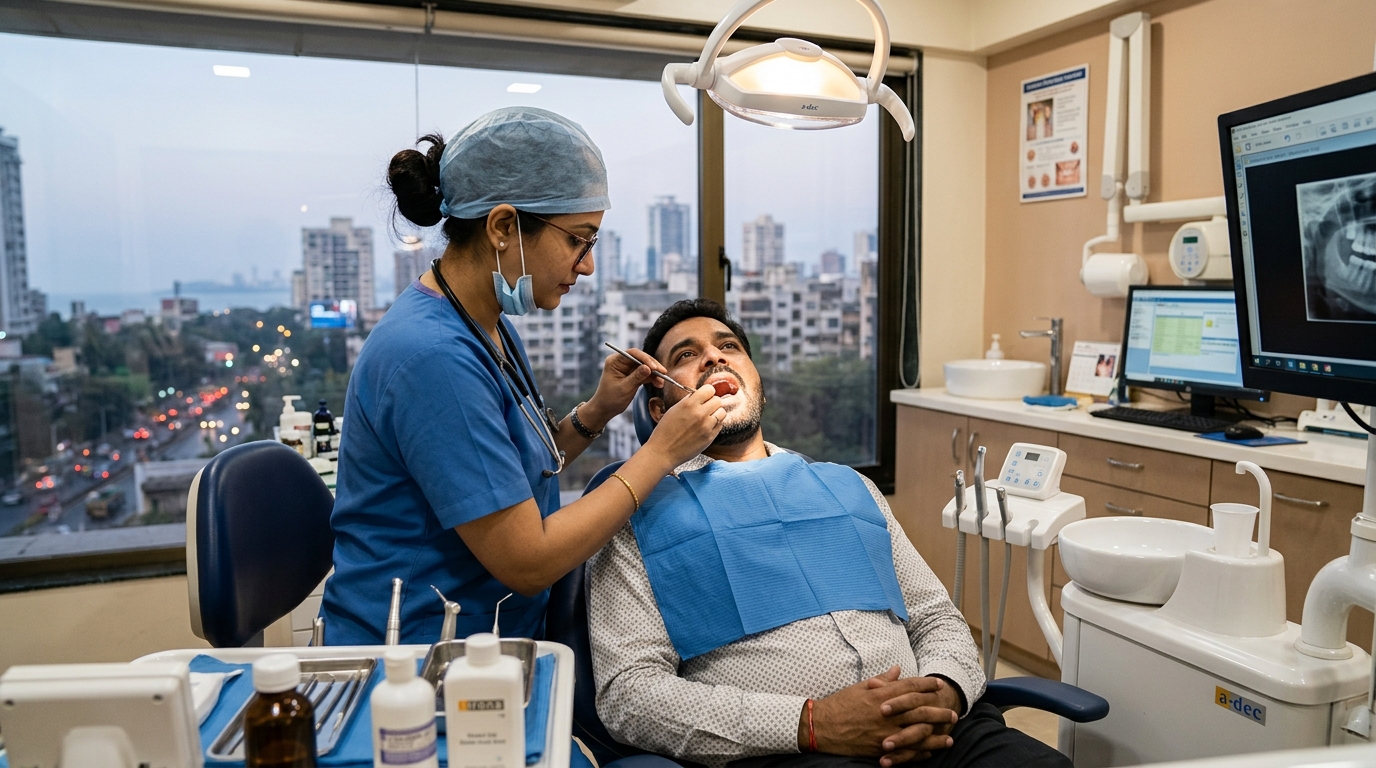
If you have been diagnosed with deep tooth decay or sensitivity, asking can a root canal be avoided is a top priority. In many early-stage dental cases, timely intervention, preventive fillings, and advanced pulp-capping therapies can save the nerve and avoid root canal surgery altogether.
Key Takeaways
- Early Intervention Is Key: A root canal can be avoided if tooth decay is caught and filled before bacteria penetrate the inner pulp chamber.
- Vital Pulp Capping: If decay is very close to the nerve but the tissue remains healthy, specialized biocompatible materials (like MTA) can protect the pulp and promote dentin healing.
- Trauma & Crack Prevention: Wearing custom night guards for teeth grinding (bruxism) prevents structural cracks that invite internal nerve infection.
- When Unavoidable: If the nerve tissue has suffered irreversible damage or necrosis, a root canal is the only safe procedure to save the natural tooth.
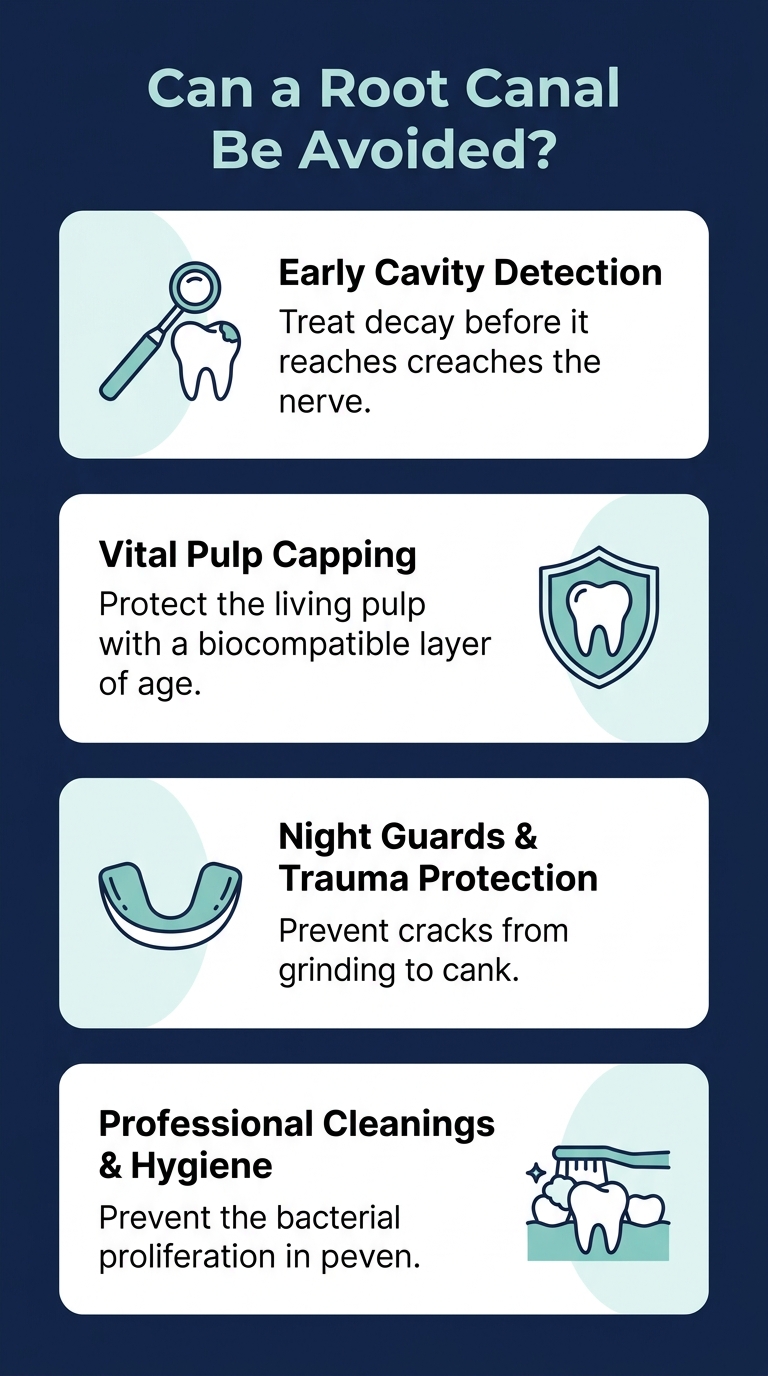
Table of Contents
- Can a Root Canal Be Avoided?
- 4 Ways to Avoid a Root Canal Procedure
- Vital Pulp Capping: The Non-Surgical Alternative
- When Is a Root Canal Clinically Unavoidable?
- Expert Dental Diagnostics with Dr. Saurabh Pakhale
- Frequently Asked Questions
Can a Root Canal Be Avoided?
The short answer is yes—provided action is taken early. A root canal becomes necessary only when bacteria penetrate through outer enamel and dentin to infect the inner dental pulp (containing nerves and blood vessels).
If dental decay is discovered during routine dental examinations while still confined to outer enamel or dentin, a standard dental filling, inlay, or onlay restores structural integrity without disturbing the living nerve inside.
4 Ways to Avoid a Root Canal Procedure
1. Early Cavity Treatment
Replacing small cavities with composite resin fillings prevents bacteria from migrating deeper into the tooth structure toward the pulp chamber.
2. Vital Pulp Capping
If deep decay reaches near the pulp but the nerve remains healthy (reversible pulpitis), dentists can place a protective biocompatible layer (such as Mineral Trioxide Aggregate / MTA) directly over the thin dentin bridge to encourage secondary dentin formation and avoid root canal therapy.
3. Custom Night Guards for Bruxism
Chronic night-time teeth grinding (bruxism) creates microscopic fractures in enamel. Over time, these cracks extend into the root canals, exposing nerves to oral bacteria. Custom night guards cushion teeth and prevent stress fractures.
4. Dental Sealants & Preventive Cleaning
Professional dental cleanings eliminate tartar accumulation along gumlines, while dental sealants smooth out deep grooves on molars where decay commonly originates.
Vital Pulp Capping: The Non-Surgical Alternative
When decay extends close to the pulp chamber, vital pulp capping serves as a direct alternative to root canal treatment. During this procedure:
- All decayed tooth structure is carefully removed under local anesthesia.
- A specialized sedative and therapeutic medicament (like MTA or Calcium Hydroxide) is placed over the exposed dentin/pulp junction.
- A permanent filling or crown is placed over the protective layer, sealing the tooth and allowing the living pulp to heal naturally.
When Is a Root Canal Clinically Unavoidable?
Root canal therapy cannot be avoided once pulp tissue suffers irreversible damage. Symptoms indicating an unavoidable root canal include:
- Spontaneous Throbbing Pain: Severe toothache that occurs without any hot or cold trigger.
- Pulpal Necrosis: Nerve death inside the tooth, often causing the tooth to turn grayish-brown.
- Dental Abscess or Gum Fistula: Pimple-like bumps on the gums discharging pus, indicating bacterial infection in the surrounding jawbone.
- Severe Thermal Pain Lingering > 30 Seconds: Sharp nerve pain caused by hot or cold liquids that lingers long after drinking.
Expert Dental Diagnostics with Dr. Saurabh Pakhale
At Elite Dermadent, Dr. Saurabh Pakhale provides thorough endodontic evaluations to determine whether vital pulp preservation or root canal treatment is recommended for your specific tooth condition.
Comprehensive Dental Care & Treatment Options
- Painless Endodontic Care: When root canal therapy is necessary to save an infected tooth, explore our gentle Root Canal Treatment in Thane.
- Specialized Revision Therapy: For teeth previously treated elsewhere that exhibit persistent pain or reinfection, learn how specialized Root Canal Retreatment protects long-term dental health.
Frequently Asked Questions
Can antibiotics cure a tooth infection and avoid a root canal?
No. Antibiotics travel through the bloodstream, but because the nerve inside an infected tooth dies and loses blood circulation, oral antibiotics cannot reach the bacteria trapped inside the root canals. A physical root canal is required to clean out the dead tissue.
What happens if I try to ignore a tooth that needs a root canal?
Ignoring an infected tooth leads to severe pain, facial swelling, bone destruction in the jaw, and eventual tooth loss. Infection can also spread to neighboring teeth or enter the bloodstream.
Is vital pulp capping always successful in avoiding a root canal?
Vital pulp capping has a high success rate (80% to 90%) when applied to teeth with mild, reversible inflammation. However, if the nerve tissue is already irreversibly infected, a root canal will eventually be required.
Can a root canal be avoided by getting a dental filling?
Yes, if the decay is detected early before it touches or severely inflames the inner pulp. Regular 6-month dental checkups ensure cavities are filled while they are still small.
Comments are closed