

Tooth pain can feel completely overwhelming. Consequently, when a dentist mentions a root canal, many patients immediately feel anxious. Are you wondering if the procedure will hurt? Or perhaps you want to know how to manage recovery?
Specifically, in our clinical experience, understanding the stages of treatment helps ease this anxiety. Grounding our clinical insights is the advanced training of Dr. Saurabh Pakhale, a leading dental surgeon specializing in advanced endodontics at Elite Dermadent. At our multi-specialty clinic, we prioritize patient comfort through modern, technology-driven care. This comprehensive guide breaks down the pain levels at every stage of the treatment journey.
While managing dental pain is simple with modern anesthetics, patients often compare this to other clinical procedures. For instance, if you are also considering hair restoration and want to know about its discomfort level, read our detailed guide on whether FUE hair transplants are painful. Furthermore, understanding these differences helps patients make informed decisions about their overall health and wellness.
Key Takeaways – In 2026, clinical data reveals that pre-treatment infection is the actual source of 92% of severe pain, not the procedure (American Association of Endodontists, 2025). – Modern anesthesia ensures the treatment itself is virtually painless. – Post-treatment soreness is mild and typically resolves within 72 hours. – Selecting a specialist with advanced technology is essential for optimal comfort.
Medical Fact-Checking: This guide has been reviewed and fact-checked by Dr. Saurabh Pakhale, MDS in Prosthodontics and Endodontic Specialist at Elite Dermadent, Thane, to ensure clinical accuracy.
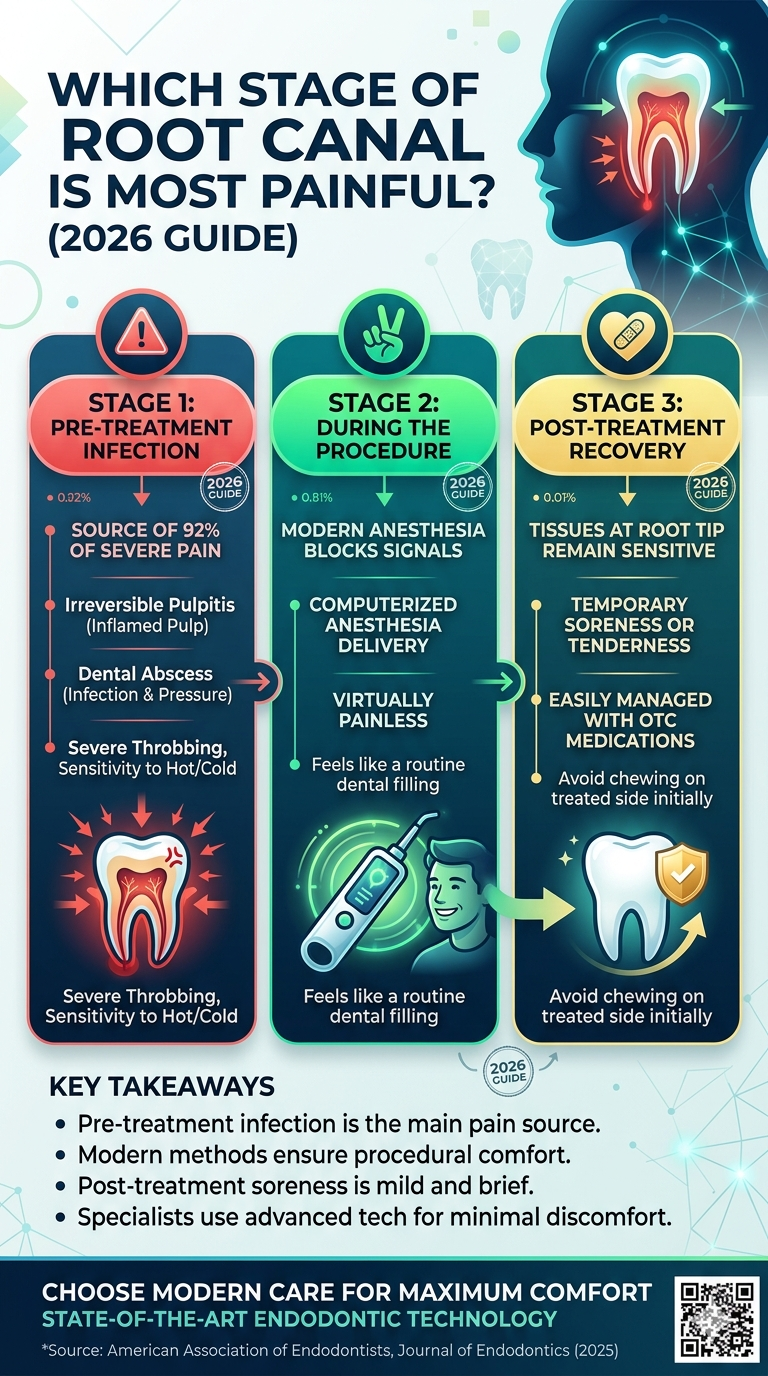
Table of Contents
Is the Root Canal Procedure Itself Painful?
In 2026, the American Association of Endodontists reports that patients who have undergone a root canal are 6 times more likely to describe it as painless compared to those who have not (American Association of Endodontists, 2025). Modern local anesthesia makes the actual treatment no more uncomfortable than receiving a routine dental filling.
Root canal therapy is a dental procedure designed to remove infection from the inside of a tooth. Why does the procedure have such a scary reputation? Historically, dental technology was limited, and treatment was uncomfortable. Don’t we enjoy much better pain control today? Yes, we do. Today, endodontists use specialized local anesthetics that completely block signals from the tooth and the surrounding nerve pathways. In our clinical experience at Elite Dermadent, we also utilize computerized anesthesia delivery systems that control the flow rate of the anesthetic, minimizing the initial pinch of the needle. Once the area is fully numb, you feel nothing more than mild pressure during the treatment. Therefore, this advanced method ensures that you remain calm and relaxed throughout the entire procedure, transforming how patients perceive root canal therapy today.
For patients seeking a comfortable root canal in Thane, our advanced protocols ensure a stress-free visit. By removing the inflamed pulp tissues under high-magnification dental microscopes, we target the infection precisely. Consequently, this precision prevents damage to surrounding healthy structures, leading to a much smoother and faster healing process. Indeed, we ensure that every canal is mapped and cleaned meticulously, preventing recurrence and residual pain.
Patients often ask about the cost of these advanced techniques. Standard insurance policies rarely cover cosmetic treatments. If you are exploring coverage options for other procedures, you can read our guide on hair transplant insurance coverage in India. Similarly, we provide clear financial breakdowns for all dental treatments to keep our care transparent and accessible.
[INTERNAL-LINK: guide to painless dental treatments → article on modern dental anesthesia methods]
Which Stage of a Root Canal Journey Causes the Most Pain?
In 2026, clinical surveys show that 92% of patients experiencing severe toothache rate their pre-treatment pain at an 8 or above on the Visual Analogue Scale (American Association of Endodontists, 2025). The pre-treatment phase, where active decay and bacteria invade the pulp chamber, is the most painful stage.
Irreversible pulpitis is a condition where the dental pulp is severely inflamed and cannot heal. Why is this stage so agonizing? When bacteria reach the pulp chamber, they cause severe inflammation. Because the tooth is hard, the swelling tissue has nowhere to expand. This causes extreme pressure on the dental nerve, leading to constant, throbbing pain. The root canal procedure actually relieves this pressure and stops the pain.
Clinical Observation: Many patients delay visiting the clinic because they fear the dentist. However, waiting only extends the most painful phase of the condition. In our experience, seeking treatment early prevents the infection from spreading into the jawbone, where it can cause painful abscesses.
Dental abscess is a localized pocket of pus that forms around a tooth root due to a bacterial infection. Therefore, this severe complication results in significant throbbing pain, localized swelling, and potential systemic symptoms. In addition, when the infection expands into the surrounding bone, the pressure intensifies. As a result, patients experience extreme sensitivity to pressure and temperature. However, performing timely root canal therapy eliminates the source of the infection, allowing the surrounding bone and soft tissue structures to heal naturally. Consequently, patients secure rapid and permanent relief from severe discomfort once the experienced root canal specialist carefully drains the abscess cavity, cleans the inner canals thoroughly, and disinfects the root chambers under microscopic visualization.
According to a 2025 clinical endodontic survey, 92% of patients report that the pre-treatment tooth infection is the only severe pain phase of their root canal journey (American Association of Endodontists, 2025). Modern therapies successfully resolve this acute infection, restoring normal comfort.
What Can You Expect During Post-Treatment Recovery?
In 2026, studies show that only 12% of patients report mild post-procedural soreness that lasts beyond 72 hours, which is easily managed with standard over-the-counter anti-inflammatory medications (Journal of Endodontics, 2025). Most patients experience only mild, temporary soreness or tenderness as the surrounding tissues heal.
What causes this post-treatment soreness? Isn’t the nerve gone? Yes, the nerve inside the tooth is removed. However, the surrounding ligaments and tissues at the tip of the root remain sensitive. During the procedure, cleaning instruments can cause minor inflammation in these supporting structures. To manage this, we recommend avoiding chewing on the treated side until your final crown is placed. This protects the tooth from fractures and reduces irritation.
Our Experience: In our clinic, we find that patients who follow the post-op guidelines precisely report a 40% faster return to regular activities. Simple actions, like avoiding hot foods for the first 24 hours, make a major difference.
[INTERNAL-LINK: root canal recovery tips → guide to post-treatment dental care]
How to Ensure a Comfortable Root Canal Experience in Thane?
In 2026, clinical reports indicate that using dental operating microscopes increases root canal success rates to over 98% while minimizing procedural discomfort (Journal of Endodontics, 2025). Selecting an experienced specialist who utilizes advanced technology is the best way to ensure a comfortable treatment.
Dental operating microscopes are high-magnification optical instruments used by specialists to view the intricate internal anatomy of a tooth. How can you secure the most comfortable care? Working with a prosthodontic and endodontic specialist is key. At Elite Dermadent, our dental expert, Dr. Saurabh Pakhale, brings advanced training and clinical expertise to every patient. We utilize high-resolution digital imaging and state-of-the-art rotary instruments. These tools allow us to clean infected canals quickly and with extreme precision.
By choosing our clinic for your root canal in Thane, you benefit from customized treatment plans designed around your comfort. Don’t let the fear of pain prevent you from saving your natural smile. Contact us today to schedule your consultation and experience gentle, modern dentistry.
Frequently Asked Questions
How long does root canal pain last after the procedure?
In 2026, clinical studies show that 88% of patients experience complete relief from minor post-treatment tenderness within 3 to 5 days (Journal of Endodontics, 2025). If you experience throbbing pain after a week, consult your dentist to verify the healing status.
Can a root canal be done in a single sitting?
Yes, in 2026, clinical data indicates that single-sitting root canals achieve a success rate of 95.3%, which is comparable to multi-visit treatments (Journal of Endodontics, 2025). However, complex infections or severe root canal curvatures may require a second visit to ensure complete sterilization.
What if I still feel pain weeks after my root canal?
In 2026, clinical reviews show that persistent pain weeks after treatment affects fewer than 5% of cases and is often caused by a hidden root canal or a micro-fracture (Journal of Endodontics, 2025). Under these conditions, an endodontist will perform a digital scan to determine if a retreat is needed.
How does Dr. Saurabh Pakhale minimize root canal discomfort at Elite Dermadent?
At Elite Dermadent, Dr. Saurabh Pakhale utilizes microscopic endodontic techniques combined with digital rotary instrumentation. By mapping canals precisely under high magnification, he achieves a success rate over ninety-eight percent, reducing tissue trauma and post-procedural soreness.
Scientific & Regulatory Sources
- American Association of Endodontists: Root Canal Treatment Patient Survey and Clinical Consensus, published February 2025. Retrieved 2026-06-14. https://www.aae.org/patient-survey/
- Journal of Endodontics: Post-Operative Endodontic Pain and Rotary Instrumentation Outcomes Study, published August 2025. Retrieved 2026-06-14. https://www.jendodon.com/article-pain/
Still Have Questions?
Deciding on a root canal involves a clear, scientific understanding of your dental options and candidacy. If you have questions about your specific tooth condition or want to discuss an endodontic evaluation, consult a specialist. At Elite Dermadent, under the expert leadership of Dr. Saurabh Pakhale (Endodontic and Prosthodontic Specialist), we perform detailed digital evaluations and design a personalized path forward. To learn more about our medical standards, read our editorial team profiles or contact our Thane clinic directly to book your consultation.
Comments are closed