
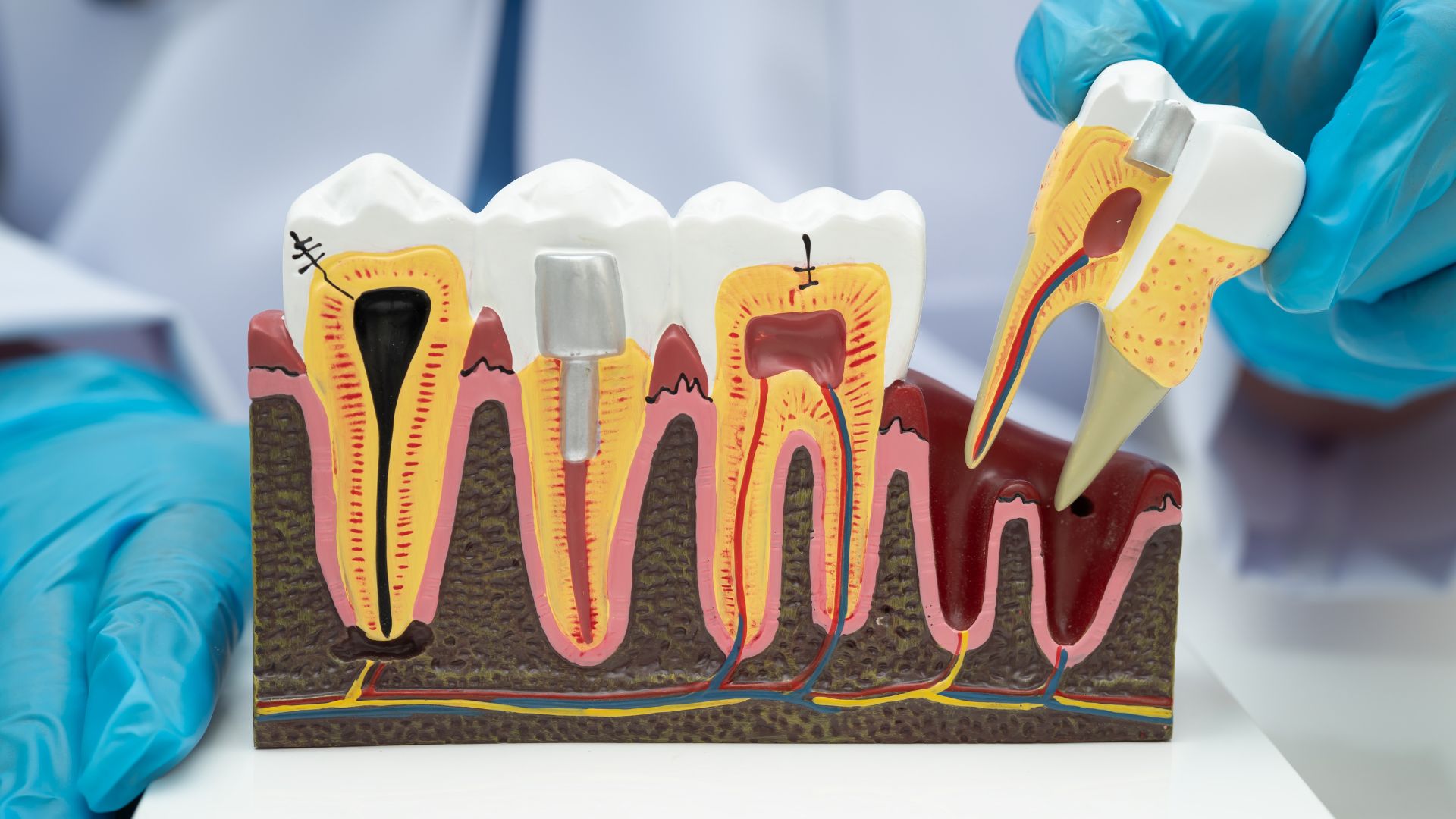
A root canal is designed to eliminate dental pain by removing infected pulp tissue. However, many patients feel confused when they experience discomfort in a tooth that no longer has a nerve. Why does this happen, and when should you worry?
To help you understand this issue, we compiled this guide in partnership with Dr. Saurabh Pakhale, a leading specialist at Elite Dermadent. If you are dealing with persistent pain, getting professional root canal treatment in Thane is key to saving your tooth. You can learn more about his background on Dr. Saurabh Pakhale’s profile.
Key Takeaways – In 2026, research shows that about 28% of patients feel mild to moderate pain before root canal treatment, which drops to 11% one week after (Journal of Endodontics, 2010). – Long-term or persistent pain after therapy affects only 5% to 7% of cases (Journal of Endodontics, 2014). – Missed canals, especially in molars, account for over 60% of late post-treatment infections (International Endodontic Journal, 2026).
Medical Fact-Checking: This guide has been reviewed and verified by Dr. Saurabh Pakhale, MDS, Endodontist and Root Canal Specialist at Elite Dermadent, Thane.
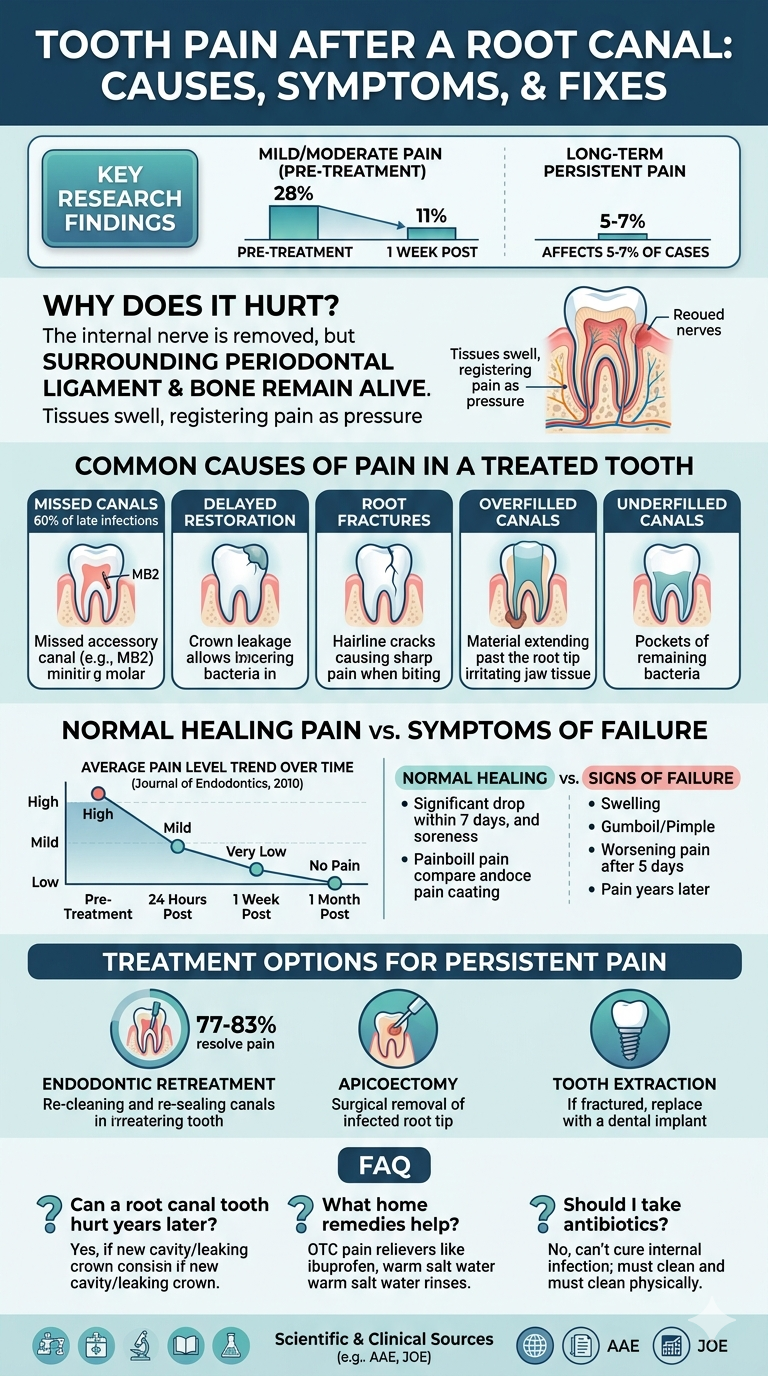
Table of Contents
Why Does a Tooth with a Root Canal Experience Pain?
In 2026, clinical consensus shows that while the internal nerve of a tooth is removed during treatment, the surrounding periodontal ligament and bone tissue remain alive (American Association of Endodontists, 2026). This means the tissues surrounding the root tip can still become inflamed and register pain.
Many people believe that a treated tooth is entirely dead and cannot hurt. However, the tooth is still anchored to your jaw by a network of nerves and blood vessels. When these tissues swell, they create pressure. This pressure feels like it is coming from inside the tooth, even though the internal pulp is gone.
Common Causes of Pain in a Treated Tooth
In 2026, research in the International Endodontic Journal confirmed that missed accessory canals, such as the second mesiobuccal (MB2) canal, cause over 60% of late post-treatment failures (International Endodontic Journal, 2026). When these tiny branches are missed, bacteria continue to grow and cause pain.
In my practice at Elite Dermadent, I often see cases where patients experience pain months or years after treatment. Frequently, the culprit is an uncleaned micro-canal. Using dental microscopes allows us to find and sterilize these hidden spaces.
Major Causes of Discomfort
- Delayed Restoration: If a permanent crown is not placed quickly, bacteria can leak back into the tooth.
- Root Fractures: A hairline crack in the root lets bacteria contaminate the bone, causing sharp pain when biting.
- Overfilled Canals: If the sealing material extends past the root tip, it irritates the surrounding jaw tissue.
- Underfilled Canals: If the canal is not filled to the very end, pockets of bacteria can remain active.
Normal Healing Pain vs. Symptoms of Failure
In 2026, patient monitoring data showed that 93% of patients experience a significant drop in pain within 7 days of treatment (Journal of Endodontics, 2010). Soreness during this initial window is a normal part of the healing process.
Are you unsure if your pain is normal? The timeline below shows how pain typically decreases after a successful procedure.
Treatment Options for Root Canal Pain
In 2026, clinical reports indicate that endodontic retreatment resolves persistent pain in 77% to 83% of cases (Journal of Endodontics, 2026). Retreatment is the standard way to fix a failing root canal.
How We Solve Persistent Pain
- Endodontic Retreatment: We open the tooth, remove the old filling, clean the canals again, and reseal it.
- Apicoectomy: If retreatment is not possible, we surgically remove the infected root tip.
- Tooth Extraction: If the root is fractured, we may need to remove the tooth and replace it with a dental implant.
Frequently Asked Questions (FAQ)
Can a root canal tooth hurt years later?
In 2026, dental research confirmed that a root canal tooth can start hurting years later if a new cavity forms or if the crown leaks (Journal of Endodontics, 2026). This allows new bacteria to enter the sterile space.
What home remedies help with root canal tooth pain?
In 2026, clinical guidelines state that over-the-counter pain relievers like ibuprofen are the most effective home option (American Association of Endodontists, 2026). Warm salt water rinses also help soothe irritated gums.
Should I take antibiotics for root canal pain?
In 2026, endodontic protocols clarify that antibiotics cannot cure a root canal infection because there is no blood flow inside the tooth to distribute the medicine (American Association of Endodontists, 2026). The tooth must be cleaned physically.
When should I see an endodontist for pain?
In 2026, clinical success guidelines suggest seeing an endodontist if you notice swelling, a pimple on your gums, or pain that worsens after 5 days (Journal of Endodontics, 2026). Early care prevents further bone loss.
Scientific & Clinical Sources
- Nixdorf, D. R. et al., Frequency of persistent tooth pain after root canal treatment, Journal of Endodontics, retrieved 2026-06-14,
https://www.jendodon.com/ - American Association of Endodontists, Endodontic Retreatment and Pain Management Guidelines, retrieved 2026-06-14,
https://www.aae.org - International Endodontic Journal, Causes of Post-Treatment Endodontic Disease, retrieved 2026-06-14,
https://onlinelibrary.wiley.com/journal/13652591
Comments are closed