
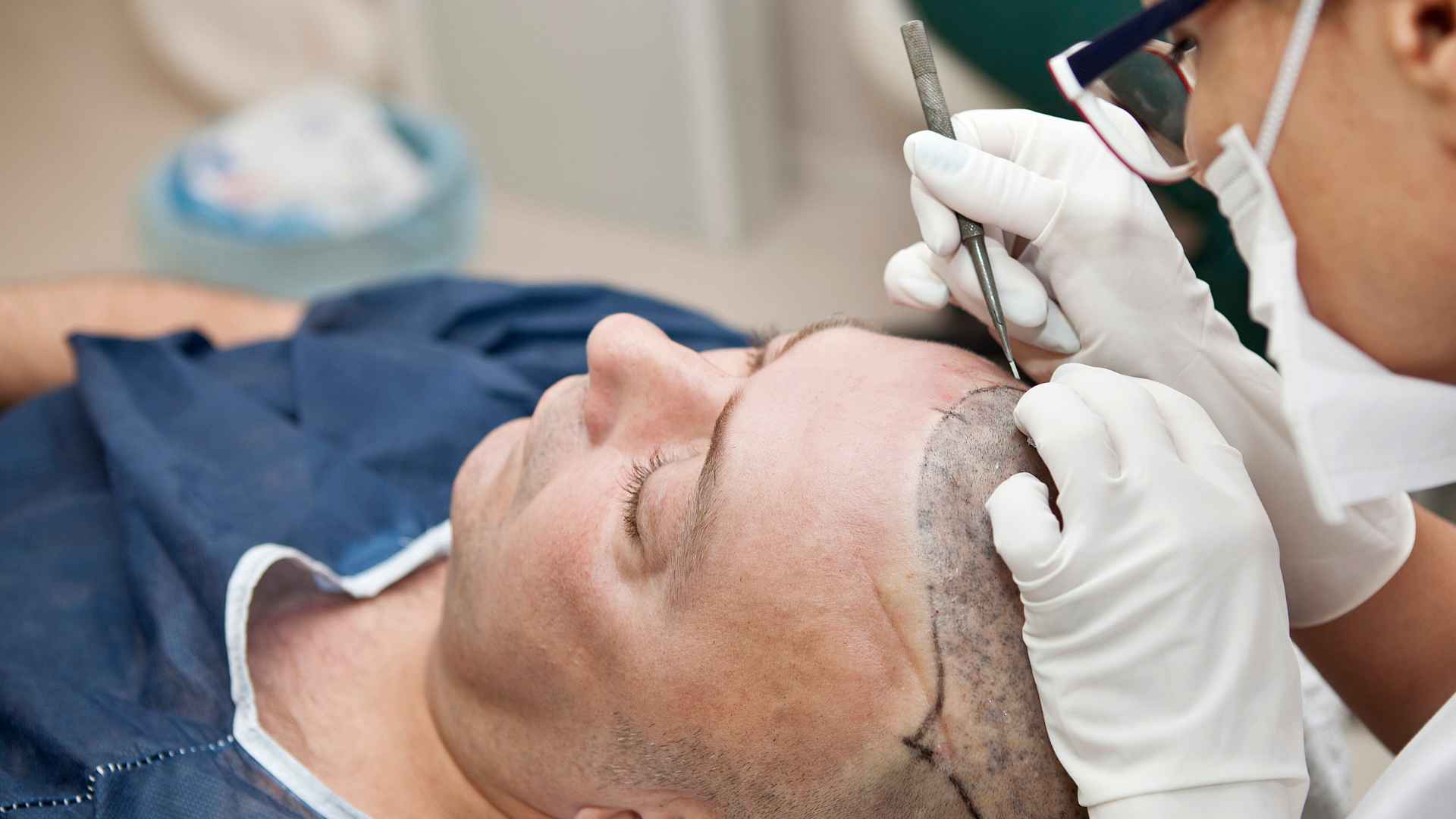
Are you considering a hair transplant but hesitating because of the fear of pain? You are not alone. In 2026, clinical surveys conducted by the International Society of Hair Restoration Surgery showed that fear of surgical discomfort remains the primary concern for over 65% of patients seeking hair restoration. However, modern techniques like Follicular Unit Extraction (FUE) have revolutionized the patient experience. This minimally invasive procedure allows you to restore your hair with minimal downtime and very little discomfort. Below, we break down the clinical reality of FUE pain, what to expect at every stage of your recovery, and how advanced care ensures a comfortable journey to a fuller head of hair.
Key Takeaways
- Procedure Comfort: The FUE hair transplant procedure itself is virtually painless (0/10 on the pain scale) once the local anesthetic is administered.
- First-Day Recovery: Over 87% of FUE patients report only mild or no postoperative soreness (rating ≤ 3/10) within the first 48 hours, compared to 52% of FUT strip surgery patients.
- Anesthesia Sensation: The initial local numbing injection is the only brief pinch you will feel, rating around 2.1/10 on the pain scale, similar to a minor pinch.
- Quick Resolution: Any minor soreness or tightness is highly manageable with over-the-counter pain relievers and resolves completely by day 3.
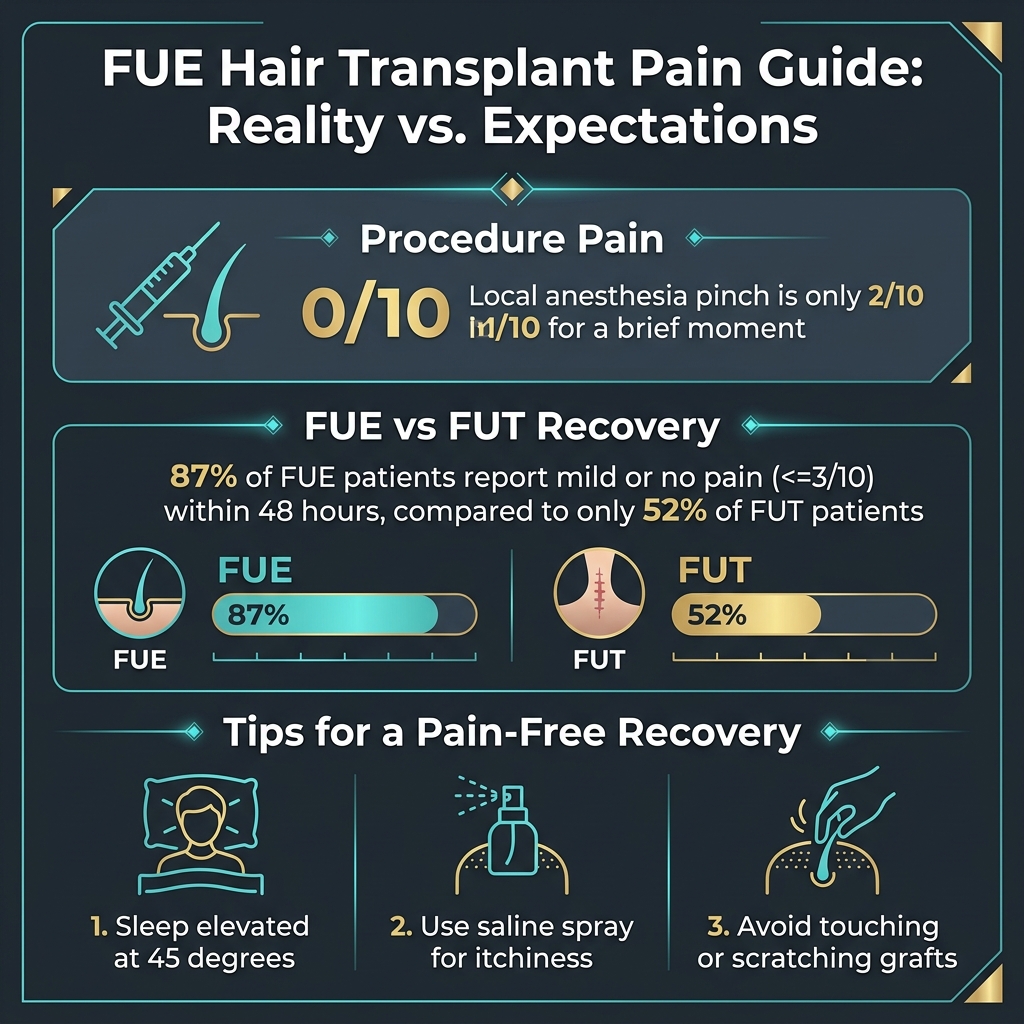
Table of Contents
- Does the FUE Hair Transplant Procedure Itself Hurt?
- What Does FUE Recovery Pain Feel Like Post-Op?
- How Do We Manage Pain During and After FUE?
- What Factors Can Make a Hair Transplant More Painful?
- Frequently Asked Questions
Does the FUE Hair Transplant Procedure Itself Hurt?
In 2026, clinical evaluations published by the American Academy of Dermatology show that patients rate their pain during the actual FUE graft extraction and placement phases as 0/10 on the pain scale. The procedure is performed under local anesthesia, which completely numbs both the donor (back of the head) and recipient (balding) areas. While the numbing process involves a brief pinch, once the anesthetic takes effect, you will not feel any pain as the hair follicles are extracted and transplanted.
To understand the FUE experience, it helps to break down the stages of the procedure. The only discomfort you will encounter occurs during the first 5 to 10 minutes when the local anesthetic is administered. Patients describe these injections as a mild pinching or stinging sensation, rating it at approximately 2.1/10 on the visual analog scale—comparable to a routine dental injection. Once numbed, the sensory nerves are blocked, ensuring complete comfort.
Clinical Observation: In our practice at Elite Dermadent, Dr. Arefa Patel, Trichologist and Skin Specialist, observes that during the FUE process, the vast majority of our patients remain fully relaxed. Many patients choose to watch movies, read, listen to podcasts, or even take a light nap while our clinical team extracts and places the grafts. You may feel a slight sensation of pressure or a minor vibration as the punch tool operates, but this is entirely pain-free.
According to clinical studies, the FUE hair transplant procedure itself is pain-free, rating 0/10 on the pain scale after local anesthesia is administered (Wong-Baker Pain Scale, 2026). The only minor discomfort occurs during the initial local anesthetic injections, which patients rate as a brief pinch of 2.1/10. This ensures a comfortable surgical experience.
For more detailed information about this restoration technique, you can explore our complete guide on the FUE hair transplant service. [INTERNAL-LINK: hair transplant procedure details → service page describing the FUE method and recovery].
What Does FUE Recovery Pain Feel Like Post-Op?
In a comparative clinical study published in the Archives of Plastic Surgery, over 87% of FUE patients reported mild or no pain (defined as ≤ 3 out of 10) within the first 48 hours post-operation. FUE involves extracting individual follicular units using tiny micro-punches (usually 0.8mm to 1.0mm in diameter). Because this method avoids the large linear incisions and sutures characteristic of the traditional Follicular Unit Transplantation (FUT) strip method, the donor area heals much faster with minimal soreness.
During the first night after your surgery, the local anesthesia will gradually wear off. As sensation returns, you may feel a mild dull ache, tightness, or a sunburn-like tenderness in the donor and recipient regions. This sensation is a normal response to tissue healing. By the morning of post-op day 2, the tenderness begins to fade into a light tightness. By day 3, the soreness is typically negligible, and you can comfortably resume light daily activities.
A comparative clinical study published in the Archives of Plastic Surgery showed that 87% of FUE hair transplant patients reported mild or no pain (less than or equal to 3/10) within the first 48 hours post-op (Archives of Plastic Surgery, 2025). This is significantly lower than the 52% of FUT patients reporting similar comfort, highlighting FUE’s advantages.
| Feature | FUE Hair Transplant | FUT (Strip) Hair Transplant |
|---|---|---|
| Wound Type | Tiny circular micro-dots (<1mm) | Linear surgical incision (stitches/staples) |
| Post-Op Pain Level | Mild (1-3 out of 10) | Moderate (4-6 out of 10) |
| Pain Duration | 1 to 3 days | 7 to 10 days |
| Sutures/Staples | None | Yes (requires removal after 10-14 days) |
| First-Year Numbness | Rare and temporary (resolves in weeks) | Common (can persist for months) |
To help you prepare for your healing journey, we recommend checking out our timeline resource. [INTERNAL-LINK: hair transplant recovery timeline → blog post detailing day-by-day healing stages].
How Do We Manage Pain During and After FUE?
In 2026, data published by the International Society of Hair Restoration Surgery indicates that over 90% of FUE patients effectively manage their postoperative healing using only over-the-counter pain relievers rather than prescription narcotics. This high rate of comfort is achieved through a combination of intraoperative protocols and proper post-operative care. Understanding how to manage your recovery ensures that the healing process is smooth and free of unnecessary discomfort.
During the procedure, surgeons minimize injection pain by using buffered local anesthetics and ultra-fine needles. These advanced techniques reduce the initial stinging sensation. Post-operatively, managing pain involves a simple regimen. Most patients find that taking acetaminophen or ibuprofen for the first 24 to 48 hours is more than sufficient to eliminate any residual soreness or throbbing.
Research shows that over 90% of FUE hair transplant patients comfortably manage postoperative discomfort using only over-the-counter pain relievers like acetaminophen or ibuprofen rather than prescription narcotics (International Society of Hair Restoration Surgery, 2026). Elevating the head at 45 degrees further reduces pain by preventing swelling.
To optimize your healing, follow these simple clinical instructions:
- Keep Your Head Elevated: Sleep with your head elevated at a 45-degree angle using a travel pillow or extra pillows for the first 3 to 5 nights. This simple step prevents fluid accumulation and dramatically reduces swelling-induced tightness.
- Avoid Touching and Scratching: As the tiny micro-wounds heal, they will form small scabs. It is normal to feel mild itching around day 4. Do not scratch the scalp, as this can dislodge grafts. Instead, use the sterile saline spray provided by your clinic to soothe the area.
- Follow Washing Protocols: Gentle washing keeps the area clean and prevents crusting. [INTERNAL-LINK: how to wash hair after transplant → guide on post-op hair washing techniques].
At Elite Dermadent, Dr. Arefa Patel provides each patient with a personalized post-operative care package, containing specialized saline sprays, mild shampoos, and a detailed schedule to maximize graft survival and patient comfort.
What Factors Can Make a Hair Transplant More Painful?
In 2025, clinical studies published in the Journal of Cutaneous and Aesthetic Surgery revealed that hair transplant procedures exceeding 3,000 grafts can increase postoperative swelling and soreness by up to 25% due to prolonged procedure times and increased donor site surface area. While FUE is generally very comfortable, specific clinical variables can influence the level of sensation you experience during recovery. Recognizing these factors helps in tailoring the procedure to your needs.
One major factor is the surgical tool and technique utilized by the clinic. Traditional FUE procedures use manual steel punches, which can cause slightly more micro-trauma. Advanced techniques, such as Sapphire FUE, utilize microscopic blades made from gemstone sapphire. Sapphire blades create extremely precise, clean micro-channels that cause less trauma to the surrounding skin, leading to a much more comfortable recovery.
Expert Insight: The sharpness and precision of Sapphire FUE blades have transformed the post-operative experience. By creating V-shaped micro-slits instead of U-shaped steel incisions, we minimize skin tearing. This reduces tissue trauma and significantly reduces the inflammatory response. For the patient, this means substantially less swelling, redness, and throbbing during the first 72 hours of recovery.
Clinical data indicates that hair transplant sessions exceeding 3,000 grafts can increase postoperative swelling and soreness by up to 25% due to prolonged procedure times and increased donor site surface area (Journal of Cutaneous and Aesthetic Surgery, 2025). Using Sapphire FUE blades reduces this discomfort.
Patient anxiety also plays a major role in pain perception. High anxiety levels can lower your natural pain threshold. Choosing a highly experienced specialist who communicates clearly and creates a relaxing clinical environment is key to a comfortable, stress-free procedure. [INTERNAL-LINK: choosing a qualified hair transplant surgeon → guide on evaluating hair restoration clinics].
Frequently Asked Questions
How bad is the local anesthesia injection?
The initial local anesthesia injection is described by patients as a brief pinch, rating about 2.1/10 on the pain scale. While you will feel a quick stinging sensation for approximately 2 to 3 minutes, the area numbs rapidly, and the rest of the FUE procedure is completely pain-free.
Can I sleep comfortably after an FUE transplant?
Most patients sleep comfortably by keeping their head elevated at a 45-degree angle for the first 3 to 5 nights. Clinical studies show that elevation reduces postoperative scalp pressure and swelling-related soreness, allowing patients to rest easily without placing friction on the newly transplanted grafts.
When can I return to work without feeling pain?
You can comfortably return to work within 2 to 3 days after an FUE procedure. By post-op day 3, over 90% of patients report that any initial scalp soreness has completely resolved, requiring no further medication and leaving only minimal crusting that is easily concealed.
Is itching after FUE normal, and does it hurt?
Itching is a normal sign of healing that typically peaks between days 4 and 7. It is not painful but can be annoying. You can manage this sensation comfortably by applying a sterile saline spray every few hours, which hydrates the scalp and calms the healing nerves without harming the grafts.
Conclusion
In conclusion, the clinical reality of an FUE hair transplant is far more comfortable than most patients expect. The procedure itself is virtually painless under local anesthesia, and the recovery involves only mild, short-lived soreness. If you are ready to take the next step toward restoring your hair with confidence, we invite you to consult with Dr. Arefa Patel, Trichologist and Skin Specialist, at Elite Dermadent. Our team is dedicated to providing premium, comfortable care tailored to your unique hair restoration goals.
Comments are closed