
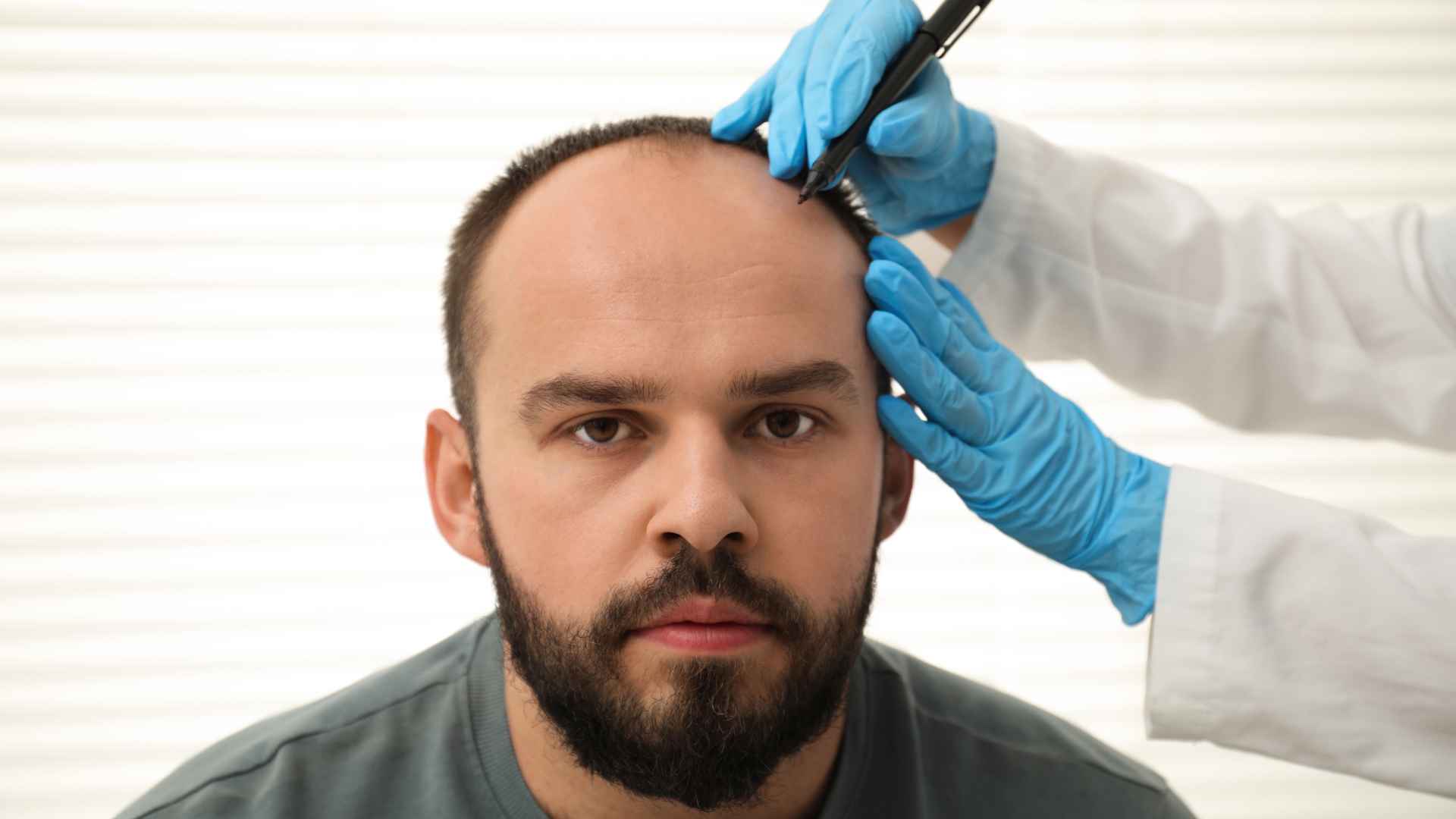
Undergoing a Follicular Unit Extraction (FUE) hair transplant is an exciting step toward restoring your hairline and boosting your self-confidence. FUE is a state-of-the-art, minimally invasive surgery, but it does not produce overnight results. Hair restoration is a journey that requires patience, as the transplanted follicles must adapt to their new environment and follow natural hair growth cycles. If you are preparing for or have recently completed the procedure, you are likely wondering: how long does FUE hair transplant take to grow?
In this guide, we will outline the detailed month-by-month hair growth timeline after FUE, explain what biological changes occur during each phase, and provide tips to support healthy hair growth during recovery.
Key Takeaways
- Overall Timeline: Full results after an FUE hair transplant typically take 12 to 18 months to mature.
- Month 1: Initial healing takes place, followed by a temporary shedding phase (shock loss), which is a normal biological reaction.
- Months 2 – 3: Follicles enter a resting/dormant phase. Visible growth is minimal during this time.
- Months 4 – 5: Early growth begins, appearing as fine, thin baby hairs.
- Months 6 – 9: The “action period” where significant density, thickness, and length become visible.
- Months 12 – 18: The final density, texture, and natural appearance are fully matured.
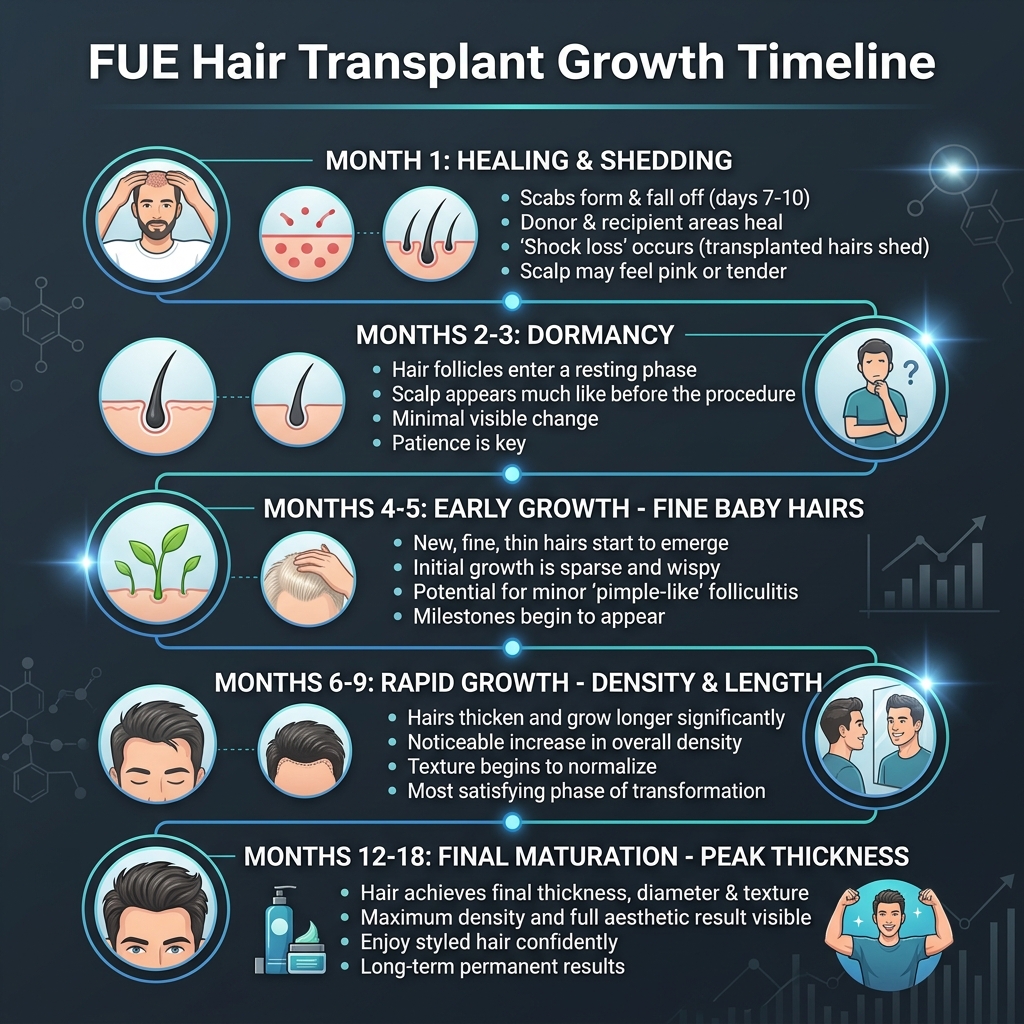
Table of Contents
- The Biological Phases of Hair Growth
- FUE Hair Transplant Growth Timeline
- Factors That Influence Growth Speed
- How to Support Healthy Graft Growth
- Consulting Your Hair Specialist
- Frequently Asked Questions (FAQs)
The Biological Phases of Hair Growth
To understand the timeline, it is helpful to know that hair naturally grows in three distinct phases: **Anagen** (growth phase), **Catagen** (transition phase), and **Telogen** (resting phase). During an FUE transplant, follicular units are harvested from the donor area (genetically resistant to thinning) and placed into recipient areas.
This physical movement temporarily disrupts the follicle’s growth cycle, pushing it into the Telogen (resting) phase. This is why the existing hair shafts shed shortly after the procedure before the follicle resets and enters a new, active Anagen phase to produce healthy, permanent hair.
FUE Hair Transplant Growth Timeline
Here is what you can expect during each phase of your hair restoration journey:
| Timeline | Growth Phase | What to Expect on Your Scalp |
|---|---|---|
| Month 1 | Healing & Shedding | Redness, swelling, and scabbing heal within 10 days. The transplanted hair shafts then shed (shock loss). |
| Months 2 – 3 | Dormancy | Follicles rest beneath the skin. Very little visible growth. The scalp looks much like it did pre-op. |
| Months 4 – 5 | Early Growth | First new hairs break through. Hairs appear fine, thin, and may have a curly or soft texture. |
| Months 6 – 9 | Noticeable Growth | Significant visual change. Hair grows thicker, longer, and coverage increases rapidly. |
| Months 12 – 18 | Final Maturation | Full density and mature hair texture are achieved. Results look natural and permanent. |
Factors That Influence Growth Speed
While the timeline above represents the average patient journey, individual growth speeds can vary based on several parameters:
- Scalp Blood Circulation: Healthy blood flow delivers oxygen and nutrients to the healing grafts, supporting faster recovery and growth.
- Hair Characteristics: Patients with thick or wavy hair often notice visual coverage faster than those with fine, straight hair, even at the same stage of follicle growth.
- Recipient Zone: The hairline and temples typically show visible growth slightly faster than the crown (vertex) area, which has lower blood supply and thicker skin.
- Adherence to Post-Op Care: Protecting the scalp from sun damage, mechanical friction, and heavy workouts in the early weeks plays a significant role in final follicle survival.
How to Support Healthy Graft Growth
To ensure your transplanted follicles have the best environment to grow, keep these post-operative practices in mind:
- Handle Scalp with Care: Avoid scratching or pick at healing scabs in the first 10 days to prevent graft dislodgement.
- Eat a Nutrient-Rich Diet: Ensure your diet includes plenty of proteins, iron, zinc, and vitamins (A, C, and E) to support healthy hair production.
- Avoid Smoking and Alcohol: Smoking constricts blood vessels and limits nutrient delivery to the hair roots, which can compromise follicle survival.
- Manage Stress Levels: High stress can trigger hormonal changes that interfere with normal hair cycles.
Consulting Your Hair Specialist
Understanding your progress and knowing if your hair is growing at a healthy rate requires specialist evaluation. Post-operative follow-up appointments allow your team to monitor graft survival and recommend additional therapies (like PRP or topical solutions) if needed.
For professional guidance throughout your restoration journey, Dr Arefa Patel, a highly experienced Trichologist and Skin Specialist, offers personalized evaluations. By monitoring your scalp health and follicle maturation, Dr. Patel ensures your recovery stays on track for optimal density. To explore the advanced restoration options available, visit our FUE hair transplant service page.
Frequently Asked Questions (FAQs)
Is “shock loss” normal after an FUE transplant?
Yes, shedding (shock loss) is a normal and expected part of the recovery process. It typically occurs 2 to 4 weeks after the procedure. The hair shafts shed because the follicle enters a temporary resting phase due to the physical transplant. The root remains healthy beneath the skin and will begin growing new hair in a few months.
Why does the crown take longer to grow than the hairline?
The crown (vertex) of the scalp has thicker skin and slightly less blood circulation compared to the frontal hairline. Because of this, follicles in the crown take longer to establish a blood supply and mature. While hairline results are often clear at 12 months, the crown can take up to 18 months for full results.
Can I speed up hair growth after a transplant?
While you cannot force hair to grow overnight, you can optimize the environment for your grafts. Follow your clinic’s post-op care guide, eat a balanced diet, avoid smoking, and consult your specialist about supportive treatments like platelet-rich plasma (PRP) therapy or minoxidil.
When can I style or cut my new hair?
You can gently trim your hair with scissors after 1 month. However, you should avoid using clippers or razors on the recipient area for at least 3 months, and avoid harsh chemical dyes or styling products for 4 to 6 weeks to prevent irritating the scalp.
Conclusion
Patience is the ultimate virtue when recovering from an FUE hair transplant. While the dormant phase in the first few months can be discouraging, the rapid changes from month 6 onward lead to a rewarding final result at 12 to 18 months. To ensure your recovery goes smoothly, follow your post-op instructions carefully and consult with your hair restoration team regularly.
Comments are closed