
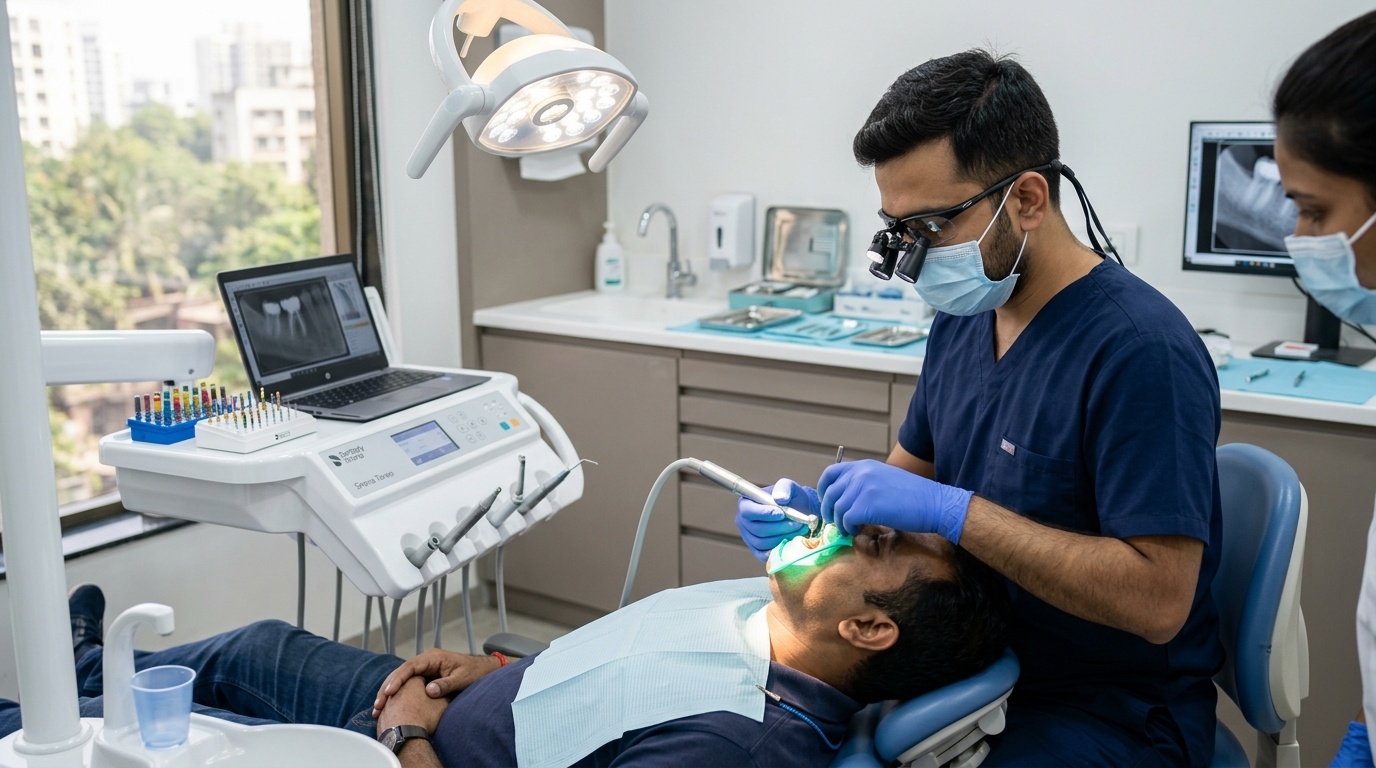
Undergoing endodontic therapy is designed to relieve severe toothache, which is why patients are often caught off guard and ask: why does a root canal tooth hurt? Once the inflamed nerve inside the pulp chamber has been removed, the tooth itself cannot feel hot or cold sensations. However, the surrounding anatomical structures—including the periodontal ligament, alveolar bone, and gingival tissues—often experience temporary inflammation. Understanding the clinical distinction between normal post-treatment healing soreness and persistent pain requiring dental evaluation gives you complete clarity and peace of mind.
Key Takeaways:
- The Tooth Nerve Is Dead, But Ligaments Remain: Pain after a root canal originates from the bruised periodontal ligament surrounding the outer root surface, not from inside the devitalized tooth.
- Expected Healing Window (24–72 Hours): Mild tenderness upon biting or tapping is standard as surrounding tissues recover from prior bacterial infection and mechanical cleaning.
- High Restoration Is a Common Trigger: If a temporary filling or crown sits even 0.2 mm too tall, normal chewing pressure bruises the socket ligament repeatedly.
- Persistent Pain Signals: Throbbing discomfort persisting past 5 to 7 days may indicate an untreated microscopic canal branch, a micro-crack, or coronal seal leakage.
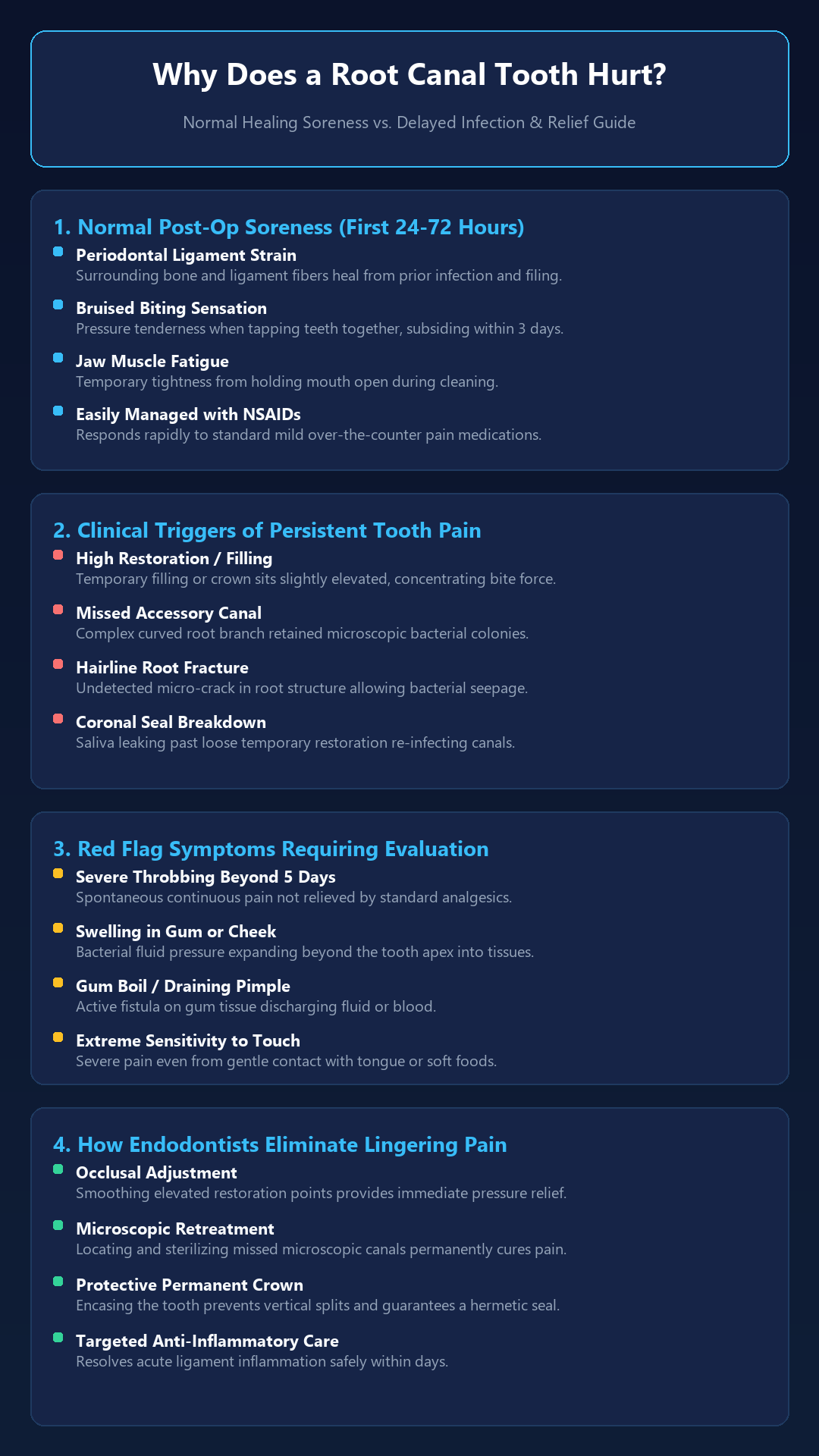
Table of Contents
- Biological Mechanism: Why a Nerve-Free Tooth Can Still Hurt
- Normal Healing Soreness: What to Expect in the First 72 Hours
- Top Clinical Triggers of Persistent Root Canal Tooth Pain
- Red Flag Symptoms That Warrant Immediate Dental Review
- Practical Steps to Relieve Post-Procedure Soreness at Home
- How Endodontists Treat and Eliminate Lingering Pain
- Gentle, Precision Endodontics with Dr. Saurabh Pakhale
- Frequently Asked Questions (FAQs)
Biological Mechanism: Why a Nerve-Free Tooth Can Still Hurt
To understand why a tooth that has undergone root canal therapy can still hurt, it is vital to distinguish between two distinct neural networks:
- The Intrapulpal Nerve Network: Located inside the hollow core of the tooth. This nerve tissue is completely cleared during root canal therapy. Once removed, the tooth can never again register thermal shocks from hot tea or iced water.
- The Periodontal Ligament (PDL) Sensors: Millions of microscopic collagen fibers anchoring the outer root surface to the surrounding jawbone socket. These external ligaments remain fully alive and are packed with tactile mechanoreceptors that detect biting pressure, chewing force, and local inflammation.
When bacterial toxins exit through the root apex prior to treatment, or when fine nickel-titanium instruments clean near the root tip, the periodontal ligament becomes temporarily bruised. When you tap the teeth together, these bruised fibers send pressure signals to the brain that feel identical to a toothache.
Normal Healing Soreness: What to Expect in the First 72 Hours
Mild post-operative tenderness is a natural part of tissue recuperation. A typical healing timeline unfolds as follows:
| Timeframe | Typical Sensation | Underlying Biological Cause |
|---|---|---|
| Day 1 (0–24 Hours) | Numbness wears off; dull bruised ache upon touching tooth | Acute periodontal ligament recovery from mechanical debridement |
| Day 2–3 (24–72 Hours) | Mild biting sensitivity; noticeably declining each day | Resolution of cellular inflammation in surrounding alveolar bone |
| Day 4–7 (1 Week) | Comfortable chewing; baseline sensation restored | Full biological stabilization of the apical periodontal seal |
Top Clinical Triggers of Persistent Root Canal Tooth Pain
If pain persists past the first week or flares up weeks later, it typically stems from one of four primary clinical factors:
- High Occlusal Contact (Premature Bite): If the temporary filling or crown sits even a fraction of a millimeter too high, the opposing tooth strikes it first every time you swallow or chew. This repeated trauma causes chronic periodontal ligament bruising.
- Missed Accessory Canal: Human molars often feature complex anatomy, such as an extra fourth canal (MB2 in upper molars) or narrow lateral branches. If a canal is missed, residual bacteria continue multiplying and producing pressure.
- Coronal Micro-Leakage: Delaying permanent crown placement allows saliva and oral bacteria to seep past porous temporary fillings, re-contaminating the disinfected canals.
- Microscopic Vertical Root Fracture: A hairline structural crack extending along the root permits chronic bacterial entry, leading to localized bone loss.
Red Flag Symptoms That Warrant Immediate Dental Review
Contact your dental surgeon promptly if you notice any of these warning signs:
- Severe throbbing, unprovoked pain that disrupts sleep or does not respond to painkillers.
- Visible swelling in the adjacent gum tissue, cheek, or jawline.
- A pimple-like bump (fistula) on the gum line draining fluid or pus.
- A feeling that the tooth is loose or moving when touched with your tongue.
Practical Steps to Relieve Post-Procedure Soreness at Home
During the first few days of recovery, these clinical self-care guidelines promote rapid comfort:
- Chew on the Opposite Side: Protect the treated tooth from mechanical chewing strain until the permanent crown is securely placed.
- Targeted Anti-Inflammatory Medication: Over-the-counter NSAIDs (such as ibuprofen) specifically reduce periodontal ligament swelling much more effectively than basic analgesics.
- Warm Saltwater Rinses: Dissolve half a teaspoon of salt in warm water and rinse gently three times daily to soothe surrounding gum margins.
- Avoid Hard or Crunchy Foods: Prevent cracking vulnerable tooth walls by steering clear of nuts, ice, hard crusts, and sticky candies.
How Endodontists Treat and Eliminate Lingering Pain
Persistent pain after root canal therapy is solvable with modern diagnostics. Your dentist will first verify the bite with articulating paper; adjusting a high spot takes only 2 minutes and brings immediate relief. If symptoms stem from complex anatomy or persistent apical bacteria, specialized root canal retreatment can reopen the tooth, dissolve old filling material, thoroughly sterilize previously missed channels under high magnification, and reseal the root system permanently.
Gentle, Precision Endodontics with Dr. Saurabh Pakhale
Post-treatment tooth pain should never remain a stressful mystery. Under the clinical leadership of Dr. Saurabh Pakhale, Elite Dermadent specializes in advanced, painless root canal treatment in Thane.
Equipped with high-precision rotary instruments, electronic apex locators, and custom CAD/CAM crowns, our team ensures your tooth is saved comfortably, accurately, and protected for decades of natural chewing.
Frequently Asked Questions (FAQs)
1. Why does my tooth hurt when I bite down after a root canal?
Biting pain is caused by inflammation in the periodontal ligament surrounding the root tip. Because this ligament has sensitive pressure sensors, chewing forces transmit soreness into the jawbone until the tissues heal completely (usually within 2 to 4 days).
2. Can a root-canal-treated tooth feel hot or cold?
No. Thermal sensitivity requires living pulp tissue inside the tooth. If you feel sensitivity to hot or cold, it is almost always originating from an adjacent untreated tooth with decay or exposed root surfaces.
3. Why does my tooth hurt 2 weeks after a root canal?
Pain lingering beyond 10 to 14 days is not normal healing soreness. It typically indicates a high restoration that needs polishing, a missed accessory canal branch, or secondary bacterial leakage. A dental checkup will identify and correct the cause.
4. Can an uneven bite cause severe toothache after root canal?
Yes. Even an elevation of 0.1 mm means the treated tooth bears the full force of chewing before other teeth touch. This constant impact severely bruises the socket ligament. A quick 2-minute bite adjustment relieves this pressure immediately.
5. When is retreatment necessary for a painful root canal tooth?
Retreatment is indicated when radiographic imaging reveals persistent periapical infection, uncleaned canal anatomy, or defective old fillings. Endodontic retreatment has an 85% to 90% success rate in curing infection and saving the tooth.
No responses yet