
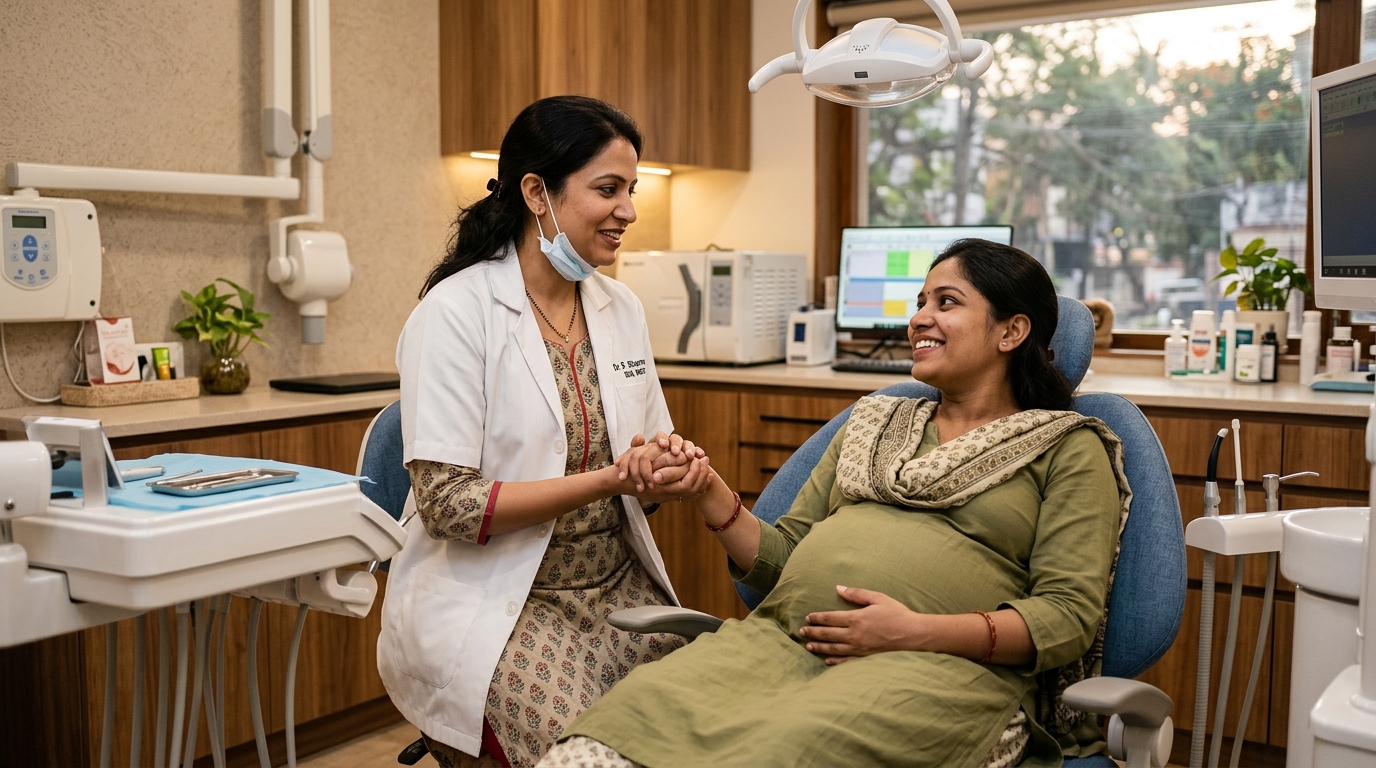
Experiencing severe tooth pain during pregnancy can be overwhelming. Expectant mothers frequently ask can a root canal be done in pregnancy. According to the American Dental Association (ADA) and OB-GYN medical guidelines, root canal treatment is completely safe during pregnancy, and treating an active dental infection is far safer for both mother and baby than delaying care.
Key Takeaways
- Medically Approved & Safe: Both the ADA and the American College of Obstetricians and Gynecologists (ACOG) confirm that emergency root canals are safe at any stage of pregnancy.
- Second Trimester Is Ideal: Weeks 14 through 27 (second trimester) represent the golden window for dental procedures.
- Safe Dental X-Rays: Digital dental X-rays emit minimal targeted radiation and are completely safe when used with a protective lead abdominal apron and thyroid collar.
- Pregnancy-Safe Anesthesia: Local anesthetics like Lidocaine (Category B safety rating) effectively numb the tooth without harming the developing fetus.
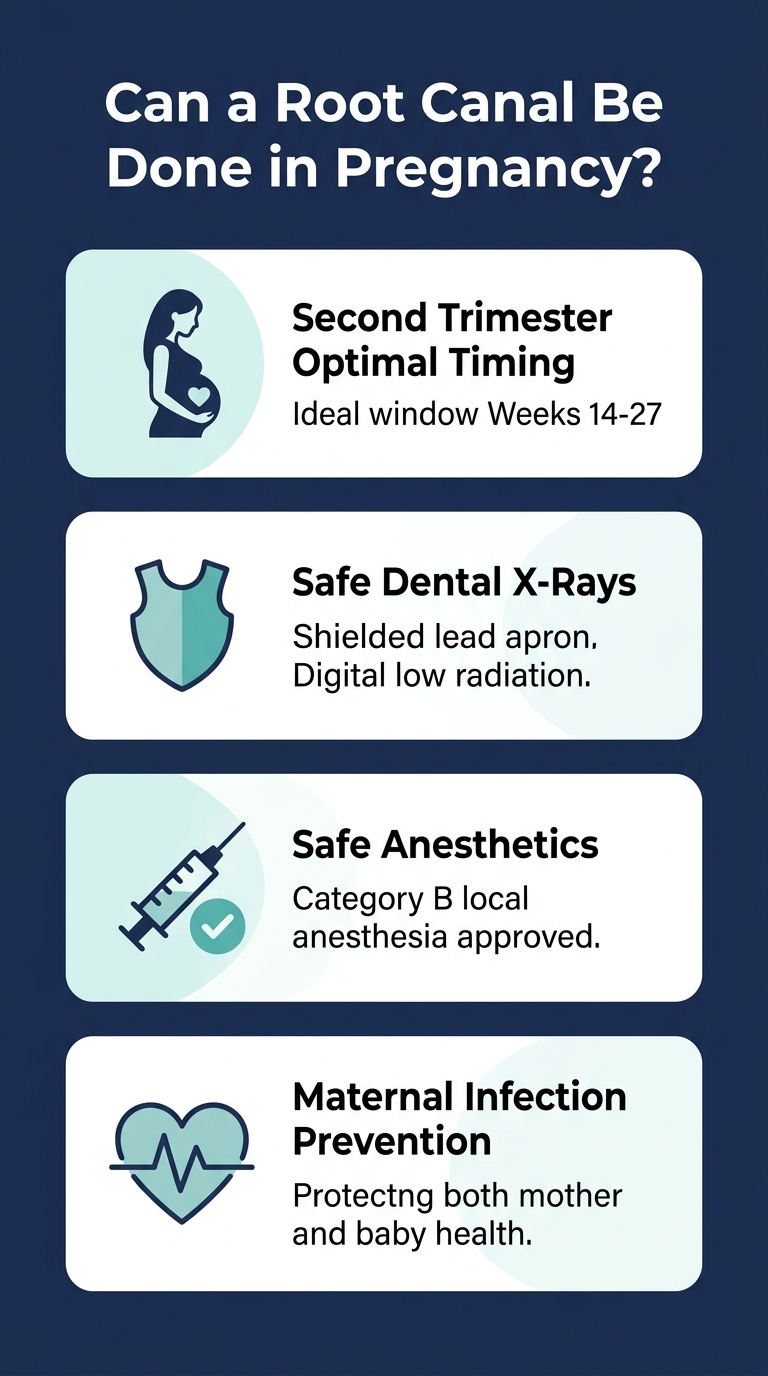
Table of Contents
- Can a Root Canal Be Done During Pregnancy?
- Trimester-by-Trimester Safety Breakdown
- Safety of Dental X-Rays, Anesthesia & Medications
- Why Ignoring Dental Infection Is Dangerous
- Maternal Dental Care with Dr. Saurabh Pakhale
- Frequently Asked Questions
Can a Root Canal Be Done During Pregnancy?
The medical consensus is unanimous: yes, a root canal can and should be done during pregnancy if a tooth is infected. Hormonal changes during pregnancy increase blood flow to gum tissues, making expectant mothers more susceptible to dental inflammation and rapid bacterial progression.
Leaving an infected tooth untreated causes severe maternal stress, systemic inflammation, and potential bacterial spread into the bloodstream, which poses significantly greater risks to the pregnancy than undergoing a controlled endodontic procedure.
Trimester-by-Trimester Safety Breakdown
Endodontists tailor treatment timing based on the stage of pregnancy:
1. First Trimester (Weeks 1 – 13)
During the first trimester, major fetal organ development occurs. If an expectant mother experiences severe tooth pain or emergency infection, immediate pain relief and temporary canal cleaning are performed safely. Non-urgent cosmetic dental work is deferred.
2. Second Trimester (Weeks 14 – 27) — OPTIMAL WINDOW
The second trimester is the safest and most comfortable period for endodontic treatment. Fetal organogenesis is complete, morning sickness has typically subsided, and lying in the dental chair is comfortable for the mother.
3. Third Trimester (Weeks 28 – Birth)
Root canal procedures can be safely performed in the third trimester to eliminate pain before delivery. Endodontists position the dental chair slightly reclined or tilted to the left to prevent pressure on the inferior vena cava.
Safety of Dental X-Rays, Anesthesia & Medications
| Procedure Element | Pregnancy Safety Rating & Protocol | Clinical Guidance |
|---|---|---|
| Digital Dental X-Rays | 100% Safe with Lead Shielding | Modern digital X-rays emit negligible radiation directed strictly at the mouth; lead aprons protect the womb completely. |
| Local Anesthesia | FDA Category B (Lidocaine) | Lidocaine crosses the placenta in negligible amounts and is fully approved for pregnant dental patients. |
| Antibiotics (If Needed) | FDA Category B (Amoxicillin/Penicillin) | Safe for clearing severe bacterial infections during pregnancy under OB-GYN coordination. |
| Pain Relievers | Acetaminophen / Paracetamol | Safe for post-op discomfort; NSAIDs (Ibuprofen) are avoided in the third trimester. |
Why Ignoring Dental Infection Is Dangerous
Delaying a necessary root canal out of fear can lead to severe maternal and fetal complications:
- Systemic Bacterial Infection: Dental abscesses can release inflammatory cytokines and bacteria into the bloodstream, which has been linked in medical studies to pre-term labor and low birth weight.
- Extreme Maternal Stress: Severe, unmanaged tooth pain causes prolonged spikes in cortisol and adrenaline, stressing both mother and baby.
- Surgical Complications Later: An untreated tooth infection can destroy jawbone tissue, requiring complex surgery post-delivery.
Maternal Dental Care with Dr. Saurabh Pakhale
At Elite Dermadent, Dr. Saurabh Pakhale, Endodontist and Dental Surgeon, provides gentle, specialized care tailored to expectant mothers in close coordination with their attending OB-GYN.
Safe Endodontic Solutions
- Painless Maternal Treatment: Schedule your gentle Root Canal Treatment in Thane featuring specialized lead shielding and stress-free single-visit protocols.
- Complex Revision Services: Learn how specialized Root Canal Retreatment cures persistent infections safely.
Frequently Asked Questions
Is it safe to get dental anesthesia while pregnant?
Yes. Local anesthetics containing Lidocaine with epinephrine (FDA Category B) are safe for pregnant women. Local anesthesia stays concentrated in the oral tissue and does not harm fetal development.
Will dental X-rays hurt my unborn baby?
No. Digital dental X-rays produce extremely low, targeted radiation directed at your jaw, not your abdomen. Wearing a protective lead apron with a thyroid collar ensures virtually zero radiation reaches the uterus.
Which trimester is best for a root canal?
The second trimester (weeks 14 to 27) is the optimal time for dental procedures. However, if you experience severe pain or infection in the first or third trimester, emergency treatment should be performed immediately to prevent bacterial complications.
Can tooth infection during pregnancy affect the baby?
Yes. An active, untreated dental abscess releases bacteria and inflammatory chemicals into your body, which can elevate systemic inflammation and increase the risk of premature labor. Clearing the infection with a root canal protects both mother and baby.
Comments are closed