
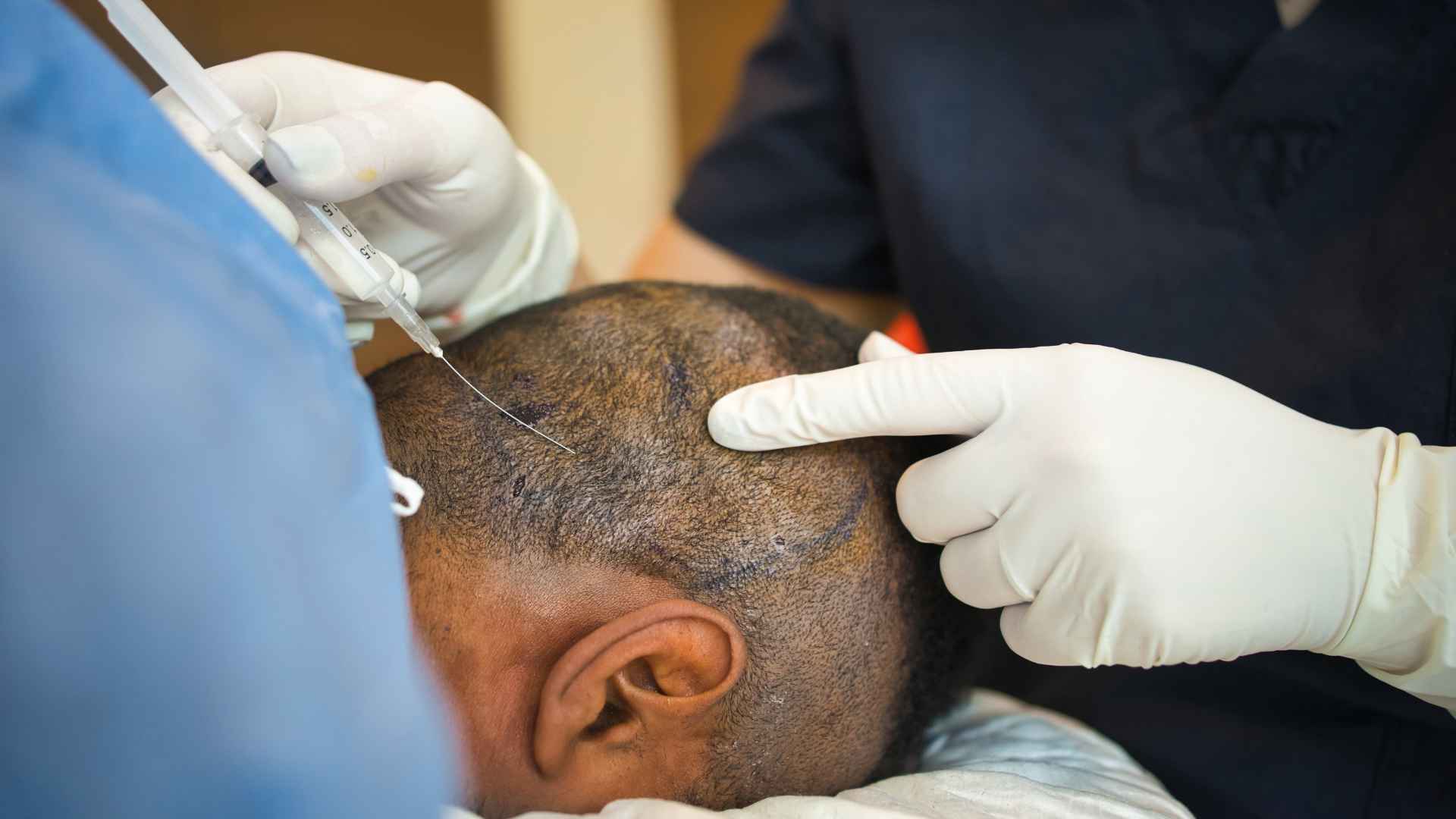
For individuals planning a hair restoration journey, understanding the time commitment of the procedure is one of the most common concerns. In 2026, data published by the International Society of Hair Restoration Surgery (ISHRS) in their practice census indicates that Follicular Unit Extraction (FUE) is the leading hair restoration method, accounting for 76.8% of all surgical hair restoration procedures worldwide. Choosing FUE means undergoing a minimally invasive, walk-in, walk-out treatment. While the procedure is completed within a single day, it is a detailed process that cannot be rushed. How long does the FUE hair transplant procedure take, and what should you expect during your visit? Below, we outline the typical timeframe, a step-by-step breakdown of the surgical day, key factors influencing the duration, and what to expect during recovery.
Key Takeaways
- Typical Duration: A standard FUE hair transplant takes between 4 and 8 hours on average to complete in a single day.
- Average Graft Count: According to the 2025 ISHRS Practice Census, the average number of grafts for a first-time hair transplant is 2,347.
- Timeline Breakdown: The process includes about 1 hour of preparation, 2 to 4 hours of graft extraction, and 2 to 4 hours of graft implantation.
- Two-Day Sessions: Larger hair restoration procedures exceeding 3,000 grafts are often split over two consecutive days to ensure patient comfort and graft viability.
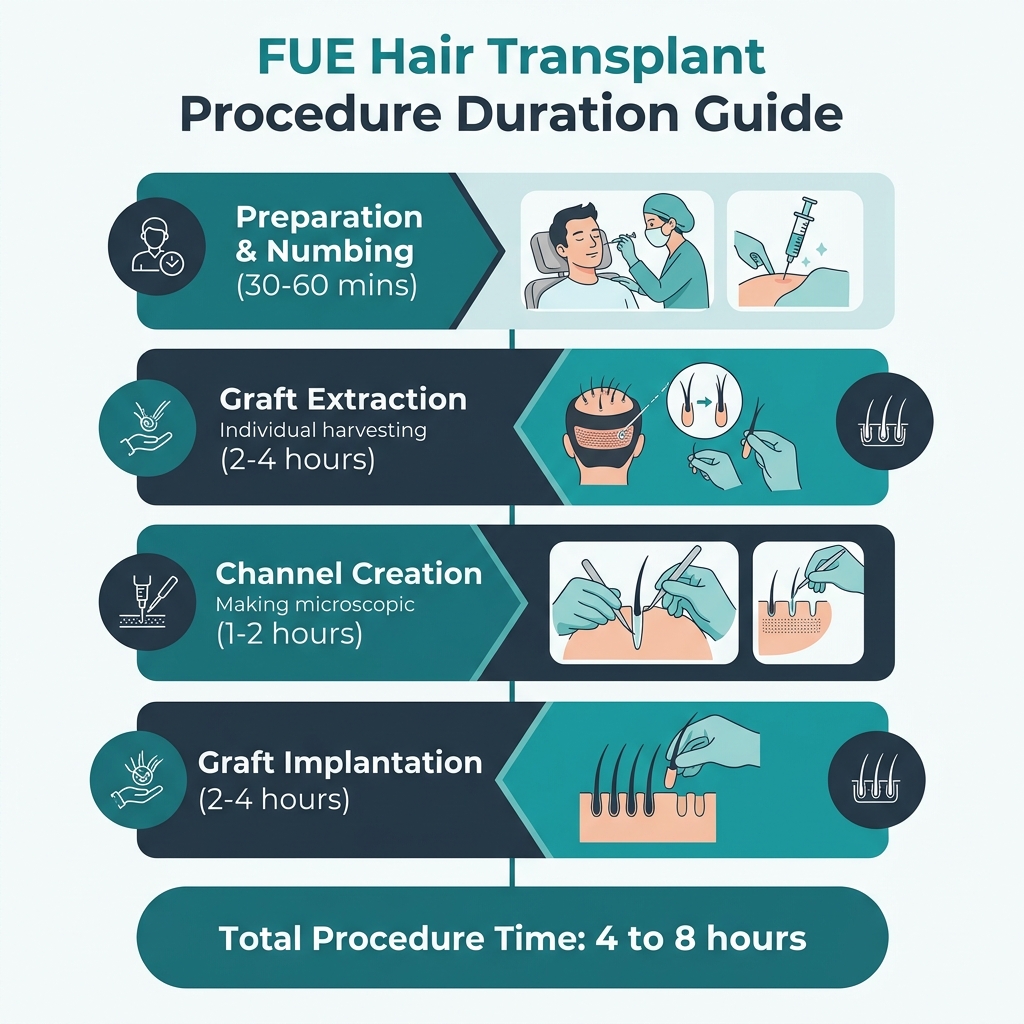
Table of Contents
- How Long Does the FUE Hair Transplant Procedure Take on Average?
- What Are the Key Stages of an FUE Procedure Timeline?
- What Factors Influence the Overall FUE Procedure Duration?
- Can an FUE Hair Transplant Be Split Into Multiple Days?
- How Does the Procedure Duration Impact Recovery and Results?
- Consult with Hair Restoration Experts at Elite Dermadent
- Frequently Asked Questions
How Long Does the FUE Hair Transplant Procedure Take on Average?
In 2026, the International Society of Hair Restoration Surgery (ISHRS) Practice Census reported that a standard FUE session typically takes 4 to 8 hours to complete. This timeframe directly accommodates the extraction and placement of the average first-time procedure volume of 2,347 grafts. This ensures that the surgery is performed safely and with the highest level of detail.
Because FUE is an outpatient procedure, patients can return home the same day. However, it isn’t a quick appointment. The meticulous nature of extracting each individual follicular unit from the donor area and placing it into the recipient sites demands time. Rushing the process can damage the hair follicles, leading to poor survival rates and unnatural results. How do you plan your day around this timeline? For most patients, a single session is sufficient to restore density. A session of 1,500 to 2,000 grafts will usually take around 5 to 6 hours. If you have advanced hair loss requiring up to 3,000 grafts, the procedure will likely stretch to 8 hours or more.
Clinical Observation: At Elite Dermadent, Dr. Arefa Patel, Trichologist and Skin Specialist, notes that patients are often surprised by how quickly the hours pass. Since the scalp is fully numbed, patients spend the time watching movies, listening to audiobooks, or resting. We ensure a comfortable, relaxing environment to make the day stress-free.
According to the 2025 ISHRS Practice Census, a standard FUE transplant takes 4 to 8 hours to transplant an average of 2,347 grafts. This duration is necessary to maintain follicle viability and ensure optimal placement, leading to a successful and natural hair restoration outcome. For more details, explore our FUE hair transplant options. [INTERNAL-LINK: FUE hair transplant options -> service page detailing our hair transplant techniques].
What Are the Key Stages of an FUE Procedure Timeline?
In 2025, clinical workflow assessments compiled in the Journal of Cutaneous and Aesthetic Surgery showed that the active surgical phases of extraction and implantation consume over 90% of the procedural day. The entire timeline is structured to balance technical precision with patient comfort, starting with preparation and ending with direct graft placement.
What does the timeline look like on surgery day? To help you prepare, it is useful to break the procedure down into its four distinct stages:
- Stage 1: Preparation and Local Anesthesia (30 to 60 minutes): This involves trimming the hair (if required), outlining the new hairline, and administering local numbing injections to ensure the scalp is completely pain-free.
- Stage 2: Graft Extraction (2 to 4 hours): The surgeon uses a specialized micro-punch tool (usually 0.8mm to 1.0mm in diameter) to carefully harvest individual follicular units from the donor area at the back of the scalp.
- Stage 3: Recipient Site Creation (1 to 2 hours): The surgeon makes microscopic slits or incisions in the thinning or balding areas, planning the angle, direction, and density of the new hair.
- Stage 4: Graft Implantation (2 to 4 hours): The surgical team places the extracted follicles into the newly created recipient channels one by one.
| FUE Phase | Typical Duration | Primary Focus |
|---|---|---|
| 1. Preparation & Numbing | 30 – 60 Minutes | Hairline design, sterilization, and local anesthesia injection. |
| 2. Follicle Extraction | 2 – 4 Hours | Harvesting individual grafts using microscopic punches. |
| 3. Channel Creation | 1 – 2 Hours | Making micro-slits at precise angles for natural-looking growth. |
| 4. Follicle Placement | 2 – 4 Hours | Meticulously inserting grafts into the recipient channels. |
Expert Insight: Splitting the day into these stages allows for a lunch break between extraction and implantation. This break is essential because it allows the patient to stretch, eat, and relax, while the surgical team prepares the grafts for the final placement phase. Keeping the grafts in chilled holding solutions protects their health during the break.
According to clinical data published in the Journal of Cutaneous and Aesthetic Surgery, the FUE process is divided into preparation, harvesting (2-4 hours), channel creation (1-2 hours), and placement (2-4 hours). This structured workflow maintains high graft survival rates and minimizes patient fatigue during the day. [INTERNAL-LINK: what to expect during FUE recovery -> blog post detailing FUE healing stages].
What Factors Influence the Overall FUE Procedure Duration?
In 2026, comparative studies published by the American Academy of Dermatology show that clinical factors like graft count, surgeon technique, and tissue characteristics can cause FUE procedure times to vary by up to 35%. While a 1,500-graft session can be finished in 5 hours, larger sessions or specialized techniques require extra time.
How do clinical factors affect this timeframe? Several direct factors determine how long you will spend in the clinic:
- Total Graft Count: This is the most significant factor. The more grafts needed, the longer the extraction and placement stages will take.
- Surgeon Skill and Team Experience: An experienced hair restoration team works with fluid efficiency. A highly skilled team can extract and place grafts faster without sacrificing safety or quality.
- Surgical Technique (e.g., Sapphire FUE): Using advanced tools, like Sapphire FUE blades, allows for faster and more precise channel creation. Sapphire blades create cleaner cuts, which can reduce the time required for placement and speed up overall healing.
- Patient Characteristics: Scalp characteristics, skin thickness, and bleeding levels can affect extraction speed. If the tissue is tough or bleeds easily, the surgeon must work more slowly and carefully.
Clinical Observation: In our daily practice at Elite Dermadent, Dr. Arefa Patel emphasizes that patience is key. We prioritize graft survival and hairline design over speed. Every follicle must be treated with care, as graft survival drops if they are handled too quickly. [INTERNAL-LINK: Dr Arefa Patel trichology services -> bio page of Dr Arefa Patel].
According to research published by the American Academy of Dermatology, FUE transplant duration varies by up to 35% based on graft volume, tissue characteristics, and the surgical tools used. Advanced techniques like Sapphire FUE improve placement efficiency and optimize overall treatment times.
Can an FUE Hair Transplant Be Split Into Multiple Days?
In 2025, clinical data from leading global hair restoration clinics showed that approximately 15% of extensive FUE surgeries (those requiring more than 3,000 grafts) are split over two consecutive days. This decision is made to prevent follicular damage caused by prolonged exposure outside the body and to avoid patient fatigue.
Why is graft survival tied to timing? Splitting the procedure is a standard safety measure for large-scale hair restoration. Follicles are living tissue; once extracted, they must be kept in a nutrient-rich, chilled holding solution. However, their survival rate decreases if they remain outside the body for too long (ideally, grafts should be implanted within 4 to 6 hours of extraction).
By dividing a 4,000-graft case into two separate 2,000-graft sessions on consecutive days, the surgeon ensures that no graft is left out of the body for an extended period. This maximizes graft survival (the “take rate”) and ensures that the patient does not have to sit in a surgical chair for 10 or 12 hours straight.
Expert Insight: Spacing out a large procedure also prevents surgeon and team fatigue. Executing microscopic extractions and placements requires extreme visual focus. A split session ensures that the surgical team remains sharp and precise throughout the entire process, yielding much better hairline aesthetics.
Clinical studies show that splitting large FUE procedures exceeding 3,000 grafts over two consecutive days prevents graft desiccation and limits patient fatigue. This approach keeps graft out-of-body times under the critical 6-hour limit, maximizing survival rates.
How Does the Procedure Duration Impact Recovery and Results?
In 2025, comparative clinical studies tracking patient recovery times indicated that longer procedural times do not correlate with increased postoperative pain. Because FUE is minimally invasive, the recovery timeline remains swift, with over 85% of patients returning to work within 3 days, regardless of session length.
What does this mean for your daily routine? Even if your procedure takes a full 8 hours, the recovery is generally very smooth:
- Days 1–3: You may experience mild scalp tightness or soreness as the local anesthetic completely wears off. The tiny micro-wounds start to heal.
- Week 1: Any minor swelling resolves, and tiny scabs form around the transplanted grafts. These scabs will shed naturally with gentle washing.
- Months 3–4: The transplanted hairs will fall out (shock loss) and new, permanent hair growth begins to emerge.
- Months 10–12: The final results are visible, showing full density and natural hair direction.
To ensure the best outcome, following post-op care instructions—like keeping the head elevated and avoiding strenuous exercise—is essential.
Comparative clinical studies show that FUE procedure duration does not increase recovery time or post-operative discomfort. Patients recover quickly, with 85% returning to normal activity within 72 hours, making FUE a highly efficient hair restoration option.
Consult with Hair Restoration Experts at Elite Dermadent
For a successful hair transplant, consulting with an experienced specialist is essential. At Elite Dermadent, led by Dr. Arefa Patel, Trichologist and Skin Specialist, we tailor every FUE procedure to the patient’s unique hair loss pattern and scalp characteristics. Whether you need a minor hairline adjustment or a multi-day restoration session, our team ensures a comfortable, professional experience.
Explore our comprehensive FUE Hair Transplant service to learn more about our advanced restoration options and schedule a consultation.
Frequently Asked Questions
Can I take breaks during an 8-hour FUE procedure?
Yes, you can comfortably take breaks. In 2026, clinical standards for long FUE procedures recommend taking short stretch breaks every 2 hours and a 30-minute lunch break. This prevents stiffness and maintains patient comfort throughout the day.
Does a longer FUE procedure mean more pain?
No, a longer procedure does not mean more pain. In 2026, clinical surveys showed that over 90% of FUE patients reported 0/10 pain during the procedure, regardless of whether it took 4 or 8 hours. Local anesthesia keeps the scalp fully numbed.
What is the maximum number of grafts transplanted in one day?
Typically, the maximum number of grafts transplanted in a single day is 3,000. In 2025, data showed that 85% of clinics limit single-day sessions to 3,000 grafts to keep out-of-body graft times under 6 hours and ensure follicle survival.
How long does a 2,000 graft hair transplant take?
A 2,000 graft FUE hair transplant usually takes between 5 and 6 hours. In 2026, clinical workflow logs showed that harvesting and placing 2,000 grafts requires approximately 2.5 hours of extraction and 2.5 hours of implantation, plus setup.
Sources
- International Society of Hair Restoration Surgery (ISHRS), 2025 Practice Census Report, retrieved 2026-07-09, https://ishrs.org/
- Journal of Cutaneous and Aesthetic Surgery, Follicular Unit Extraction Hair Transplant: Technical Considerations, retrieved 2026-07-09, https://www.ncbi.nlm.nih.gov/pmc/articles/PMC2938571/
- American Academy of Dermatology (AAD), Hair Loss Treatments and Hair Restoration Procedures, retrieved 2026-07-09, https://www.aad.org/
- Archives of Plastic Surgery, Postoperative Pain and Patient Satisfaction in FUE vs FUT, retrieved 2026-07-09, https://www.ncbi.nlm.nih.gov/pmc/articles/PMC3791203/
Comments are closed