
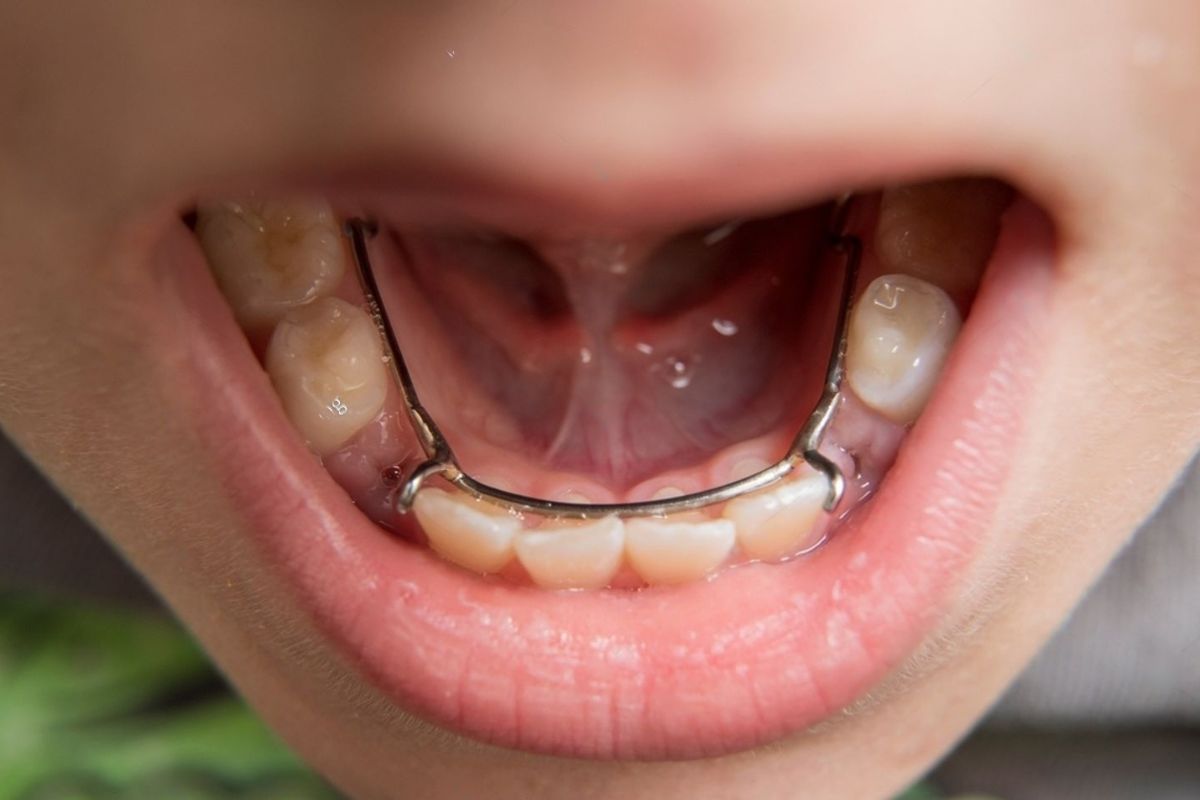
Cost of Tooth Space Maintainer in Thane
Cost of Tooth Space Maintainer in Thane: Transparent prices, fast results, expert care by Dr. Saurabh Pakhale. Call Elite Dermadent now.
Table of Contents
Cost by Appliance Type — Thane 2026
At Elite Dermadent, pricing is competitive and tailored to the child’s specific needs — exact fees are discussed during consultation .
| Type of Space Maintainer | Description | Thane — Elite Dermadent (Dr. Pakhale) | Thane (Other Clinics) |
|---|---|---|---|
| Band & Loop (Fixed) | Steel band + wire loop for single tooth gap | ₹3,500 – ₹6,000 | ₹2,500 – ₹5,500 |
| Crown & Loop (Fixed) | Crown + loop; used when adjacent tooth is decayed | ₹4,500 – ₹8,000 | ₹3,500 – ₹7,000 |
| Distal Shoe (Fixed) | Extends under gum to guide erupting molar | ₹6,000 – ₹10,000 | ₹5,000 – ₹9,000 |
| Lingual Holding Arch (Fixed) | Bilateral lower jaw maintainer | ₹7,000 – ₹12,000 | ₹6,000 – ₹11,000 |
| Removable Acrylic Appliance | Flexible, removable; for older children | ₹3,000 – ₹6,000 | ₹2,000 – ₹5,000 |
| Gerber Space Maintainer | Fixed type for precise alignment | ₹5,000 – ₹9,000 | ₹3,500 – ₹7,000 |
Consultation fee at Elite Dermadent: ₹500
City-by-City Cost Comparison (2026)
Thane offers a strong middle-ground between the premium pricing of South Mumbai and the budget markets of Kalyan/Dombivli.
| Space Maintainer Type | Thane — Elite Dermadent | Thane (Other Clinics) | Mumbai (South/Bandra) | Navi Mumbai | Pune | Kalyan / Dombivli |
|---|---|---|---|---|---|---|
| Removable Appliance | ₹3,000 – ₹6,000 | ₹2,000 – ₹5,000 | ₹5,000 – ₹9,000 | ₹4,000 – ₹8,500 | ₹2,500 – ₹5,000 | ₹2,000 – ₹4,500 |
| Fixed Appliance (Basic) | ₹3,500 – ₹8,000 | ₹2,500 – ₹6,000 | ₹6,000 – ₹12,000 | ₹5,000 – ₹9,000 | ₹3,000 – ₹7,000 | ₹2,500 – ₹5,500 |
| Fixed Appliance (Complex) | ₹8,000 – ₹15,000 | ₹6,000 – ₹12,000 | ₹9,000 – ₹18,000 | ₹8,500 – ₹16,000 | ₹7,000 – ₹14,000 | ₹7,500 – ₹15,000 |
| Gerber / Distal Shoe | ₹5,000 – ₹10,000 | ₹3,500 – ₹8,000 | ₹7,000 – ₹14,000 | ₹6,000 – ₹12,000 | ₹5,000 – ₹9,000 | ₹4,000 – ₹8,000 |
| Bilateral (Lingual Arch) | ₹7,000 – ₹12,000 | ₹5,500 – ₹10,000 | ₹10,000 – ₹18,000 | ₹9,000 – ₹16,000 | ₹7,000 – ₹13,000 | ₹6,000 – ₹11,000 |
City ranges sourced from regional dental market data and published clinic benchmarks
Value-for-Money Index
| City | Avg. Fixed Appliance Cost | Specialist Access | Technology | Travel from Thane | Overall Value |
|---|---|---|---|---|---|
| Thane — Elite Dermadent | ₹3,500 – ₹8,000 | ⭐⭐⭐⭐⭐ | ⭐⭐⭐⭐⭐ | 🟢 Local — No travel | 🏆 Excellent |
| Mumbai (South/Bandra) | ₹6,000 – ₹12,000 | ⭐⭐⭐⭐⭐ | ⭐⭐⭐⭐⭐ | 🔴 45–90 min | ⭐⭐⭐ High cost + travel |
| Navi Mumbai | ₹5,000 – ₹9,000 | ⭐⭐⭐⭐ | ⭐⭐⭐⭐ | 🟡 30–50 min | ⭐⭐⭐⭐ Good |
| Pune | ₹3,000 – ₹7,000 | ⭐⭐⭐⭐ | ⭐⭐⭐⭐ | 🔴 2–3 hours | ⭐⭐ Not practical |
| Kalyan / Dombivli | ₹2,500 – ₹5,500 | ⭐⭐⭐ | ⭐⭐⭐ | 🟡 20–40 min | ⭐⭐⭐ Budget option |
Key Factors Affecting the Cost
These factors will directly influence the final cost quoted at any clinic, including Elite Dermadent:
- Type of appliance — Fixed types (especially Distal Shoe/Lingual Arch) cost significantly more than removable ones
- Number of teeth involved — Bilateral/multiple tooth cases require more material and chair time
- Child’s age and jaw stage — Younger children may need more complex appliances
- X-rays and imaging — Digital X-rays (panoramic/bite-wing) add ₹500–₹2,000 to the total visit cost
- Dentist’s specialization — MDS Pedodontist vs. BDS general dentist can differ by 30–50% in fees
- Follow-up and adjustments — Ongoing monitoring visits (every 3–6 months) add to cumulative cost
When a child loses a baby tooth too early — due to decay, trauma, or a necessary extraction — the gap left behind is more than just a cosmetic concern. The surrounding teeth silently begin to drift. The permanent tooth beneath loses its roadmap. And what begins as a small gap can snowball into a complex orthodontic problem years later.
A tooth space maintainer is the simple, effective solution pediatric dentists prescribe to prevent exactly this. But as a parent in Thane, you’re right to ask: What does it cost? Is it necessary? Which type does my child need?
This guide answers every question — clearly, honestly, and completely.
What Is a Tooth Space Maintainer?
A tooth space maintainer is a custom-made dental appliance — either fixed or removable — that holds open the space created by a prematurely lost primary (baby) tooth. It acts as a placeholder, keeping the neighboring teeth from tipping or shifting into the gap, until the permanent tooth is ready to erupt naturally.
Think of it as a reserved parking spot for your child’s incoming permanent tooth. Without it, other teeth crowd into that space, forcing the new tooth to erupt in the wrong position, at the wrong angle, or sometimes not at all.
The appliance is fabricated from dental-grade stainless steel, acrylic, or a combination of both, and is fitted by a trained pedodontist (children’s dental specialist) after a clinical examination and X-ray assessment.
Why Is a Space Maintainer Prescribed?
Pediatric dentists at clinics like Elite Dermadent, Thane recommend space maintainers in the following situations:
- A baby tooth is extracted due to severe tooth decay or infection
- A primary tooth is knocked out or fractured due to trauma
- A tooth is lost prematurely — more than 6 months before the permanent tooth is expected to erupt
- A child has a congenitally missing permanent tooth (the baby tooth has no replacement)
- Post-treatment following pulpectomy failure where the tooth could not be saved
Who Needs a Space Maintainer?
Space maintainers are most commonly prescribed for children between 3 and 12 years of age, during the mixed dentition phase — when both baby teeth and permanent teeth coexist. The decision depends on:
- Which tooth was lost (front vs. back)
- The child’s age and stage of jaw development
- The position and development of the underlying permanent tooth (confirmed via X-ray)Important: Not every lost baby tooth requires a space maintainer. Front teeth (incisors) in older children may not need one, as the permanent teeth erupt relatively quickly. Your pedodontist at Elite Dermadent will confirm this after reviewing X-rays.
What Happens If You Skip a Space Maintainer?
This is the question most parents wish they had asked earlier. Skipping a space maintainer after premature tooth loss can lead to a cascade of problems:
| Consequence | What It Means for Your Child |
|---|---|
| Teeth drifting | Adjacent teeth tip into the gap, misaligning the bite |
| Permanent tooth impaction | New tooth gets blocked, erupts at wrong angle or gets trapped |
| Crowding | Insufficient space causes overlapping teeth |
| Malocclusion | Bite misalignment affects chewing, speech, jaw growth |
| Expensive orthodontic treatment | Braces or aligners needed later — costing ₹40,000 – ₹2,00,000+ |
The cost of a space maintainer — ₹3,500 to ₹12,000 — is a fraction of what orthodontic correction costs later. Prevention, in this case, is dramatically cheaper than treatment.
Types of Space Maintainers Used at Elite Dermadent, Thane
Space maintainers are not one-size-fits-all. The type prescribed depends on how many teeth were lost, which jaw is affected, the child’s age, and the clinical findings from X-rays. Dr. Saurabh Pakhale at Elite Dermadent offers the full spectrum of space maintainer types under one roof.
Fixed Space Maintainers
Fixed appliances are cemented onto the teeth and cannot be removed by the child. They are the most commonly recommended type because they require no cooperation from the child and work continuously without interruption.
1. Band and Loop Space Maintainer
The most widely used fixed appliance. A stainless steel band is placed around the anchor tooth adjacent to the gap, and a loop of wire extends across the space to hold it open. It is used for single-tooth gaps, primarily in the lower back jaw.
2. Crown and Loop Space Maintainer
Similar to the band and loop, but the anchor is a stainless steel crown placed over a decayed or weakened adjacent tooth instead of a band. Ideal when the neighboring tooth has cavities that also require restoration.
3. Distal Shoe Space Maintainer
Used when the second primary molar is lost before the first permanent molar has erupted. A metal extension slides beneath the gumline to guide the emerging permanent molar into its correct position. This is the most technically demanding appliance and requires careful monitoring.
4. Lingual Holding Arch (Lower Jaw)
A bilateral fixed appliance — meaning it spans both sides of the lower jaw. Two bands are placed on the lower first molars, connected by a wire running along the inside (lingual side) of the teeth. Used when multiple lower primary teeth are lost.
5. Nance Holding Arch (Upper Jaw)
The upper jaw equivalent of the lingual arch. A wire connects two upper molar bands, with an acrylic button resting against the roof of the mouth (palate) for additional anchorage. Prevents upper molars from moving forward when multiple upper teeth are lost.
6. Transpalatal Arch (TPA)
A wire crossing the palate, connecting upper first molars on both sides. Used to prevent upper molars from rotating or tipping inward, particularly in bilateral upper tooth loss cases.
Removable Space Maintainers
Removable appliances look similar to orthodontic retainers and can be taken out by the child for eating and cleaning. They are generally used for older, cooperative children and in cases where aesthetics matter — as artificial replacement teeth can be attached to fill the visible gap.
- Best suited for children aged 8 years and above
- Require consistent wear and parental supervision
- Not recommended for younger children who may lose or forget to wear them
| Space Maintainer Type | Jaw | Fixed/Removable | Ideal For |
|---|---|---|---|
| Band & Loop | Lower (usually) | Fixed | Single back tooth gap |
| Crown & Loop | Lower | Fixed | Gap with adjacent decayed tooth |
| Distal Shoe | Lower | Fixed | Second molar lost before permanent eruption |
| Lingual Holding Arch | Lower | Fixed | Multiple lower teeth gaps |
| Nance Holding Arch | Upper | Fixed | Multiple upper teeth gaps |
| Transpalatal Arch | Upper | Fixed | Upper bilateral molar stabilization |
| Removable Acrylic | Both | Removable | Older children, visible gap, aesthetic need |
Cost of Tooth Space Maintainer in Thane 2026
The cost of a space maintainer in Thane in 2026 varies based on the type of appliance, the complexity of the case, and the infrastructure of the dental clinic. At Elite Dermadent, Majiwada, Thane, Dr. Saurabh Pakhale follows transparent, evidence-based pricing — with every cost component explained to parents before treatment begins.
Cost by Type of Appliance — Elite Dermadent, Thane (2026)
| Type of Space Maintainer | Estimated Cost (₹) |
|---|---|
| Band & Loop | ₹3,500 – ₹6,000 |
| Crown & Loop | ₹4,500 – ₹8,000 |
| Distal Shoe | ₹6,000 – ₹10,000 |
| Lingual Holding Arch | ₹7,000 – ₹12,000 |
| Nance Holding Arch | ₹7,000 – ₹12,000 |
| Transpalatal Arch (TPA) | ₹6,500 – ₹11,000 |
| Removable Acrylic Appliance | ₹3,000 – ₹6,000 |
Consultation fee: ₹500 | X-rays (if required): ₹500 – ₹2,000 additional
Additional Cost Components to Budget For
Many parents focus only on the appliance cost but overlook the full picture. Here is a complete cost breakdown to expect:
- Initial consultation: ₹500
- Periapical X-ray (per tooth): ₹300 – ₹600
- OPG (full jaw X-ray): ₹800 – ₹2,000
- Space maintainer fabrication & fitting: As per type (table above)
- Follow-up monitoring visits (every 3–6 months): ₹500 – ₹1,000 per visit
- Appliance removal (when permanent tooth erupts): ₹500 – ₹1,500
- Replacement if lost or broken: 50–80% of original appliance costParent Tip: Ask your dentist at Elite Dermadent to bundle the consultation, X-ray, and appliance fitting into a single treatment estimate so you have full financial clarity before committing.
Thane vs. Nearby Cities — Cost Comparison 2026
Thane represents strong value for families seeking specialist pediatric dental care without the premium pricing of South Mumbai or the inconvenience of traveling to other cities.
| City | Fixed Appliance Range (₹) | Removable Appliance (₹) | Travel from Thane |
|---|---|---|---|
| Thane — Elite Dermadent | ₹3,500 – ₹12,000 | ₹3,000 – ₹6,000 | 🟢 Local — No travel |
| Mumbai (South / Bandra / Andheri) | ₹6,000 – ₹18,000 | ₹5,000 – ₹9,000 | 🔴 45–90 min |
| Navi Mumbai | ₹5,000 – ₹16,000 | ₹4,000 – ₹8,500 | 🟡 30–50 min |
| Pune | ₹3,000 – ₹14,000 | ₹2,500 – ₹5,000 | 🔴 2–3 hours |
| Kalyan / Dombivli | ₹2,500 – ₹11,000 | ₹2,000 – ₹4,500 | 🟡 20–40 min |
While Kalyan and Dombivli offer lower base prices, they have limited access to specialist pedodontists and advanced imaging technology. Mumbai clinics offer top-tier infrastructure but at significantly higher costs and with the added burden of travel. Thane — specifically Elite Dermadent — offers the optimal balance of specialist care, modern technology, transparent pricing, and convenience.
What Factors Affect the Cost of a Space Maintainer?
No two children present with the same dental situation. The final cost quoted at your consultation will depend on several clinical and logistical factors.
Type and Complexity of the Appliance
A simple band and loop for a single lower molar gap is among the most straightforward and affordable options. But a bilateral lingual arch for a child who has lost multiple lower teeth, or a distal shoe that requires subgingival extension, involves far more clinical precision, custom fabrication, and chair time — and is priced accordingly.
Number of Teeth Involved
Unilateral appliances (one side of the mouth) cost considerably less than bilateral appliances (both sides). A child who has lost teeth on both sides of the lower jaw will require a lingual holding arch instead of two separate band and loop appliances — which consolidates treatment but increases the cost.
- Single tooth gap: Band & Loop or Crown & Loop — ₹3,500 – ₹8,000
- Multiple teeth, one jaw: Lingual/Nance Arch — ₹7,000 – ₹12,000
- Both jaws involved: Combination appliances — ₹12,000 – ₹22,000+
Child’s Age and Jaw Development Stage
Younger children (3–5 years) who lose teeth very early may need more complex appliances and more frequent monitoring as their jaws grow rapidly. The appliance may also need to be replaced or adjusted sooner, adding to the cumulative cost over time.
Material Quality
- Standard stainless steel — most common, durable, cost-effective
- Tooth-colored or aesthetic bands — higher cost, used for visible areas
- Titanium components — premium pricing, rare but available
Specialist Qualification
A pedodontist (MDS in Pediatric Dentistry) like Dr. Saurabh Pakhale brings post-graduate specialist training to every case. Specialist fees are typically 30–50% higher than general dentist fees — but this investment significantly reduces the risk of misfit, discomfort, and the need for repeat procedures.
Clinic Technology and Infrastructure
At Elite Dermadent, digital X-rays, intraoral cameras, and precise lab coordination ensure a well-fitting, durable appliance from the first appointment. Clinics without digital imaging rely on analog X-rays and may require more adjustment visits — which can offset any initial cost savings.
| Cost Factor | Budget Impact | Why It Matters |
|---|---|---|
| Appliance type | High | More complex = higher fabrication cost |
| Number of teeth | High | Bilateral costs more than unilateral |
| Child’s age | Medium | Younger = more frequent replacements |
| Material | Medium | Aesthetic materials cost more |
| Specialist vs. General Dentist | Medium-High | Specialist = better outcomes, higher fee |
| Clinic technology | Low-Medium | Better tech = fewer adjustment visits |
| Follow-up frequency | Cumulative | 3–6 monthly reviews add up over time |
How Is a Space Maintainer Placed? — Step-by-Step
Understanding the procedure helps parents prepare their child and reduces anxiety on the day of the appointment. The process at Elite Dermadent is gentle, structured, and child-friendly.
Step 1 — Initial Consultation & Clinical Examination
Dr. Saurabh Pakhale begins with a thorough oral examination of your child’s teeth, gums, and bite. The existing gaps, the condition of adjacent teeth, and the child’s overall dental health are all assessed. Parents are asked about any history of dental trauma, diet habits, and oral hygiene routines.
Duration: 20–30 minutes
Step 2 — Dental X-Rays
X-rays are essential to determine how far the permanent tooth has developed beneath the gumline. This directly influences which type of appliance is recommended and how long it will need to stay in place.
- Periapical X-ray: Focused view of specific teeth and roots
- OPG (Orthopantomogram): Full jaw panoramic view — recommended for multiple missing teeth
Duration: 10–15 minutes | Cost: ₹500 – ₹2,000
Step 3 — Impressions or Digital Scan
A mold (impression) of the child’s jaw is taken using dental putty, or a digital intraoral scan is performed for greater precision. This impression is sent to the dental laboratory where the space maintainer is custom-fabricated to fit your child’s exact anatomy.
Parent Note: Some children find the impression material uncomfortable. Dr. Pakhale’s team uses child-friendly techniques and flavored impression materials to minimize discomfort.
Duration: 15–20 minutes
Step 4 — Laboratory Fabrication
The appliance is custom-made in a dental laboratory based on the impression. At Elite Dermadent, this process typically takes 3 to 7 working days, after which you return for the fitting appointment.
Step 5 — Fitting & Cementation
On the fitting day, the appliance is tried in the mouth, checked for correct fit, and then permanently cemented using dental-grade luting cement (for fixed appliances). The dentist checks the bite, ensures no sharp edges are present, and makes any necessary adjustments on the spot.
Duration: 30–45 minutes | Child tolerance: High — most children do not require local anesthesia for fitting
Step 6 — Instructions, Diet Guidelines & Review Scheduling
Before leaving the clinic, parents receive detailed instructions covering:
- Foods to avoid — sticky sweets, chewing gum, hard popcorn, ice
- Oral hygiene routine — how to brush around the bands effectively
- Warning signs — what to watch for between visits
- Follow-up schedule — typically every 3–6 months until the permanent tooth is ready to eruptTypical Total Duration for Both Appointments: 1.5 – 2 hours across two visits (consultation + fitting)
Caring for Your Child’s Space Maintainer
Getting the space maintainer fitted is only the beginning. How well the appliance is maintained at home directly affects how long it lasts, how comfortable it is, and how effectively it does its job. The good news — the daily care routine is simple and takes no more than a few extra minutes.
Good oral hygiene around a space maintainer is non-negotiable. Food debris and plaque accumulate easily around the metal bands and wire loops, making the area around the appliance a hotspot for decay if neglected. With a fixed appliance in place, your child’s brushing technique needs a small but important upgrade.
Daily Oral Hygiene Routine
- Brush twice daily using a soft-bristled toothbrush, paying extra attention to the areas around the metal bands
- Angle the brush at 45 degrees toward the gumline to dislodge plaque from beneath the band margins
- Use fluoride toothpaste to protect the enamel of adjacent teeth
- Floss daily — for fixed appliances, use a floss threader or interdental brush to clean beneath the wire
- Rinse with an antiseptic mouthwash (alcohol-free, suitable for children) after brushing if recommended by your dentist
- For removable appliances — take out before eating, clean the appliance under running water, and soak in a mild denture-cleaning solution weekly
Foods to Avoid
The most common reason space maintainers fail prematurely is dietary — specifically, certain foods dislodging or bending the wire and bands. Teach your child to avoid:
| Food Category | Examples | Why to Avoid |
|---|---|---|
| Sticky foods | Toffee, caramel, chewing gum, fruit chews | Pull the band off the tooth |
| Hard foods | Ice, hard candy, popcorn kernels, crusty bread | Bend or break the wire loop |
| Chewy foods | Bagels, beef jerky, thick rotis with excess force | Stress on the cemented joint |
| Sugary foods & drinks | Cold drinks, sweets, biscuits | Accelerate decay under bands |
Parent Tip: Packing your child’s school tiffin thoughtfully — avoiding hard or sticky snacks — can significantly extend the life of the appliance and prevent unplanned emergency dental visits.
When Is the Space Maintainer Removed?
The appliance is removed once the permanent tooth is confirmed to be actively erupting — typically visible on an X-ray as the tooth crown breaking through the bone. Removal is a quick, painless procedure that takes 10–15 minutes. No anesthesia is required in most cases.
- Average duration of wear: 6 months to 3 years, depending on the child’s age and tooth eruption timeline
- Earlier removal signs: Permanent tooth visibly erupting through the gum next to the appliance
- Delayed removal risk: If left too long, the erupting permanent tooth can erupt into the appliance wire, complicating removal
Risks, Complications & Warning Signs
Like any dental appliance, space maintainers carry a small but real set of risks. Being aware of these helps parents respond quickly if something goes wrong — and in most cases, prompt action prevents any lasting harm.
Common Risks
These are expected, manageable occurrences that your dentist at Elite Dermadent will brief you on before treatment:
- Band loosening — The most frequent issue. Occurs due to dietary non-compliance or normal biting forces over time. The band needs to be re-cemented promptly — a loose band can be swallowed or cause the tooth to shift
- Wire distortion — Bending of the loop due to hard food, which may allow teeth to drift slightly if not corrected quickly
- Soft tissue irritation — The gum tissue around the band may become slightly sore in the first 1–2 weeks as the child adjusts
- Plaque accumulation — Inadequate brushing causes tartar and decay under bands; managed with regular follow-ups
Rare but Serious Complications
| Complication | What Happens | Action Required |
|---|---|---|
| Appliance swallowed or aspirated | Child accidentally swallows or inhales a dislodged appliance | Medical emergency — go to emergency room immediately |
| Gingival hyperplasia | Gum tissue overgrows and partially covers the band due to poor hygiene | Requires professional cleaning; rarely, minor gum procedure |
| Permanent tooth eruption through wire | Delayed removal causes tooth to push into the appliance | Prompt removal by dentist to prevent malalignment |
| Allergic reaction to metal | Rare sensitivity to nickel in stainless steel bands | Titanium or resin alternatives available at Elite Dermadent |
Warning Signs — Call Your Dentist Immediately If:
Do not wait for the next scheduled visit if you notice any of the following:
- The appliance feels loose, clicks, or moves when your child bites down
- Your child complains of pain or soreness persisting beyond the first 2 weeks
- Gum tissue appears swollen, red, or bleeds consistently around the band
- The wire loop appears bent or broken
- Your child reports difficulty chewing or a changed bite
- The permanent tooth is visibly erupting but the appliance is still in placeEmergency Note: If your child swallows the space maintainer, go to the nearest emergency room immediately and inform the treating doctor it is a small metal dental appliance. Bring the appliance details or a photo if possible.
Space Maintainer vs. No Treatment — The Long-Term Math
Parents sometimes hesitate, hoping the permanent tooth will “find its way” naturally. In some cases it does — but the risk of it not doing so is clinically significant. Here is a direct comparison to help with the decision.
| Factor | With Space Maintainer | Without Space Maintainer |
|---|---|---|
| Cost now | ₹3,500 – ₹12,000 | ₹0 |
| Risk of crowding | Very low | High (60–70% in back teeth) |
| Risk of impaction | Very low | Moderate to high |
| Future orthodontic need | Significantly reduced | Likely — ₹40,000 – ₹2,00,000+ |
| Dental appointments | Follow-up every 3–6 months | Emergency visits if complications arise |
| Child’s comfort | Preserved natural eruption path | Possible pain, extraction of permanent tooth |
| Treatment complexity later | Minimal | Potentially high (braces, tooth removal, surgery) |
The evidence overwhelmingly supports early intervention. A space maintainer is one of the highest return-on-investment procedures in pediatric dentistry — a small cost today that prevents a large, avoidable expense tomorrow.
Why Choose Dr. Saurabh Pakhale at Elite Dermadent, Thane?
Choosing the right dentist for your child is not just about price. It is about trust, expertise, and an environment where your child feels safe. Elite Dermadent at Majiwada, Thane checks every box.
Specialist Pediatric Dental Care
Dr. Saurabh Pakhale brings focused expertise in pediatric dentistry to every child who walks through the clinic doors. His approach combines clinical precision with a child-first philosophy — understanding that a positive early dental experience shapes a child’s attitude toward oral health for life. At Elite Dermadent, the consultation process is designed to be unhurried, thorough, and parent-inclusive.
Advanced Clinical Technology
Accurate diagnosis is the foundation of correct appliance selection. Elite Dermadent is equipped with:
- Digital X-rays — Lower radiation, instant results, precise root and bone-level imaging
- Intraoral camera — Real-time visual explanation of the child’s dental condition to parents
- Digital impressions — Eliminates the discomfort of traditional putty impressions for many cases
- Laser-assisted procedures — For soft tissue management around bands, when required
Transparent, Parent-Friendly Communication
One of the most common frustrations parents express about dental visits is leaving without fully understanding the treatment plan or the costs involved. At Elite Dermadent, Dr. Pakhale’s team provides:
- A written treatment plan with itemized cost estimates before any procedure begins
- Before-and-after X-ray explanations so parents can visually understand the necessity of treatment
- WhatsApp-based follow-up for questions between appointments
Clinic Timings & Location
| Detail | Information |
|---|---|
| Clinic Name | Elite Derm-a-Dent Clinic |
| Doctor | Dr. Saurabh Pakhale |
| Address | Shop No. 11, K Wing Azziano, Rustomjee Urbania Township, Majiwada, Thane West |
| Days Open | Monday to Sunday |
| Timings | 12:30 PM – 2:00 PM & 2:15 PM – 10:00 PM |
| Nearest Landmarks | Kapurbawdi Junction, Ghodbunder Road, Kolshet Road |
The clinic’s location in Majiwada makes it easily accessible from Thane West, Ghodbunder Road, Kolshet, Manpada, and Balkum — without the traffic and parking challenges of a city-centre location.
Frequently Asked Questions
Is a space maintainer painful for my child?
The fitting procedure itself is not painful — no drilling or injections are required in most cases. Your child may feel slight pressure during the cementing step, but this passes within seconds. Mild soreness of the gum tissue for the first 3–5 days is normal and resolves on its own. If soreness persists beyond two weeks, contact Elite Dermadent for a review.
How long does a space maintainer stay in?
This varies from child to child and depends entirely on when the permanent tooth erupts. On average, most appliances remain in place for 6 months to 3 years. Your dentist will monitor eruption progress at every follow-up visit and advise you when the time is right for removal.
Can a space maintainer fall out? What should I do?
Yes — usually due to sticky food or a strong bite force on the appliance. If the appliance becomes loose or falls out:
- Do not attempt to re-insert it yourself
- Keep the appliance safely and bring it to the clinic
- Call Elite Dermadent the same day — even a few days without the appliance can allow teeth to begin shifting
- If your child has swallowed it, seek emergency medical care
Does dental insurance cover space maintainers?
Coverage varies widely between insurers and corporate health plans. Many standard dental plans in the country do not cover pediatric orthodontic appliances, but some premium family health plans do offer partial reimbursement. Check your policy terms under “orthodontics” or “pediatric dental” — and ask the Elite Dermadent billing team for a detailed invoice that supports insurance claims where applicable.
What is the difference between fixed and removable space maintainers?
| Feature | Fixed | Removable |
|---|---|---|
| Removed by child | No | Yes |
| Best for age | 3–10 years | 8 years and above |
| Requires cooperation | No | Yes |
| Aesthetic option | Limited | Yes (artificial teeth attached) |
| Risk of loss | None | Moderate |
| Cost | Slightly higher | Slightly lower |
At what age should a child first visit a pediatric dentist?
The American Academy of Pediatric Dentistry recommends a child’s first dental visit within 6 months of the first tooth erupting — or by the first birthday at the latest. Early visits help identify developmental concerns before they become problems. At Elite Dermadent, first dental visits are structured to be relaxed, playful, and pressure-free for the child.
Can I simply monitor and wait instead of placing a space maintainer?
In some specific cases — particularly front teeth in older children where the permanent tooth is expected to erupt within 3–4 months — watchful waiting is a valid approach. However, for back teeth (molars and premolars), where the eruption timeline is much longer, waiting without a space maintainer significantly increases the risk of space loss and crowding. Your pedodontist will give a clear recommendation based on the X-ray findings.
Does Elite Dermadent offer EMI or payment flexibility?
The clinic team can guide you on available payment options during your consultation. It is advisable to ask specifically about installment-based payment plans at the time of your visit, particularly for more complex bilateral appliances where the overall investment is higher.
Book a Consultation for Your Child’s Space Maintainer in Thane
Early intervention is the single most powerful tool available to parents in pediatric dental care. A space maintainer placed at the right time does more than hold a gap — it protects the entire future alignment of your child’s teeth, preserves the natural eruption path of permanent teeth, and potentially saves your family from tens of thousands of rupees in future orthodontic treatment.
Dr. Saurabh Pakhale and the team at Elite Dermadent, Majiwada, Thane are equipped to assess your child’s specific situation, recommend the most appropriate appliance type, and walk you through every step of the process — from diagnosis to fitting to follow-up — with clarity, compassion, and clinical expertise.
Do not wait for the problem to worsen. The earlier the space is maintained, the better the outcome.
📞 Book Your Child’s Consultation Today
Elite Derm-a-Dent Clinic | Majiwada, Thane West
🕐 Open 7 Days a Week: 12:30 PM – 10:00 PM
📍 Shop No. 11, K Wing Azziano, Rustomjee Urbania Township
This article is intended for informational purposes only and does not substitute professional dental advice. Please consult Dr. Saurabh Pakhale or a qualified pedodontist for a diagnosis and personalized treatment recommendation for your child.
Comments are closed