

It is very common for patients who require multiple dental treatments to feel self-conscious about their oral health. If you have had more than one root canal, you might worry that your teeth are unusually weak and ask yourself: how many root canals is normal for an adult to have? Reassuringly, root canals are incredibly common, and having several is a normal part of preserving your natural smile as you age.
At Elite Dermadent, led by our experienced endodontic care specialist Dr. Saurabh Pakhale, we use advanced technology to perform highly successful, painless treatments, including single-visit Same Day Root Canal procedures, designed to keep your natural teeth healthy for a lifetime.
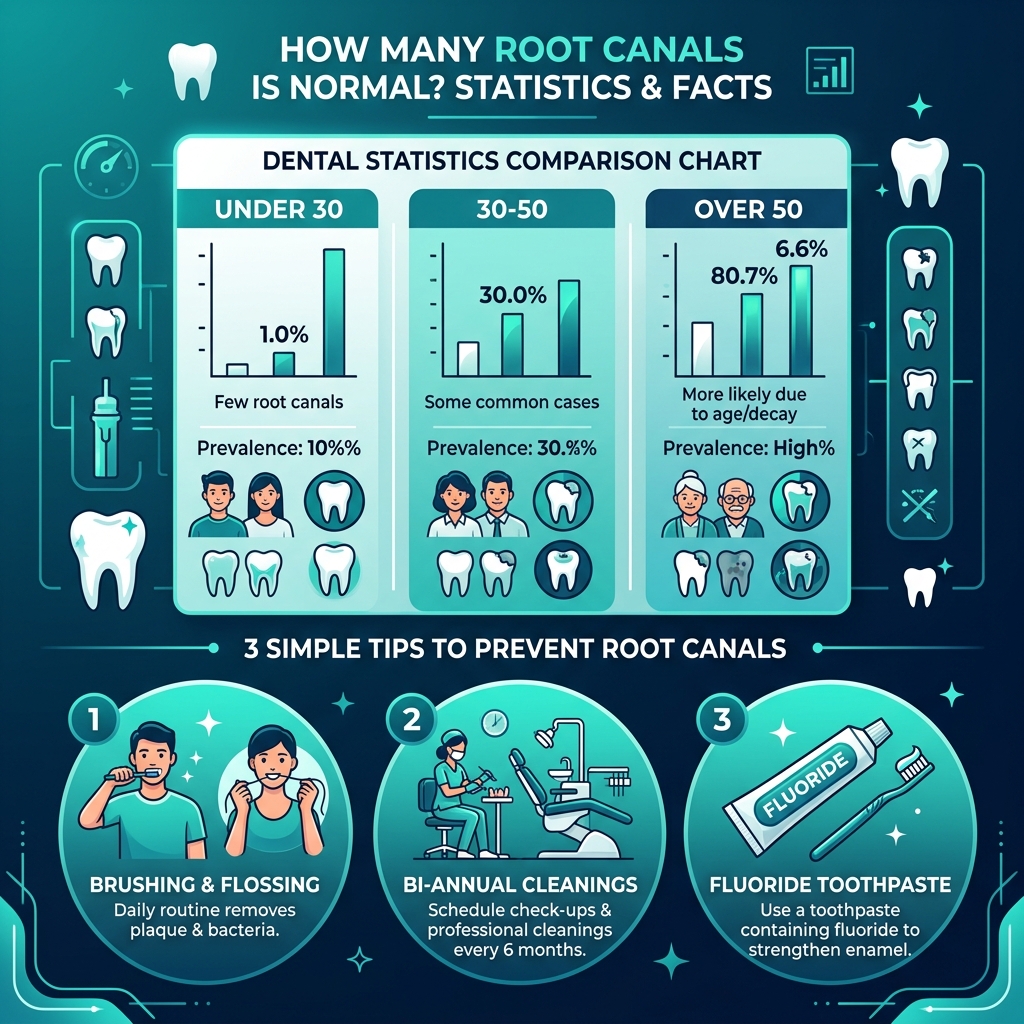
Table of Contents
- What is the “Normal” Number of Root Canals?
- Root Canal Frequency and Statistics by Age
- Why Having Multiple Root Canals is Actually a Good Sign
- Managing Re-infections (Root Canal Retreatment)
- Tips to Prevent Needing Future Root Canals
- Frequently Asked Questions (FAQs)
What is the “Normal” Number of Root Canals?
There is no single “normal” number of root canals for a person to have, as dental health depends on genetics, hygiene habits, and diet. However, statistical averages show that having between 1 to 4 root canals over a lifetime is extremely common for adults. According to dental health surveys, over 50% of the adult population will require at least one root canal by the time they reach age 50.
Undergoing a root canal simply means that you and your dentist have chosen to save a severely decayed or infected tooth rather than extracting it. Choosing root canal therapy preserves your natural bite and keeps your mouth fully functional.
Root Canal Frequency and Statistics by Age
As we age, existing dental fillings can break down, teeth can crack, and deep decay can reach the pulp, making root canals more common. Here is an overview of typical root canal frequency by age group:
| Age Group | Average Number of Root Canals | Percentage of Population with 1+ Root Canals |
|---|---|---|
| Under 30 | 0 to 1 | ~20% |
| 30 to 50 | 1 to 3 | ~55% |
| Over 50 | 2 to 5 | ~75% |
Why Having Multiple Root Canals is Actually a Good Sign
While needing dental work is never ideal, having multiple root-canal-treated teeth is actually a sign of proactive health management. Here is why:
- Preserving Natural Teeth: Keeping your natural teeth prevents the jawbone loss that occurs when teeth are extracted.
- Maintaining Bite Alignment: Saving teeth prevents adjacent teeth from shifting into gaps, avoiding bite problems and TMJ pain.
- Avoiding Dentures: Retaining your natural teeth allows you to chew comfortably and speak clearly without the need for removable dentures.
Managing Re-infections (Root Canal Retreatment)
In rare cases, a tooth that has already undergone a root canal can become re-infected due to new decay or complex canal anatomy. If this happens, a specialized Root Canal Retreatment is the standard corrective procedure. The dentist will remove the old filling materials, re-sterilize the canals, and seal the tooth again. Retreatment is a highly effective way to give the tooth a second chance at healthy survival.
Tips to Prevent Needing Future Root Canals
To keep the rest of your teeth healthy and prevent the need for future root canals, adopt these daily prevention tips:
- Brush Twice Daily: Use a soft-bristled toothbrush and fluoride toothpaste to protect enamel.
- Floss Daily: Flossing removes plaque and food particles from between teeth where decay often starts.
- Regular Dental Cleanings: Visit Elite Dermadent every 6 months for a professional cleaning and examination to catch decay early.
Frequently Asked Questions (FAQs)
1. How many root canals is normal for a person?
There is no single normal number, but it is very common for adults to have 1 to 4 root canals over their lifetime. Over half of the adult population requires at least one root canal.
2. Is it bad to have 4 or more root canals?
No, having multiple root canals is not bad. It indicates that you have successfully saved your natural teeth from extraction, which protects your jawbone and bite.
3. What is the average age for a first root canal?
Most people get their first root canal between the ages of 30 and 45, often due to aging fillings or deep decay that reaches the pulp.
4. What happens if you have too many root canals?
There are no adverse health effects. Each treated tooth is reinforced with a crown, allowing you to chew and function normally.
5. Can a root canal tooth get infected again?
Yes, in rare cases new decay or accessory canals can cause re-infection, which is corrected using a root canal retreatment.
Comments are closed