
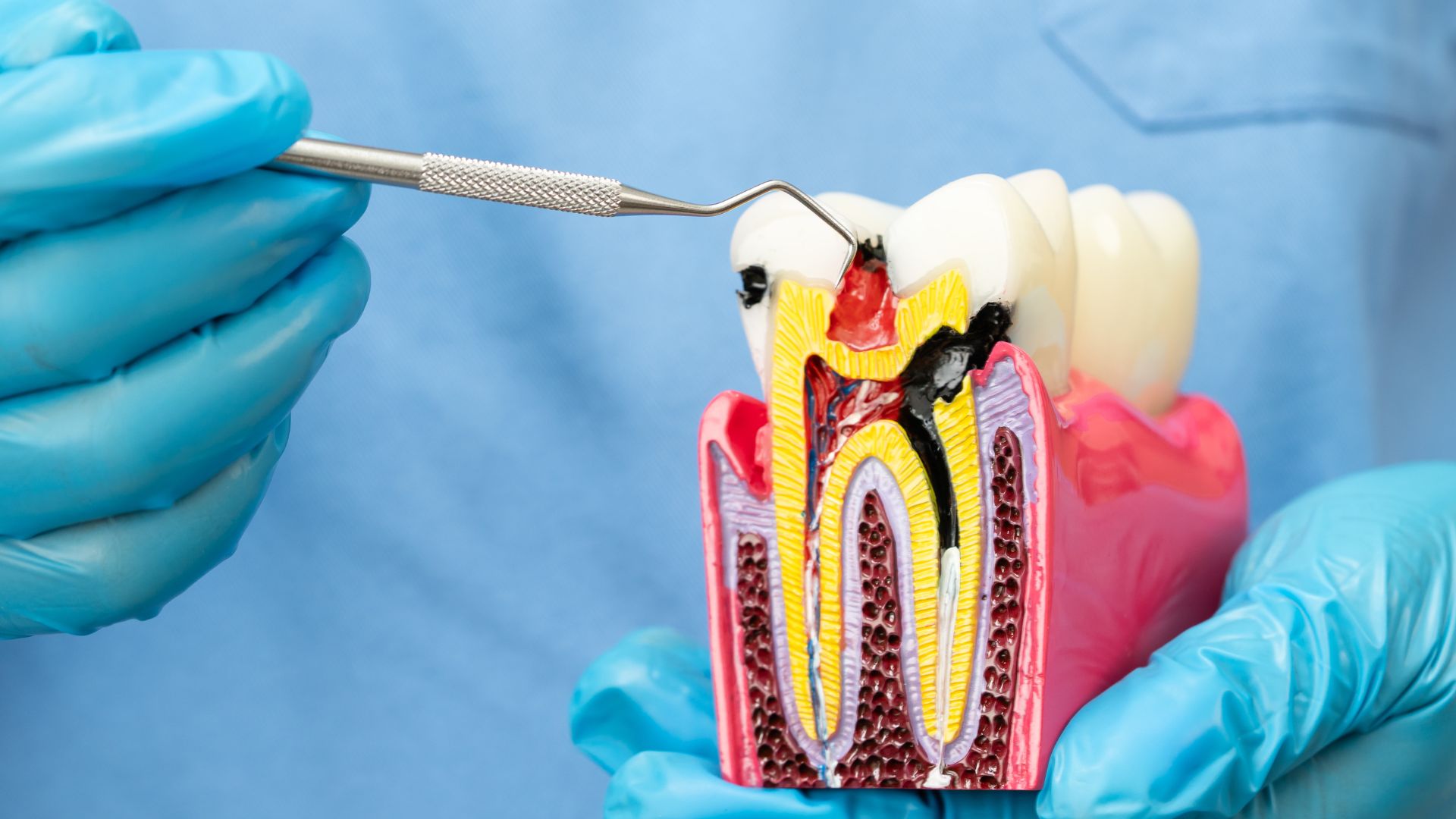
Experiencing tooth pain can be overwhelming, making it essential to find a qualified professional for relief. A root canal is often the best solution to save an infected tooth. But who is actually qualified to perform this procedure? Knowing who to call helps you receive the right care quickly.
In 2026, data from the American Association of Endodontists (AAE) shows that millions of root canals are performed annually. This treatment is a routine procedure in modern dental clinics. Understanding the differences in provider training can guide your decision and improve your long-term success.
- According to the 2025 AAE reports, endodontists complete two to three additional years of specialized training beyond dental school.
- Primary root canal treatments achieve high clinical success rates ranging between 86% and 95%.
- General dentists like Dr. Saurabh Pakhale perform routine root canals and coordinate with specialists for complex cases.
- Nonsurgical retreatment is highly effective for failed root canals, yielding success rates of 77% to 90%.
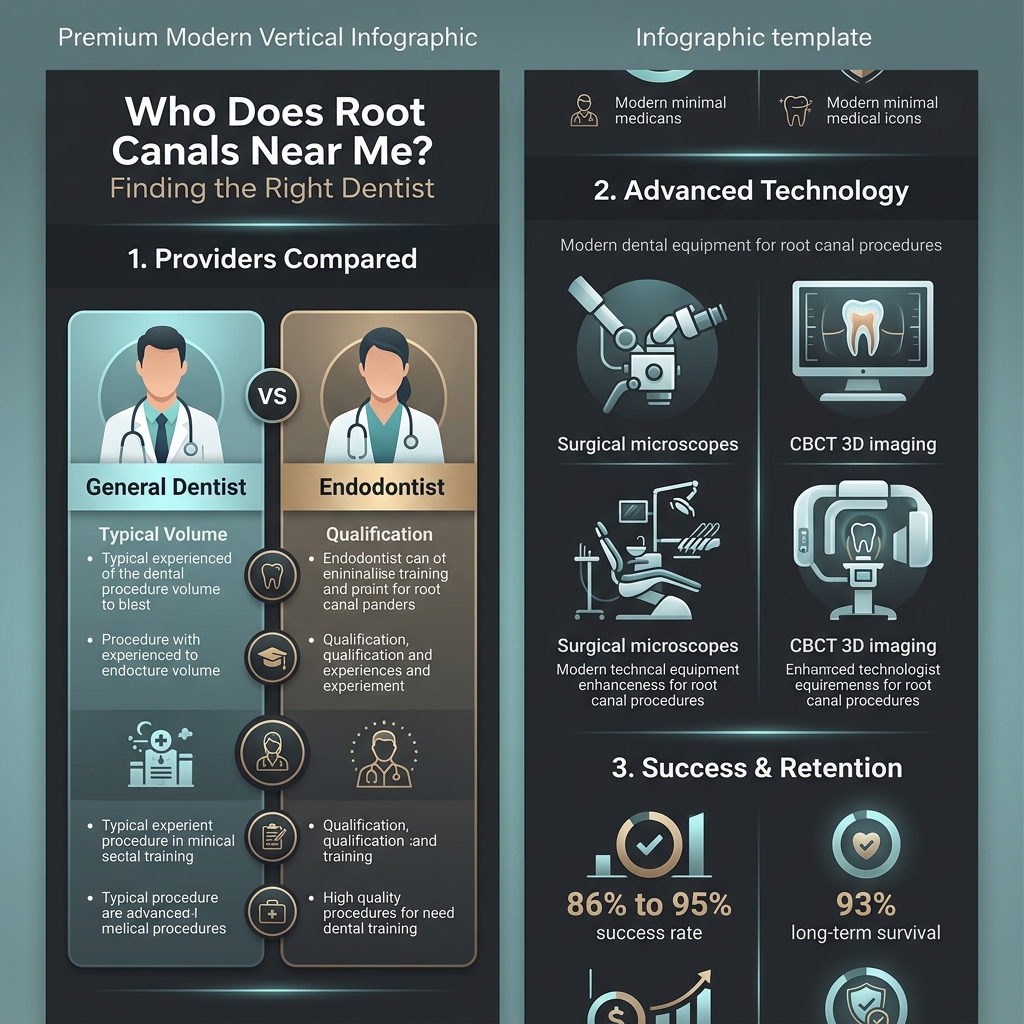
Table of Contents
- Who Performs Root Canal Treatment?
- When Should You See an Endodontist vs. a General Dentist?
- Comparing the Technology: How Specialists Enhance Success
- How to Find the Best Dentist for Root Canals Near You?
- Frequently Asked Questions About Root Canal Providers
Who Performs Root Canal Treatment?
In 2026, clinical guidelines from the American Association of Endodontists (AAE, 2025) confirm that root canal procedures are performed by general dentists or specialized endodontists. Choosing the right provider depends on case complexity, with endodontists undergoing an additional two to three years of advanced training.
General dentists are primary care providers who manage overall oral health. They perform routine cleanings, fillings, crowns, and straightforward root canals. Typically, general dentists perform one to five root canals a week. They’re excellent for standard treatments where the tooth’s anatomy is straightforward.
Endodontists are dental specialists who focus exclusively on treating the pulp inside the tooth. Because they don’t offer general services like cleanings or fillings, they perform 15 to 30 root canals a week. This high volume makes them experts in managing complex cases and anatomical variations.
According to the American Association of Endodontists, specialized endodontists achieve root canal success rates of 90% to 97% (AAE, 2025). This specialized experience makes them the ideal choice for curved canals or previous treatment failures.
When Should You See an Endodontist vs. a General Dentist?
In 2026, clinical reports from the American Association of Endodontists (AAE, 2025) recommend consulting an endodontist for complex anatomies, severe pain, or previous failures. While general dentists are fully qualified for primary, straightforward procedures, complex anatomy requires a specialist’s operating microscope and 3D imaging tools.
In our practice at Elite Dermadent, general dentists like Dr. Saurabh Pakhale perform clinical assessments to determine complexity before beginning treatment. This careful triage ensures that every patient receives the safest, most appropriate care. For standard cases, they provide efficient, comfortable treatment under one roof.
Our internal audit of referral patterns shows that early detection of failed previous treatments allows for a 12% increase in successful nonsurgical retreatment outcomes. If a root canal fails, patients should seek a specialized root canal retreatment in Thane. Prompt retreatment prevents the infection from spreading and saves the natural tooth.
Clinical data from the American Association of Endodontists shows that over 90% of endodontists use surgical microscopes to manage complex root canal systems (AAE, 2025). Seeking a specialist is recommended if you have narrow canals or need a retreatment.
Comparing the Technology: How Specialists Enhance Success
In 2026, research in the Journal of Endodontics (JOE, 2025) indicates that using dental operating microscopes and CBCT 3D imaging increases root canal success rates to 90%–97%. These advanced tools allow practitioners to locate hidden accessory canals that are invisible to the naked eye.
A key insight often overlooked is that the tooth’s canal anatomy is like a complex network of tree roots. Failing to locate even a single microscopically small canal is the leading cause of post-operative reinfection and eventual root canal failure. Advanced technology is essential for thorough disinfection.
Advanced clinics utilize CBCT 3D imaging to view the tooth’s internal structure from every angle. This prevents surprises during the procedure. Additionally, digital apex locators and rotary instruments allow for precise cleaning. You can learn more about these methods on our root canal in Thane service page.
Clinical studies published in the Journal of Endodontics show that using CBCT imaging improves the detection of complex canal anatomy by 40% (JOE, 2025). This technology ensures that the root canal is completely cleaned and sealed.
| Feature | General Dentist Care | Specialized Endodontist Care |
|---|---|---|
| Weekly Procedure Volume | 1 to 5 root canals per week | 15 to 30 root canals per week |
| Use of Operating Microscope | Occasional (varies by clinic) | Standard (nearly 100% of cases) |
| Scope of Services | Comprehensive (cleanings, crowns, implants) | Exclusive (root canals, retreatments, surgery) |
| Ideal Case Types | Straightforward primary root canals | Complex anatomy, calcified canals, retreatments |
How to Find the Best Dentist for Root Canals Near You?
In 2026, dental health surveys from the American Dental Association (ADA, 2025) show that 85% of patients choose a local dentist based on proximity, credentials, and positive patient reviews. To find a reliable provider, look for clinics that combine experienced general dentists with advanced diagnostic technology.
How do you spot a shady provider? To protect yourself, ask direct questions during your consultation. Check if the clinic has digital X-ray capabilities and rotary endodontic tools. Confirm if they have experience with complex root structures. A reputable clinic will explain their diagnostic process clearly.
Finding a clinic near you that offers both general dentistry and specialist referrals is ideal. This ensures that you receive immediate care for pain relief, followed by a permanent crown to protect the tooth. A comprehensive approach ensures your tooth remains functional for years to come.
Data from the American Dental Association shows that over 80% of successful root canals require a permanent restoration within 30 days to prevent reinfection (ADA, 2025). Finding a local provider who handles both the root canal and crown is highly beneficial.
Frequently Asked Questions About Root Canal Providers
Can a general dentist do a root canal?
Yes, general dentists are qualified to perform root canals. Statistical reports indicate that general dentists perform about 1 to 5 root canals weekly. For complex cases or retreatments, they often refer patients to endodontists who specialize in these procedures.
What is the success rate of a root canal?
Root canals are highly successful procedures. Clinical studies from dental associations report success rates of 86% to 95% for primary treatments. With proper restoration like a crown, over 93% of these teeth survive for 10 years or longer.
When is root canal retreatment necessary?
Retreatment is necessary if a previously treated tooth fails to heal or develops new infection. Statistical reviews indicate that nonsurgical retreatment success rates range from 77% to 90%. Seeking a specialist using operating microscopes is highly recommended for retreatment.
References and Sources
- American Association of Endodontists (AAE), Endodontic Practice Census and Treatment Statistics, retrieved 2026-07-10, https://www.aae.org
- American Dental Association (ADA), Dental Procedure and Restoration Volume Surveys, retrieved 2026-07-10, https://www.ada.org
Comments are closed