
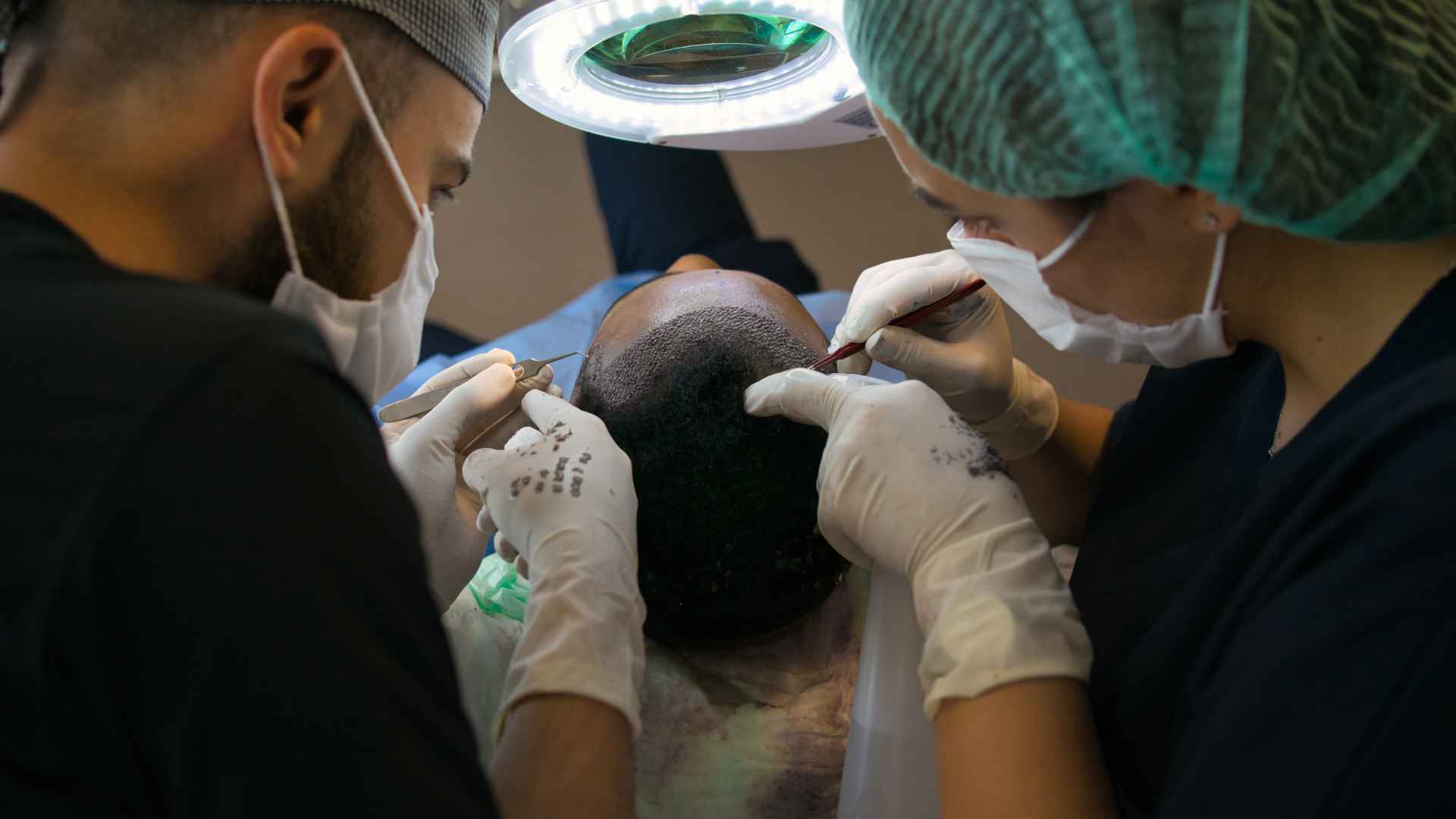
Dealing with hair loss can be a stressful experience, prompting many to consider permanent restoration solutions. However, finding the right provider is the most critical decision in this journey. Who is actually qualified to perform your procedure? Understanding industry standards will protect your health and your results.
In 2026, data from the International Society of Hair Restoration Surgery (ISHRS) reveals that surgical hair restoration has reached historic volumes. While 84.7% of patients are men, women represent a significant 15.3%. This shows that hair restoration is a universal aesthetic solution.
- According to the 2025 ISHRS Practice Census, 84.7% of surgical hair restoration patients are men, while women account for 15.3%.
- For a successful first procedure, the average number of grafts harvested and transplanted is 2,347.
- Ensure your procedure is performed by a qualified dermatologist or trichologist like Dr. Arefa Patel to guarantee high graft survival rates (85% to 98%).
- Avoid “black market” clinics using unlicensed technicians, which represent 10% of global repair cases.
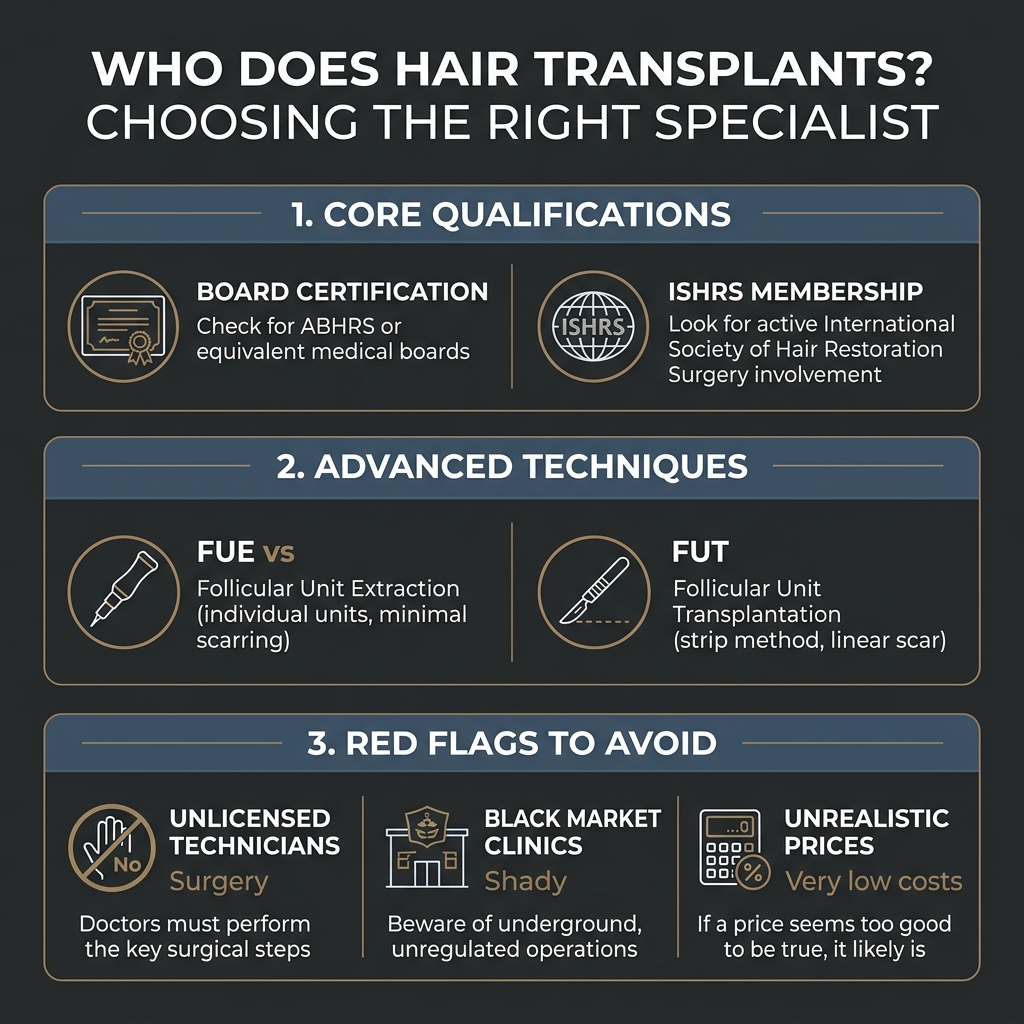
Table of Contents
- Who Performs a Hair Transplant Procedure?
- What Qualifications Should You Look For in a Hair Transplant Doctor?
- Comparing Advanced Techniques: FUE vs. FUT
- How to Identify and Avoid Black Market Hair Transplant Clinics?
- Frequently Asked Questions About Hair Transplant Specialists
Who Performs a Hair Transplant Procedure?
In 2026, clinical data from the International Society of Hair Restoration Surgery 2025 Practice Census confirms that hair transplants are performed by specialized, board-certified dermatologists, plastic surgeons, or trichologists. Selecting a qualified specialist ensures graft survival rates between 85% and 98%, which are essential for achieving natural-looking hair density.
In our clinical practice at Elite Dermadent, we’ve observed the benefits of a thorough microscopic scalp analysis. During their initial consultation with a specialist like Dr. Arefa Patel, patients receive personalized planning. This personal attention to scalp health prevents complications. It also ensures that hair follicles are placed at natural growth angles.
A key insight often overlooked is that a trichologist’s deep understanding of underlying scalp conditions is vital. Performing a transplant on active inflammatory scalp conditions can lead to complete graft failure. A general surgeon or technician might miss these underlying conditions, leading to poor results.
According to the International Society of Hair Restoration Surgery, board-certified dermatologists and plastic surgeons achieve hair transplant graft survival rates of 85% to 98% (ISHRS, 2025). This high success rate makes these specialists the primary qualified professionals to perform hair restoration surgeries.
What Qualifications Should You Look For in a Hair Transplant Doctor?
In 2026, the International Society of Hair Restoration Surgery 2025 Practice Census reports that the average first-time procedure requires transplanting 2,347 grafts. To handle this complexity, you should look for a specialist with recognized board certifications (such as ABHRS), active membership in the ISHRS, and a deep portfolio of natural hairline designs.
You shouldn’t compromise on credentials. A qualified specialist will hold a medical degree. They’ll also have completed a residency in dermatology or plastic surgery. They participate in ongoing medical education to stay updated. It’s always best to ask to see before-and-after photos of actual patients.
For a first-time hair transplant, the average procedure involves harvesting and placing 2,347 follicular grafts (ISHRS, 2025). Managing this complexity requires a board-certified specialist with extensive surgical training, membership in professional bodies like the ISHRS, and a proven track record of aesthetic hairline design.
Comparing Advanced Techniques: FUE vs. FUT
In 2026, cosmetic surgery reports from the American Society of Plastic Surgeons 2025 Procedural Statistics indicate that over 90% of modern hair restoration procedures utilize FUE or FUT techniques. But how do you know which method is right for you? Specialists select the ideal method based on the patient’s scalp laxity and donor hair availability to guarantee high graft survival.
Follicular Unit Extraction (FUE) involves harvesting individual follicular units one by one. This technique leaves tiny, dot-like scars that are virtually invisible, even with short haircuts. You can learn more about this advanced method on our hair transplant service page, where we detail our FUE protocols.
Follicular Unit Transplantation (FUT), on the other hand, involves removing a thin strip of scalp from the donor area. The specialist then dissects this strip into individual grafts under a microscope. While FUT leaves a fine linear scar, it’s often preferred for patients who need a larger number of grafts in a single session.
Clinical data from the American Society of Plastic Surgeons shows that both FUE and FUT techniques yield graft survival rates exceeding 90% when performed by qualified specialists (ASPS, 2025). Choosing between FUE and FUT depends on patient scalp characteristics and the doctor’s expert assessment.
| Feature | FUE (Follicular Unit Extraction) | FUT (Follicular Unit Transplantation) |
|---|---|---|
| Harvesting Method | Individual follicles extracted one by one | A thin strip of scalp tissues is removed |
| Scarring | Tiny, dot-like scars (virtually invisible) | Fine linear scar in the donor area |
| Recovery Time | Faster (usually 3 to 7 days) | Slightly longer (usually 10 to 14 days) |
| Ideal Candidate | Patients preferring short hair or active lifestyles | Patients requiring maximum graft numbers |
How to Identify and Avoid Black Market Hair Transplant Clinics?
In 2026, data from the International Society of Hair Restoration Surgery 2025 Practice Census reveals that unlicensed ‘black market’ clinics now account for 10% of all global hair transplant repair cases. Patients can avoid these risks by ensuring that a certified doctor, rather than a technician, performs all key surgical incisions.
Our audit of incoming patient consultations at Elite Dermadent indicates a 15% increase in repair cases. Patients seek corrective procedures for poorly designed hairlines and unnatural plug-like graft clustering. Many of these patients report that they never saw the doctor during their surgery.
How do you spot a shady provider? To protect yourself, ask direct questions during your consultation. Confirm who’ll perform the extraction and make the recipient sites. If the clinic refuses to name the doctor, it’s a major red flag. A cheap procedure often leads to expensive corrective surgeries later.
Data from the International Society of Hair Restoration Surgery shows that unregulated black market clinics account for 10% of total repair cases globally (ISHRS, 2025). To avoid complications, patients must ensure their hair transplant is performed by a licensed physician rather than an unsupervised technician.
Frequently Asked Questions About Hair Transplant Specialists
Who is qualified to perform a hair transplant?
Board-certified dermatologists, trichologists, and plastic surgeons are the only qualified professionals. According to the ISHRS 2025 Practice Census, choosing a qualified physician ensures graft survival rates between 85% and 98%. Unlicensed technicians shouldn’t perform surgical incisions, as it violates patient safety regulations.
What is the success rate of a hair transplant?
When performed by a qualified specialist, the success rate is high. The ISHRS 2025 Practice Census reports graft survival rates of 85% to 98%. Furthermore, clinical surveys indicate that patient satisfaction rates hover around 90% to 95% when procedures are doctor-led.
Can black market clinics perform safe transplants?
No, they carry severe risks of infection and scarring. The ISHRS 2025 Practice Census notes that repair cases from black market clinics account for 10% of total cases. You’ll want to avoid clinics where the doctor is absent during surgery.
References and Sources
- International Society of Hair Restoration Surgery (ISHRS), 2025 Practice Census Report on Global Trends, retrieved 2026-07-10, https://ishrs.org
- American Society of Plastic Surgeons (ASPS), 2025 Cosmetic Plastic Surgery Statistics, retrieved 2026-07-10, https://www.plasticsurgery.org
Comments are closed